What should a shelf reading sheet record?
Start with a single shelf or bay. Note the branch, collection, shelf label, inclusive call-number range, date, and reader on the sheet or in its filename and handoff note. Use your collection’s shelving rules when comparing spines. If you have a current list of copies expected in that range, use the item ID to distinguish copies with the same call number.
The CSV gives you seven fields. Use item ID and call number to identify the copy. Write the shelf it belongs on in expected shelf and the shelf where you actually saw it in found shelf. Mark the discrepancy, give it an action, and leave recheck pending until somebody verifies the result. Add a note with neighboring call numbers when the shelf alone is too broad to locate the slot.
A gap in the sequence does not tell you which copy to look for. Check the expected-copy list first. When an expected copy has no sighting, a blank found-shelf field keeps the next search open. The SUNY inventory guide distinguishes missing items, misshelved items, and books in the wrong position.
What does a three-book handoff look like?
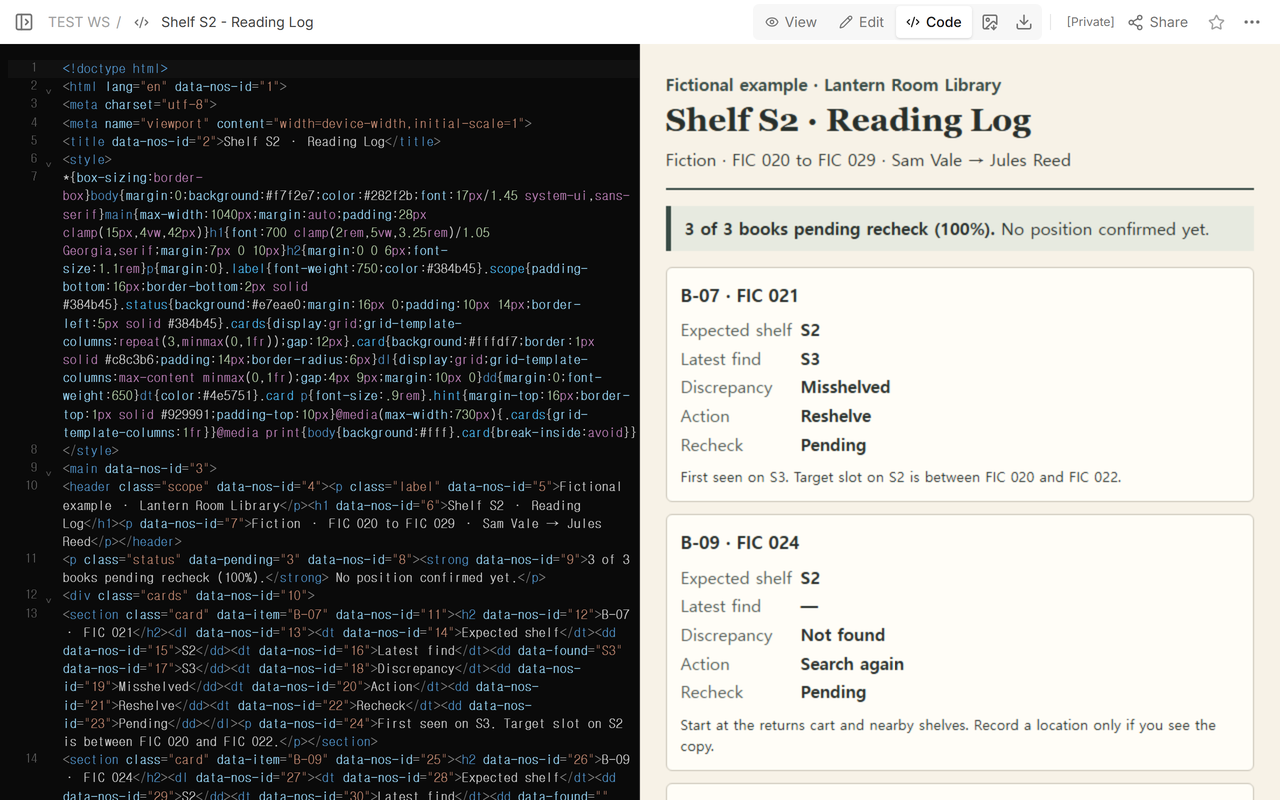
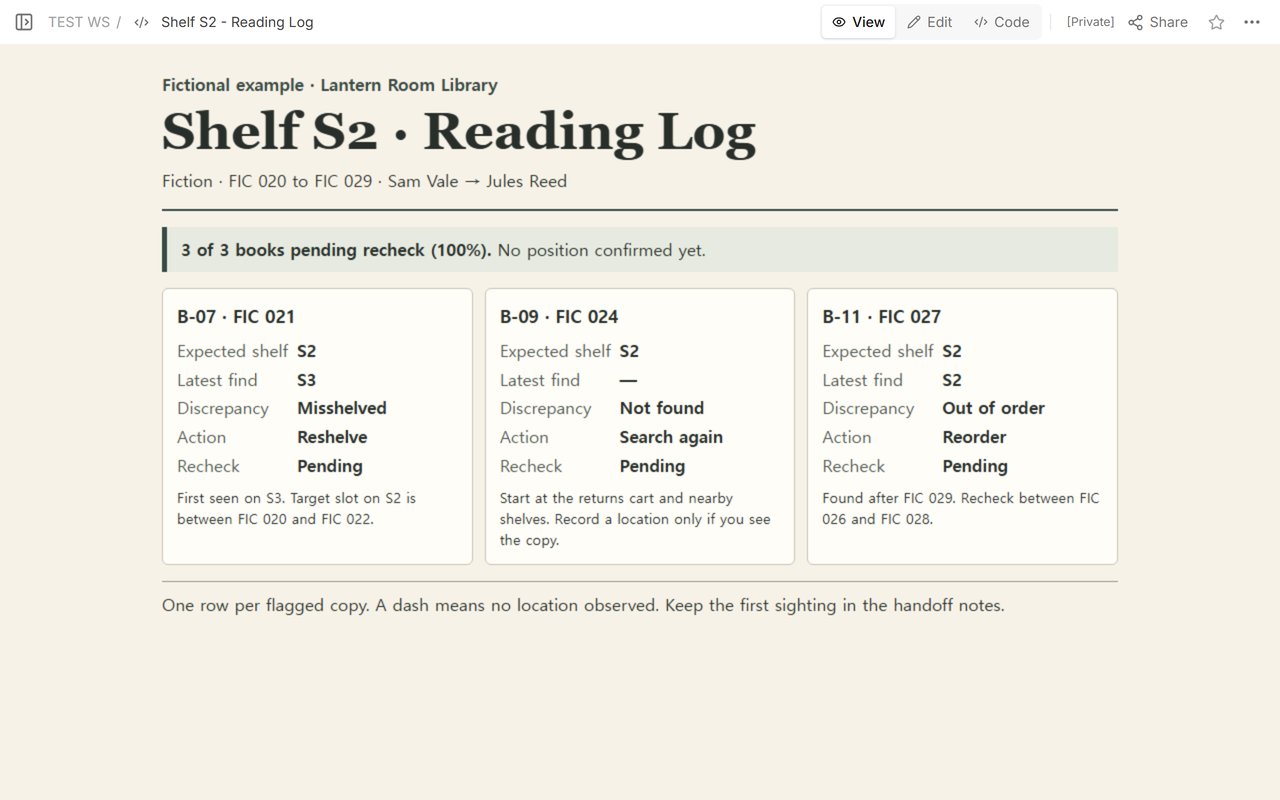
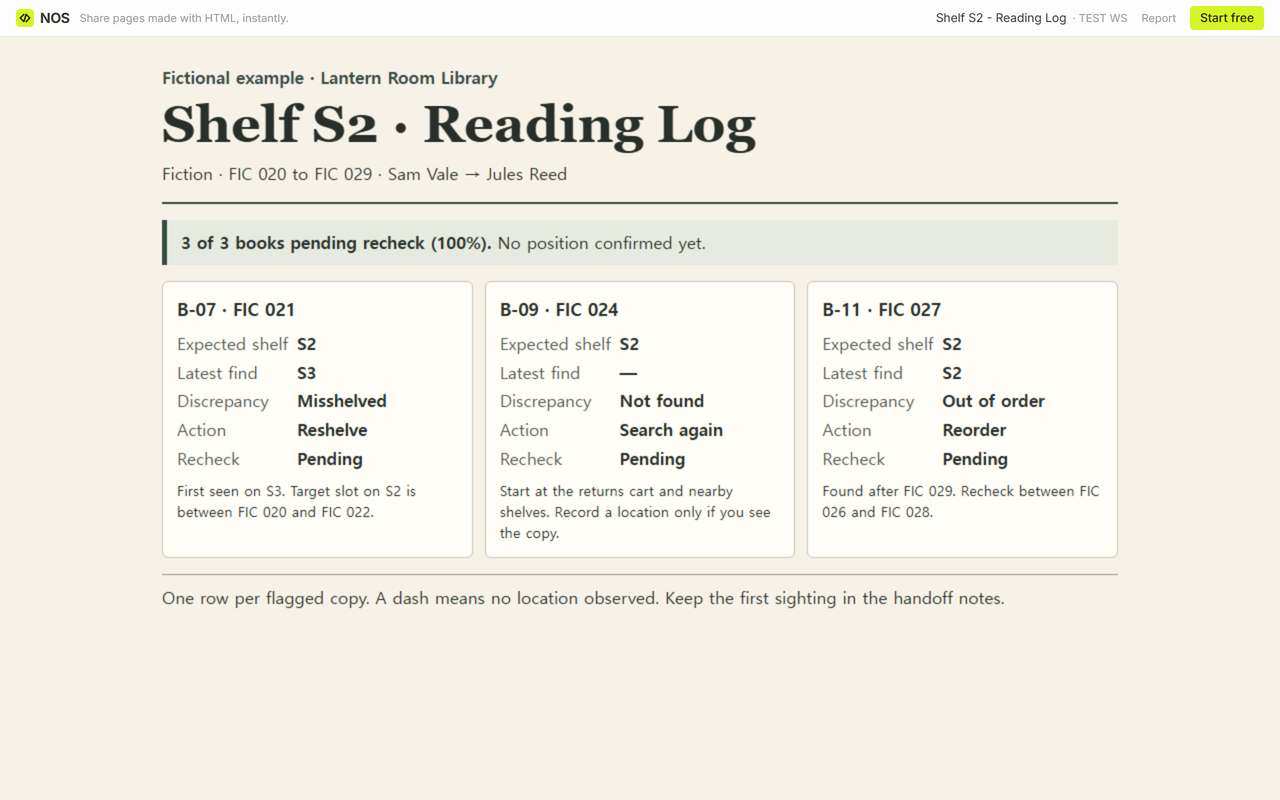
We built a fictional handoff for Sam Vale and Jules Reed at Lantern Room Library. Sam reads fiction shelf S2 from FIC 020 through FIC 029 and records three exceptions. Here is what each note asks Jules to do.
- B-07 · FIC 021. Expected on S2, first seen on S3. Mark it misshelved and reshelve it between FIC 020 and FIC 022.
- B-09 · FIC 024. Expected on S2, with no observed location. Mark it not found. Leave the found-shelf cell blank and ask Jules to check the returns cart and nearby shelves.
- B-11 · FIC 027. Expected and found on S2, but sitting after FIC 029. Mark it out of order and ask Jules to check it between FIC 026 and FIC 028 after moving it.
When can you mark a book as rechecked?
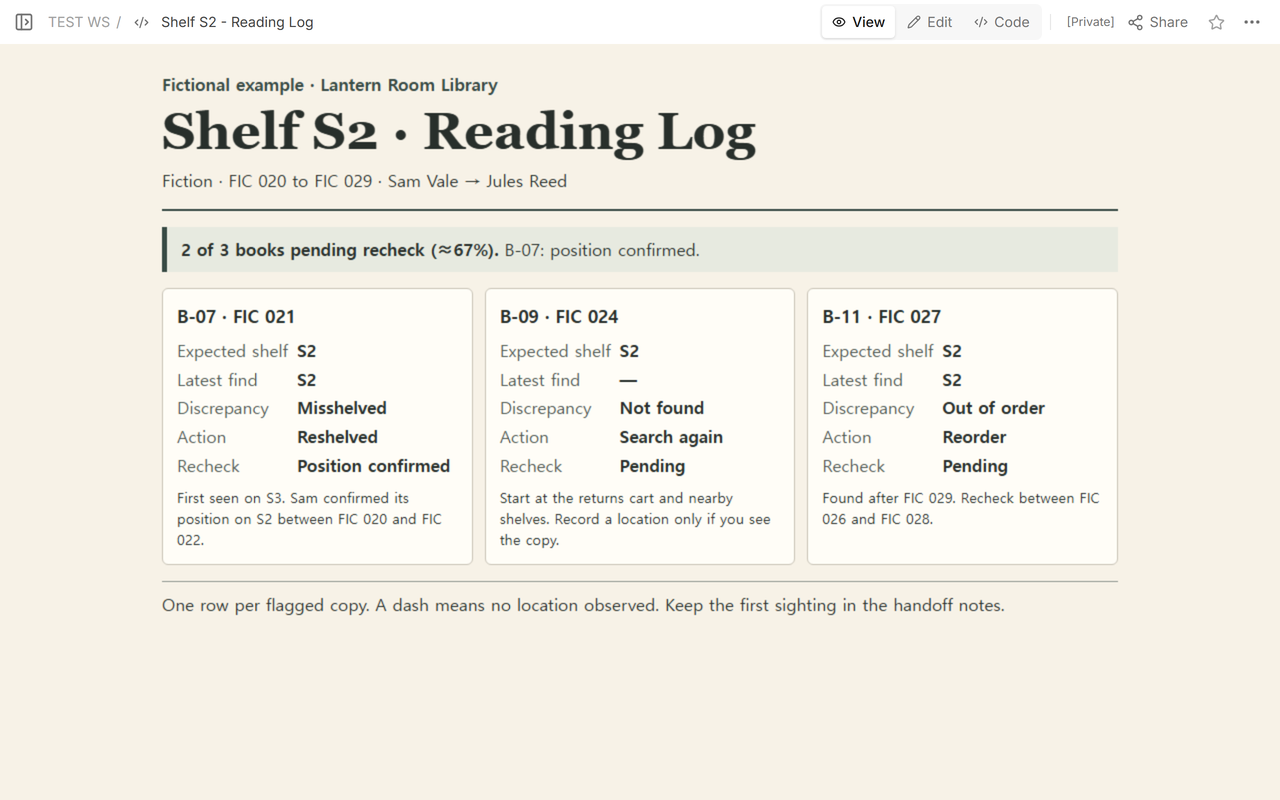
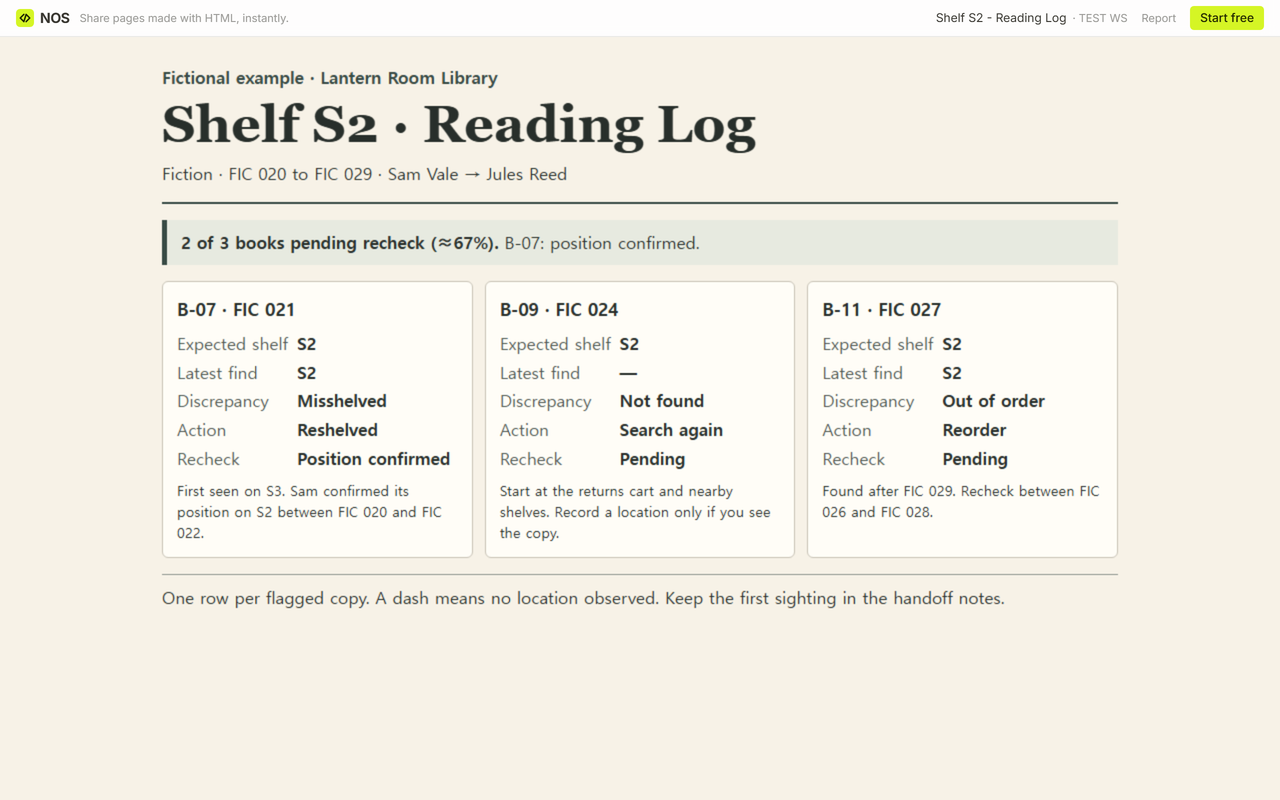
Check the spine against the books on both sides after placing it. In the example, Sam has moved B-07 to S2, between FIC 020 and FIC 022. We updated the same handoff with that result. The latest find changed from S3 to S2, the action became reshelved, and the recheck became position confirmed. The note still says where Sam first saw the book.
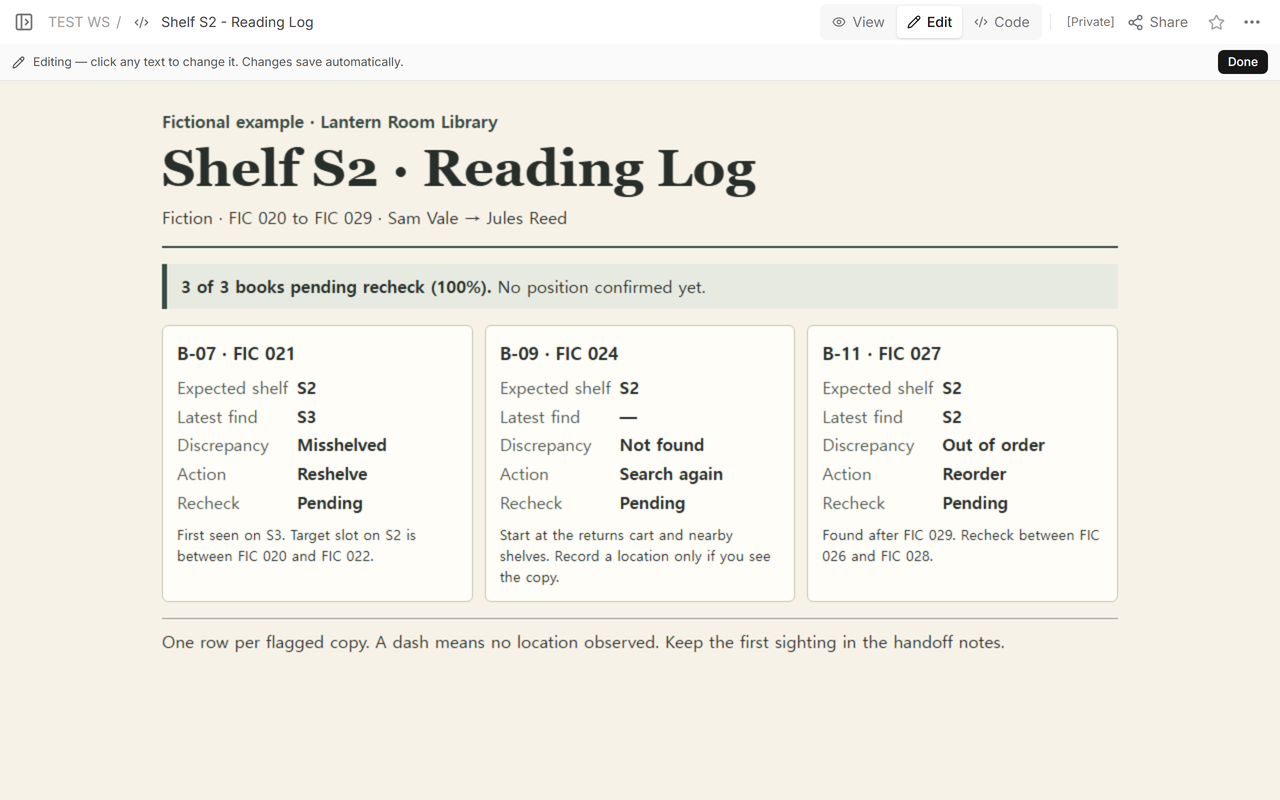
B-09 and B-11 stayed pending. That leaves 2 of 3 books pending recheck (≈67%) after the update. Two divided by three, multiplied by 100, rounds to 67%. The denominator is the three exceptions, and the percentage describes the handoff queue. The CSV remains one row per copy and records the underlying statuses.
When not to do this
Use this sheet for a small shelf pass. If the next step is to mark a book lost, withdraw a copy, change circulation status, or reconcile an entire collection, follow your library’s authorized process. Check carts, temporary locations, and the catalog record before escalating an unresolved row. Keep library-only identifiers and staff notes in your approved staff system.
Sharing the handoff in NOS
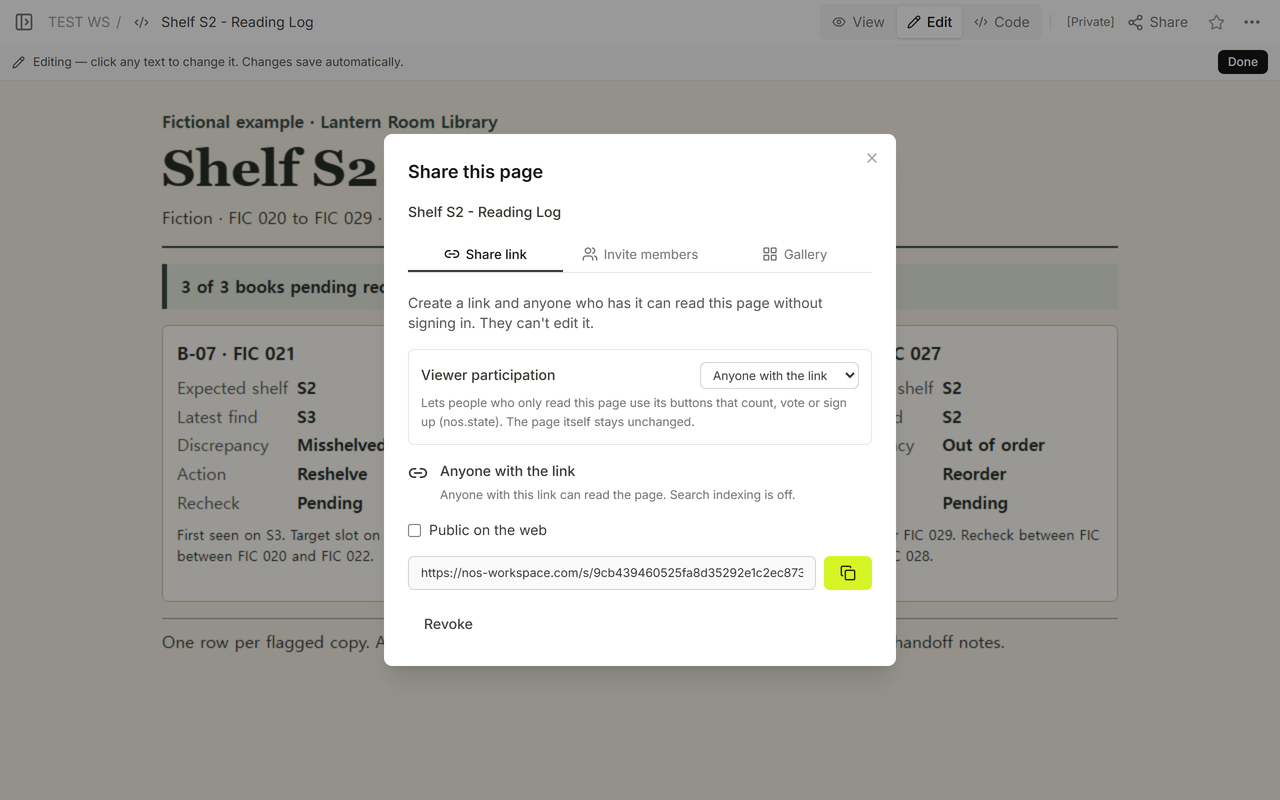
We checked the fictional handoff in NOS View and opened its Share link signed out. The link displayed the sheet for reading. Opening the editor address signed out led to sign-in. Send the address from Share when somebody needs to read the fictional shelf log, and use the existing page when you need to post a correction.
For a discrepancy driven by stock quantity and receipts, see the inventory procedure template. For a supply-room queue based on availability and reorder thresholds, see the inventory dashboard template.