In short
A 1:16 coffee-to-water ratio means one part coffee for 16 parts water by mass.
With 480 g water, divide by 16 to get 30 g coffee. In the other direction, multiply 30 g coffee by 16 to get 480 g water.
Use a method preset as a starting point, or enter your own ratio. The calculation does not guarantee taste or extraction.
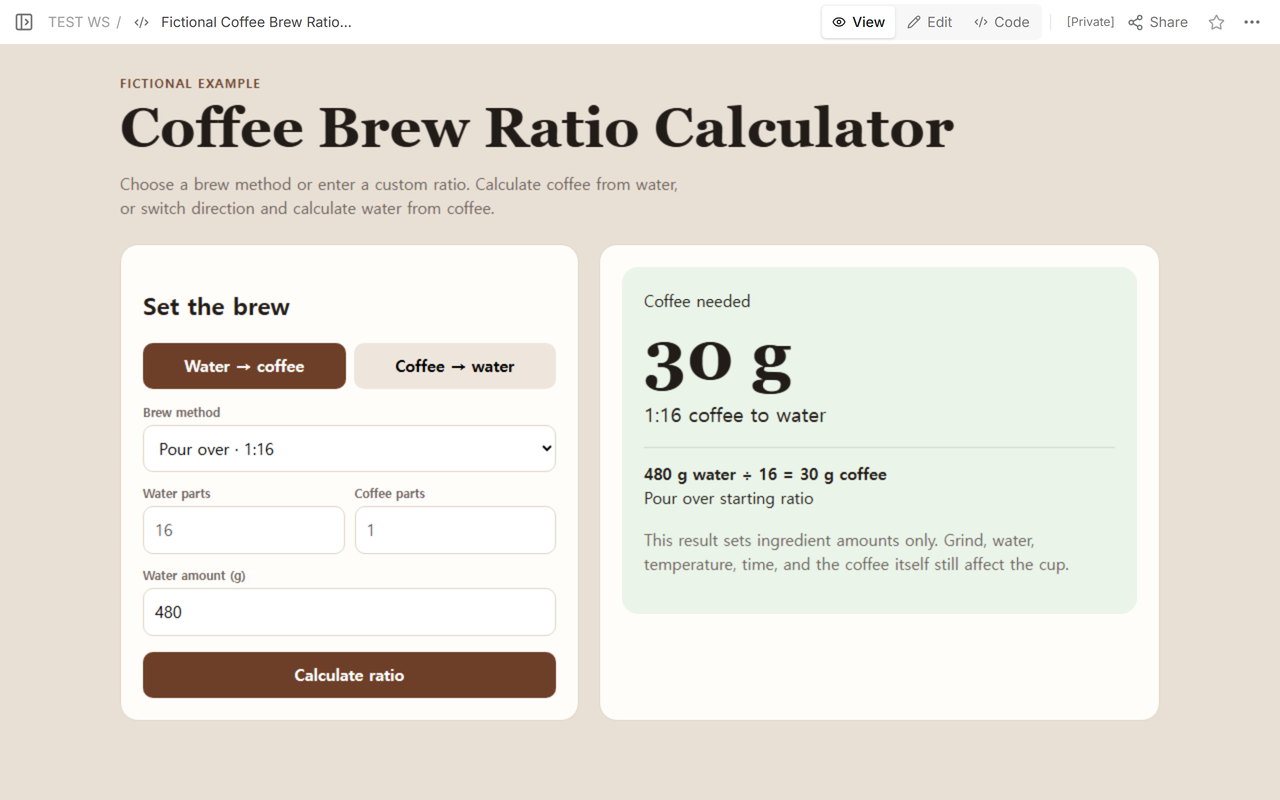
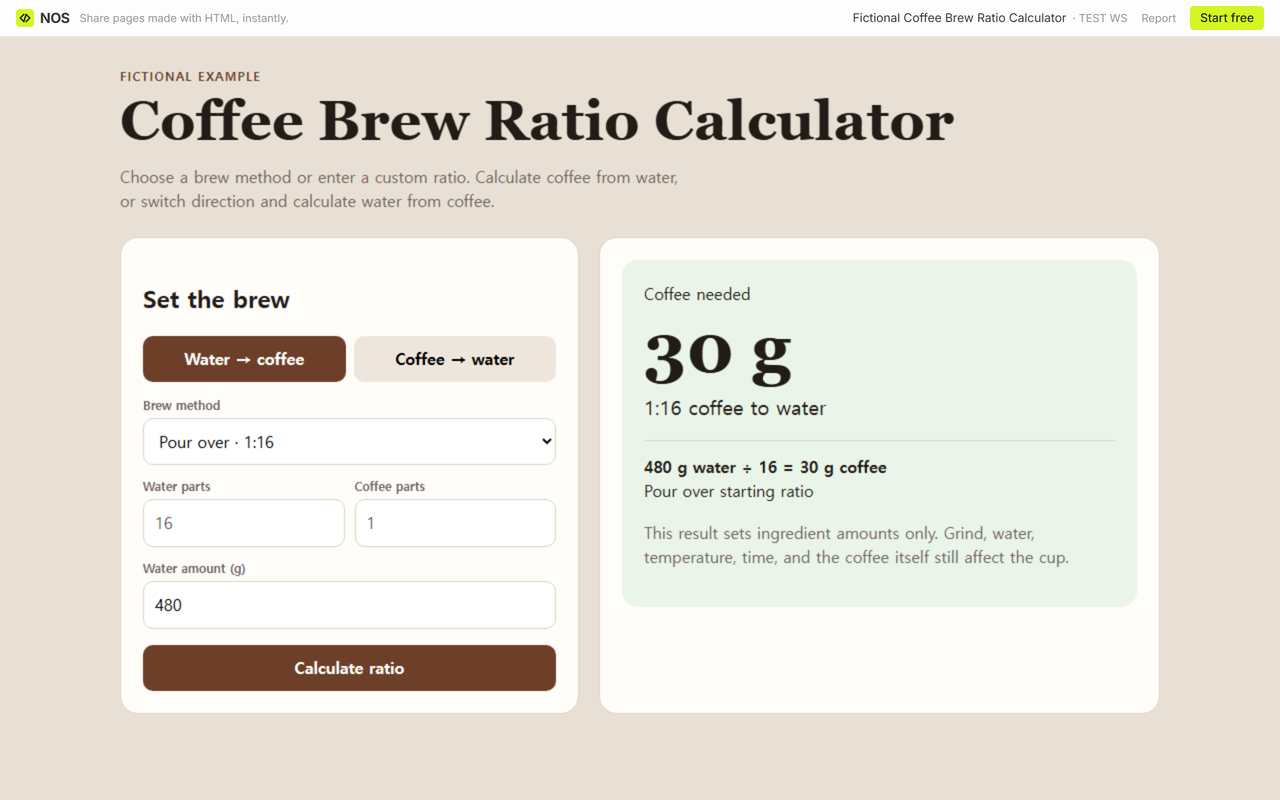
The finished fictional example opens in water-to-coffee mode. Pour over is selected at 1:16, and 480 g of water produces a 30 g coffee result. Every number in the answer keeps its gram unit and the equation appears directly below it.
How do I calculate coffee from the water amount?
Read the ratio in coffee-to-water order. For 1:16, divide water mass by 16. The worked calculation is 480 g ÷ 16 = 30 g. For 600 g water at the same ratio, the result would be 37.5 g coffee.
The calculator uses mass for both sides. It does not silently mix fluid ounces, milliliters, scoops, or tablespoons with grams. If your plan starts in another unit, convert or weigh it before entering the amount.
Can the same calculator find water from coffee?
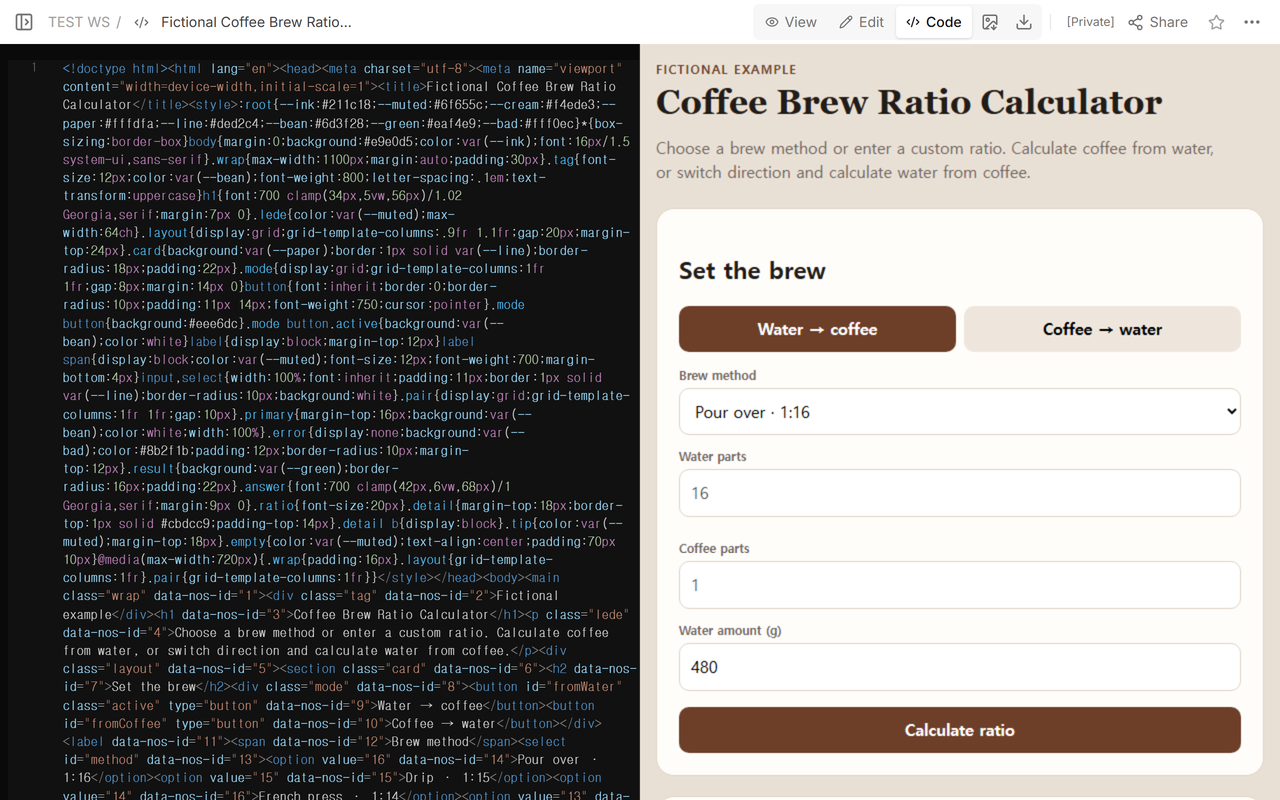
Yes. Switch to Coffee → water and enter the coffee mass. The operation reverses: coffee mass × water parts ÷ coffee parts. With a 1:16 ratio, 30 g coffee × 16 = 480 g water.
This reverse check is useful because it returns to the same pair of amounts. Keep full precision until the final display. Rounding 37.5 g to 38 g before reversing it will not return exactly 600 g.
Which coffee ratio should I choose?
The example provides pour over, drip, French press, and AeroPress presets so the reader can begin with a declared ratio. These are starting values in this fictional tool, not universal standards for every brewer or coffee. Select Custom ratio when your recipe, equipment guide, or own tested process calls for something else.
For a custom 1:15 ratio, set coffee parts to 1 and water parts to 15. For a less familiar form such as 2:30, the calculator reduces nothing silently; it uses 30 ÷ 2 = 15 as the multiplier and keeps the entered relationship visible.
What does this ratio leave out?
A mass ratio answers how much coffee and water to combine. It does not establish grind size, water composition, temperature, contact time, agitation, filter behavior, or extraction yield. The Specialty Coffee Association source saved for this article discusses how water composition and extraction method can change acidity. That is why the result is presented as a measured starting pair rather than a promise about flavor.
Espresso also needs care because recipes often describe beverage yield from a coffee dose rather than the total brew water used by a filter method. Do not choose a filter-style preset and label the result an espresso yield without defining what each side measures.
What should happen with zero or an invalid ratio?
Amount, coffee parts, and water parts must be finite numbers greater than zero. Zero water cannot produce a positive coffee amount under this task, and a zero ratio part would make the operation undefined. When an entry is invalid, the calculator shows a specific message and removes the previous answer.
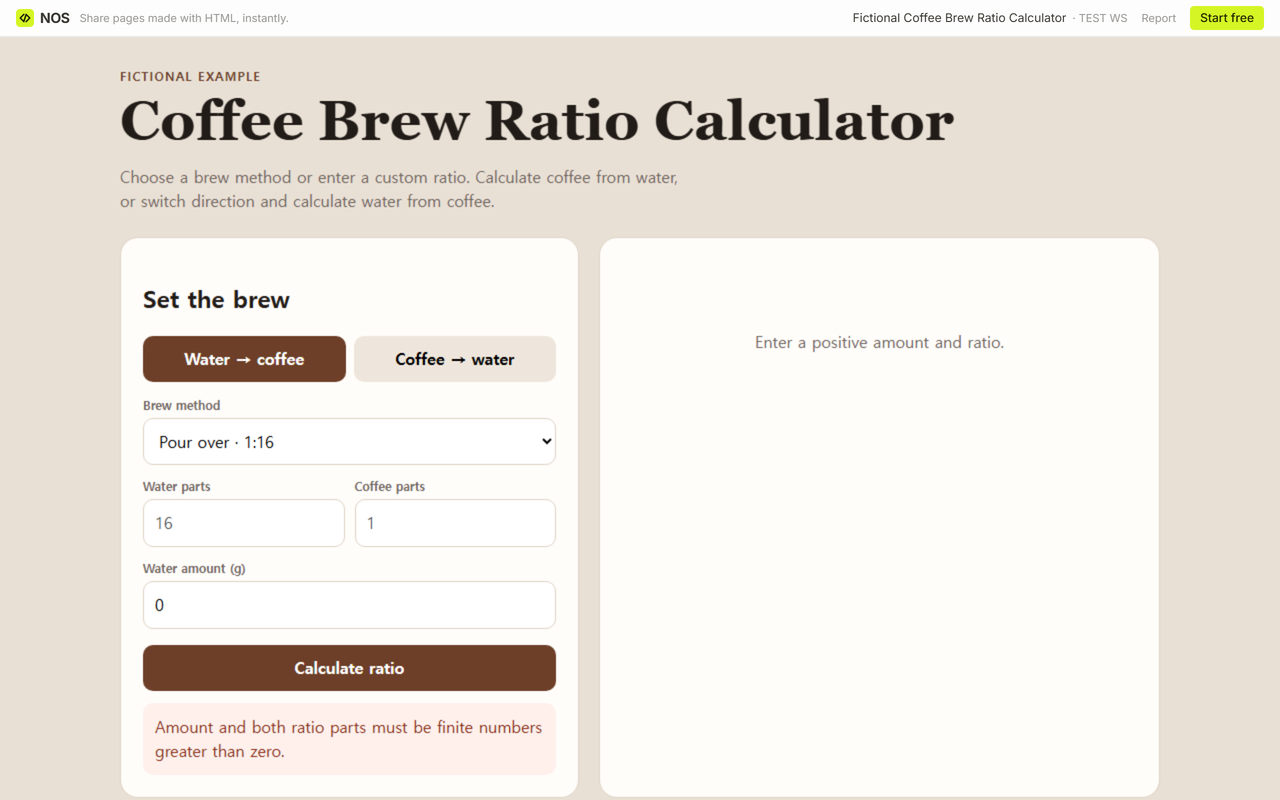
Blank input is missing, not zero. A negative amount is also rejected. These states stay separate from a valid small positive amount such as 0.5 g.
How do I share a brew calculation without losing the units?
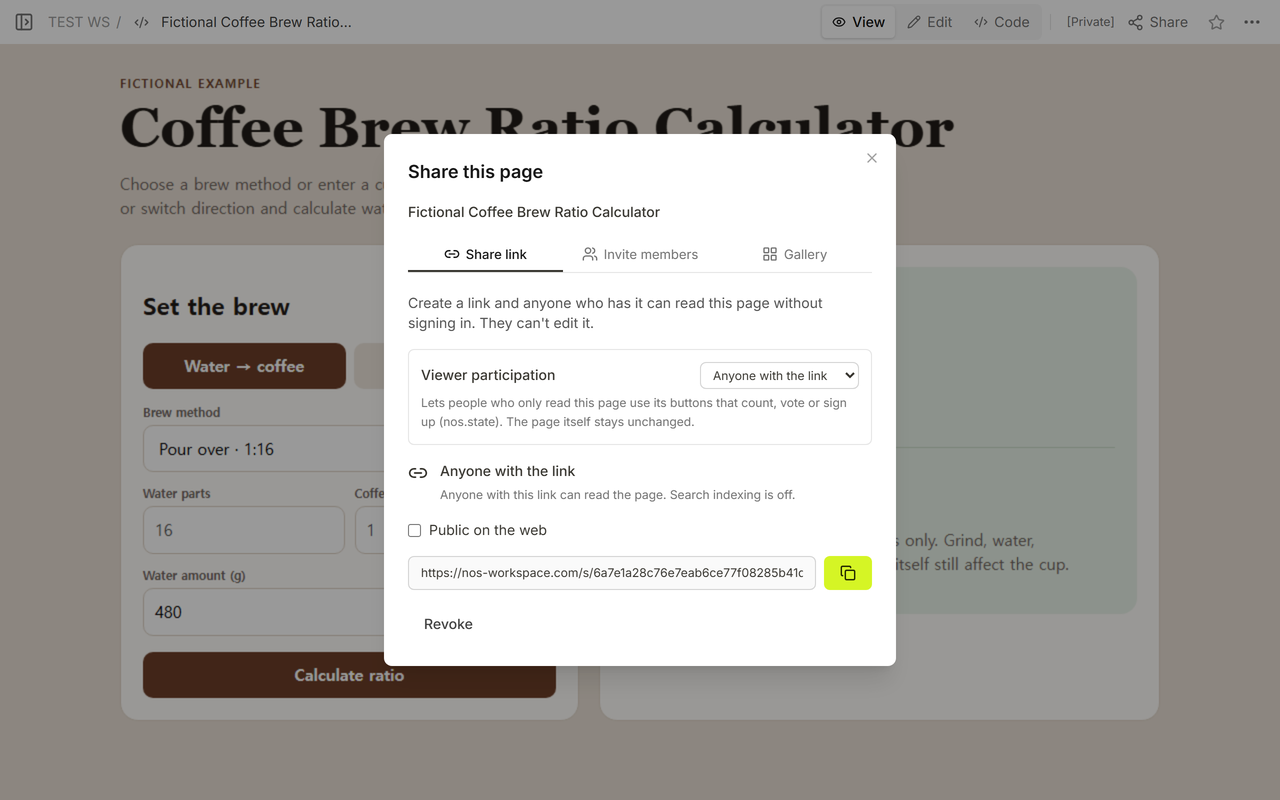
Review the selected direction, method name, ratio, amount, answer, and equation together. Then open Share and use the reader address rather than the editing address.
The public reader was opened separately. It showed 480 g water, 30 g coffee, 1:16, and the matching equation. After the zero-amount error test, the same page was restored to this normal state.
Download the complete fictional coffee ratio calculator. Treat its presets as editable starting points, not a guarantee of taste, extraction, strength, or a specific brewer's instructions.
When not to do this
Do not use this simple ratio result as a substitute for a roaster's recipe, equipment instructions, or an espresso yield definition. Do not infer flavor from mass alone. If a recipe uses concentrate plus later dilution, record the concentrate ratio and final dilution as separate steps.
Where NOS fits
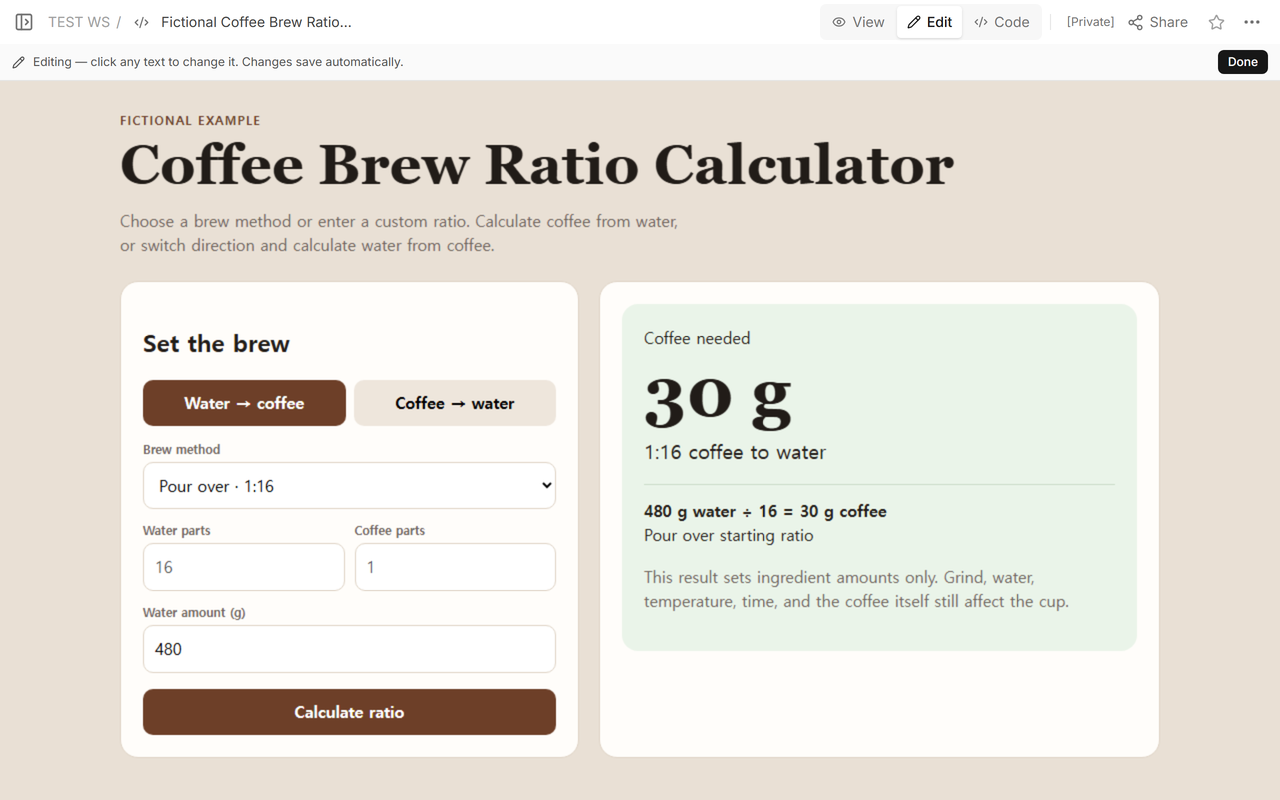
NOS stored the self-contained calculator, displayed its normal result in View, opened the same page in Edit, and created the reader link used for both normal and error observations. To practice keeping ratio order consistent before reversing a calculation, see the ratio games for the classroom. For a recipe-first page with serving controls, see recipe website without stories.