In short
Write one guide for one identified pet and appointment.
Separate what the owner should share before the visit from what the groomer records afterward.
List the actual service, the agreed trim, what to check at home, and who handles service questions versus health concerns.
Keep medical interpretation with the pet's veterinary team.
NOS Team built a complete fictional grooming handoff for Juniper, a made-up dog. The page gives the owner a short preparation list, records the fictional service, and sends different questions to the groomer or the veterinary team. It contains no real pet, customer, groomer, clinic, email address, or appointment record.
What should pet grooming instructions include?
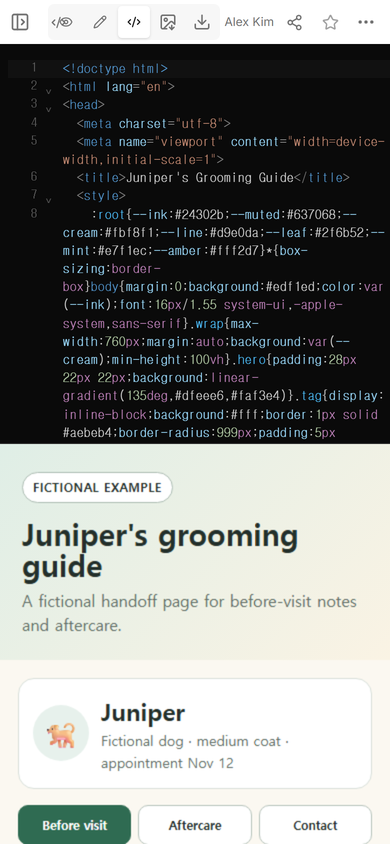
Start with identity and scope. Name the pet, date the appointment, and state that the page is a fictional example if you are using it as a template. Then divide the handoff into three parts: information to confirm before the visit, the service record after pickup, and contact routes for follow-up.
The Juniper example asks the owner to share current skin, coat, mobility, and handling concerns. It also tells the owner to bring directions already supplied by the treating veterinary team and to agree on what should be trimmed, left alone, or discussed before a change. These are prompts for a conversation, not claims that a condition has been assessed.
How do you write grooming aftercare instructions?
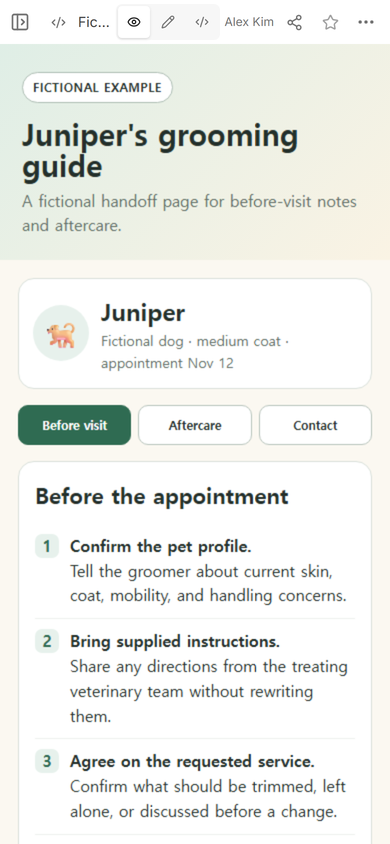
Record what happened before telling the owner what to do next. In this example, the service card names a brush-out, bath with the fictional shop's unscented shampoo, paw-pad trim, and nail trim. It preserves the owner's instruction to keep the ear fringe long. A separate groomer note says that a small loose tangle was removed behind the left harness strap and makes clear that no diagnosis was recorded.
That separation matters. A service record can say what product or technique was used and what the groomer noticed. It should not turn an observation into a diagnosis. The home section then points the owner back to the instructions actually given at pickup, the receipt, and the correct contact route.
What warning signs should an owner watch after grooming?
Use a veterinary source for health warning signs instead of inventing a universal list for the shop. The ASPCA advises contacting a veterinarian for skin or hair abnormalities and lists signs such as redness, bumps, rashes, scabs, open sores, bald spots, and excessive scratching or licking. Link to that guidance, then tell the owner to use their own veterinarian's instructions for the individual pet.
Keep the boundary visible: the groomer can answer a question about the agreed service or trim. A veterinarian should handle medical interpretation, medication questions, and new health concerns.
How should owners contact the groomer after an appointment?
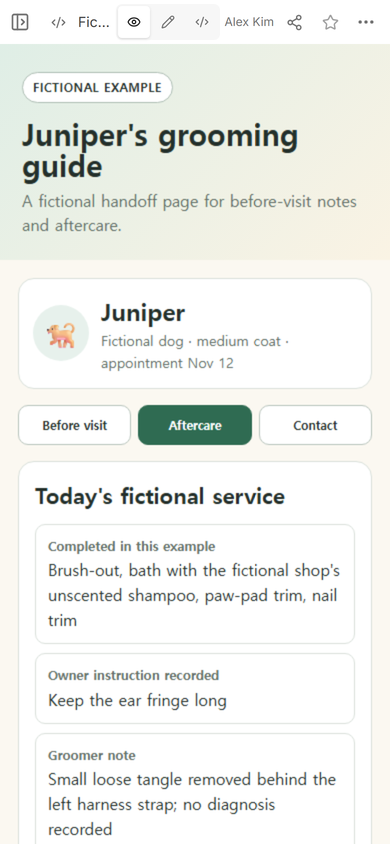
Give each question a destination. The example directs service and trim questions to the contact shown on the real receipt. It directs health and medication questions to the pet's veterinary contact route. It also asks the owner to include the pet name, appointment date, service item, and a clear description of the concern, so the recipient can identify the relevant visit without a long exchange.
How we turned the guide into one owner-facing link
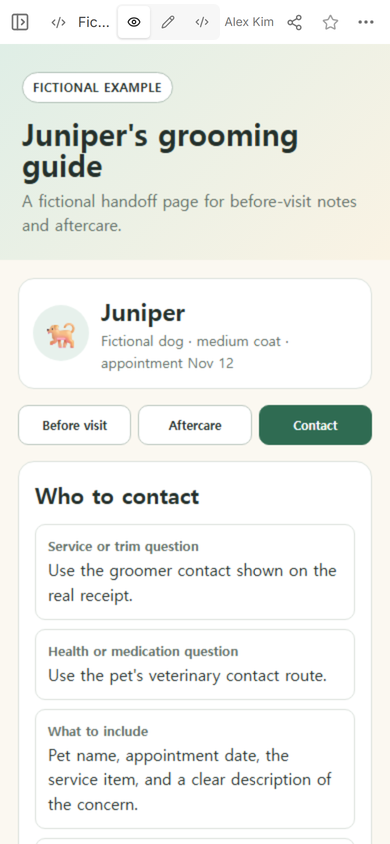
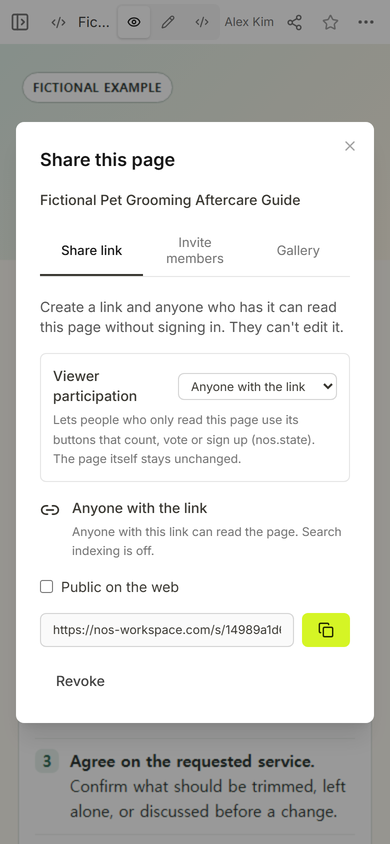
We checked the complete page in Code and opened each guide section in View. Then we used Share to create the viewer link. On this example, anyone with that link could read without signing in; viewers could not edit, and public web indexing was off.
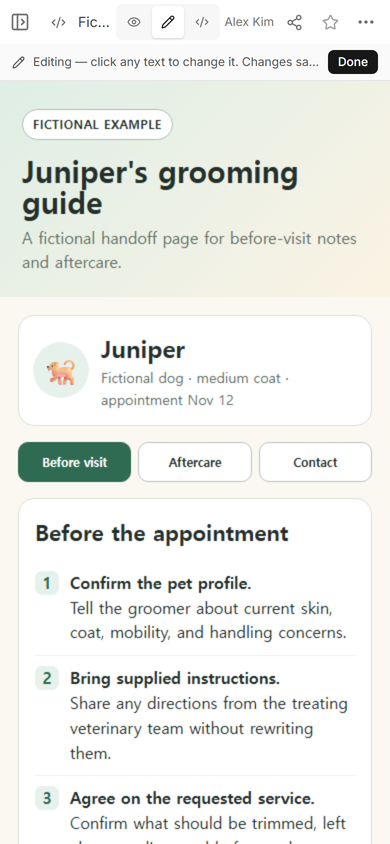
The first visual edit exposed a useful failure: only part of the subtitle was replaced, so the old and new wording appeared together. We did not treat the save as proof. We restored the complete page, reopened View, and then checked the original public address. The final page shows one clean subtitle and all three guide sections.
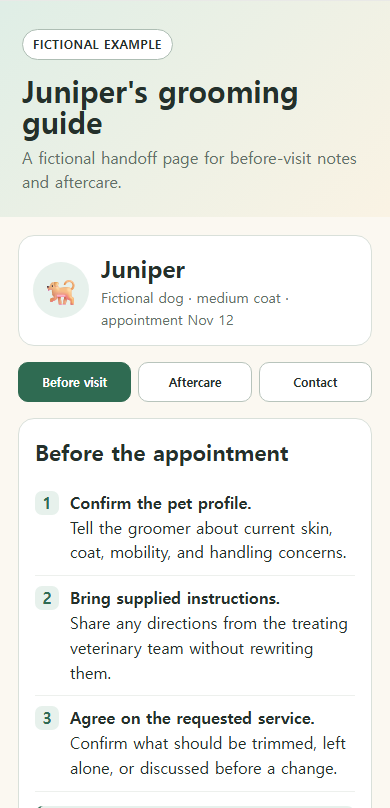
Result: one link now holds the pet identity, before-visit questions, fictional service summary, aftercare boundary, and two contact routes. The page is a communication aid; it does not book an appointment, collect owner replies, save visitor checkmarks, or provide veterinary care.
Pet grooming instruction template
Use the complete worked example as a starting point, then replace every fictional detail with confirmed information for the actual pet and visit. Remove any field your shop does not use, and do not add a medical claim to make the page look complete.
Download the complete fictional guide
For a different care handoff, see pet sitter instructions. That guide sends routines and private contact details from an owner to a sitter. If staff need a repeatable internal completion record instead, use the checklist template to define what counts as done.
When not to do this
- Do not put a diagnosis, medication change, or invented health instruction on the page.
- Do not publish an owner's phone number, home address, payment detail, or other private record in a public example.
- Do not use a static page as an appointment system, intake form, emergency service, or proof that a visitor completed a step.
- Do not reuse the same aftercare wording for every pet when the actual service or veterinary direction is different.
Using NOS for a grooming handoff
NOS can turn the complete page into a viewer link, keep Code, View, Edit, and Share in the same document, and let the page owner revise the existing page. The reader-facing guide should still be checked at the viewer address after every meaningful change. See the current pricing page for plan details; no price is needed to explain this workflow.
Source for pet health guidance
The health-sign paragraph above is based on the ASPCA's Dog Grooming Tips. The worked page itself stays conservative: it tells the owner to contact the pet's veterinary team rather than interpreting a symptom.