In short
Choose one reader and one reason for the list before choosing a layout.
Group books by the decision they support, not by decorative labels.
Give every book a short recommendation and a clear status.
Share one page, then correct that same page when the list changes.
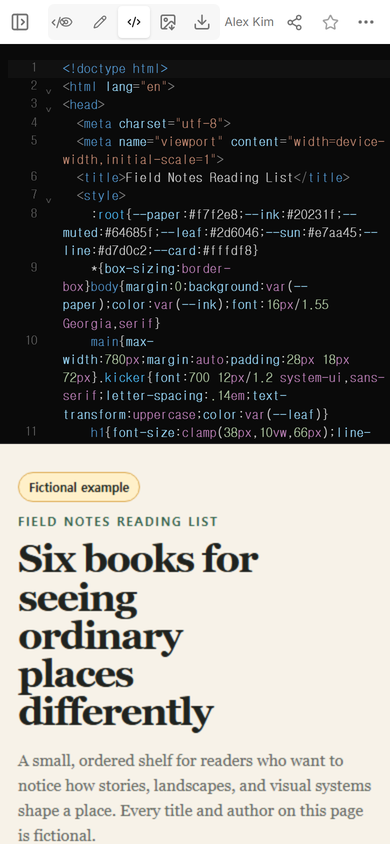
The NOS Team made a fictional reading list for a small reading circle. The finished page holds six invented books in three groups: narrative craft, ecology, and visual thinking. Each book has a fictional author, a reason for inclusion, and one of three statuses: Next, Reading now, or Finished.
This is not a reading log. A log records dated sessions and what happened during them. A reading list website is a curated route through a set of books. Its job is to help a visitor decide where to begin and what could follow.
How do I make a reading list website?
Start with the decision the page should make easier. “Books I like” is too loose. “Six books for seeing ordinary places differently” gives the list a reader, a theme, and a useful boundary.
- Name the reader outcome. Write one sentence that says what the reader should understand or choose after opening the page.
- Choose a short set. Six books were enough for this example. A shorter list makes the recommendation for each title more important.
- Write the reason before styling the card. One sentence should explain why the title belongs here, not repeat the title or praise it vaguely.
- Add a status that means something. Next, Reading now, and Finished describe the curator's progress without pretending to record every reading session.
- Put the groups in a deliberate order. The example moves from story craft to ecology and then to visual practice. The sequence is part of the recommendation.
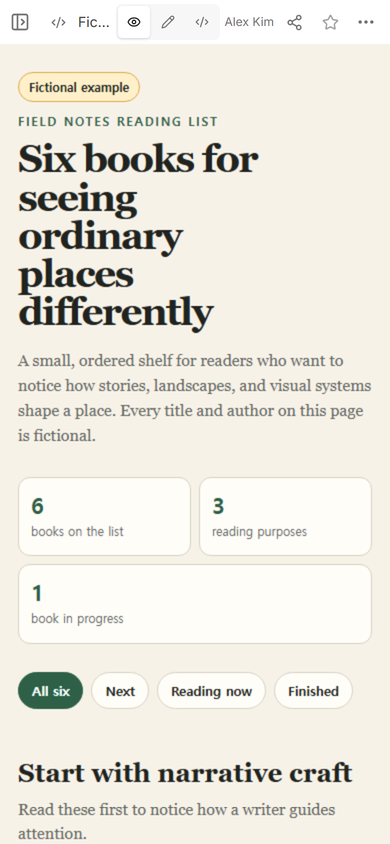
A phone-screen check changes the writing. The title and introduction use most of the opening screen. Keeping the introduction to one sentence lets the first category appear without burying it under a long explanation.
What should a reading list website include?
A reader needs enough context to choose, but not a full book review. These fields carried the example:
- Title and author: the identity of the book.
- Purpose: the group that explains what the book contributes.
- Why it is here: a concrete recommendation in one or two sentences.
- Status: where the curator is in the list.
- Starting point: one marked first choice for a visitor who does not want to compare all six.
The fictional label matters too. Every title and author in this example was invented for the page. A real public list should use the exact book title and author shown by the source you have, and it should not invent a quotation, review score, or reading result.
How should I organize a reading list?
Use categories that answer “Why would I read this now?” Genre can work, but it is not the only useful structure. A list can be ordered by difficulty, purpose, point of view, project stage, or the question each book helps explore.
Do not make the reader decode clever group names. “Start with narrative craft” is clearer than a mood label because it tells the visitor what the first pair is for. The short line below the heading narrows the promise again.
Within a group, put the best entry point first. The example labels The Quiet Corner as the starting place because its recommendation describes the clearest introduction to the list. That is more useful than sorting six fictional titles alphabetically.
Download the complete fictional reading list example
Can I share a reading list as a link?
Yes. The example was shared from its NOS page. The Share panel states that anyone with the link can read the page without signing in and cannot edit it. Search indexing was off for this example.
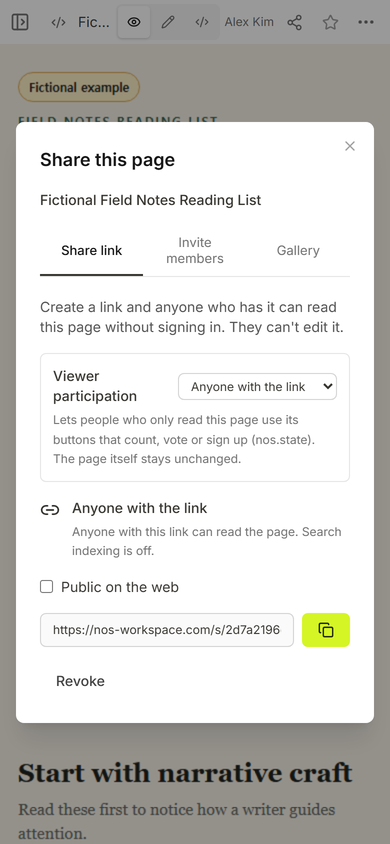
Open the share address yourself before sending it. Check the fictional or sample label, the first recommendation, the category order, and every real outbound book link you add. A polished page is not evidence that a destination link is correct.
How do I update the list without sending a new link?
Edit the existing page instead of creating another one. For this example, we changed one word in the introduction: “A small, ordered shelf” became “A compact, ordered shelf.” The narrow correction kept the title, groups, six book cards, and share address in place.
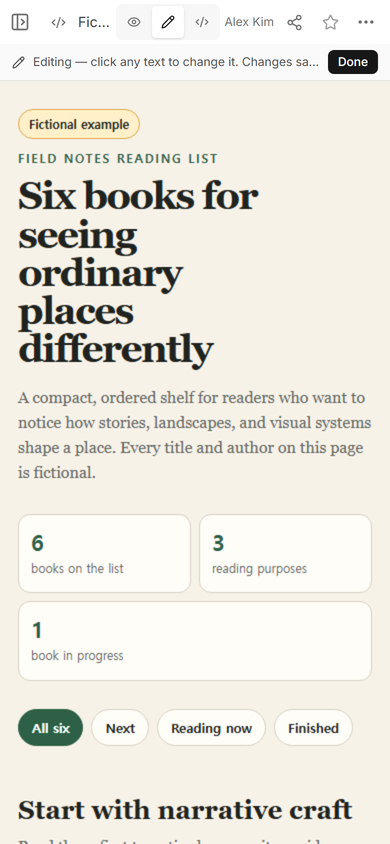
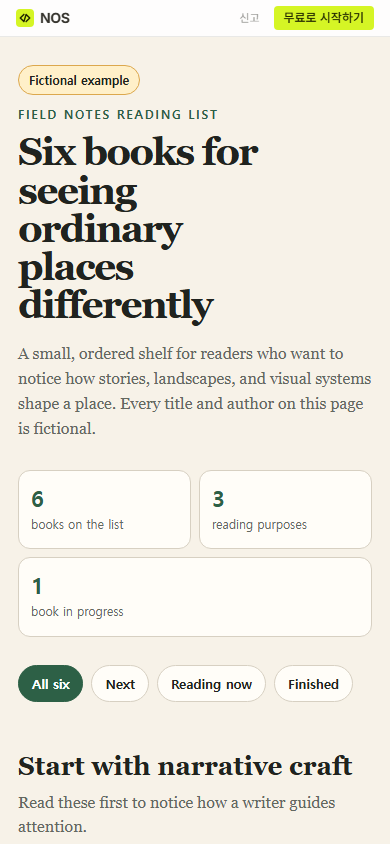
We then opened the original share address again. It showed the revised sentence on the same public page.
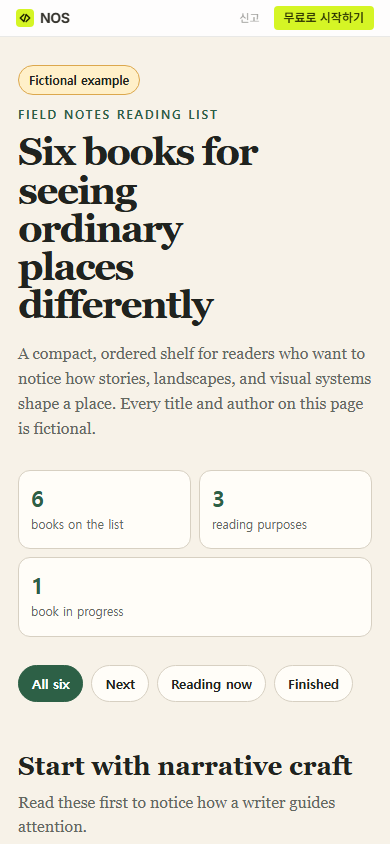
The useful result is one maintained recommendation. A reader who saved the address does not need a replacement page just because the curator clarified a sentence or moved a book to another status.
When not to do this
- Use a reading log when the real task is recording dates, pages, rereads, or session notes.
- Use a library catalog when people need to search a large collection, check availability, or manage loans.
- Use a private system when the notes include student records, customer information, or anything that should not be available to everyone with the link.
- Do not add purchase links, quotations, or availability claims until you have checked each one from its source.
Using NOS for a reading list website
NOS Workspace can hold a complete HTML reading list, show it in View, and create a share link for readers. The current Share panel for this example says link visitors can read without signing in and cannot edit the page. The owner can use Edit for a supported text correction, as we did with the introduction. See the current pricing page for plan details rather than relying on a price copied into an article.