In short
Mark a fixed starting point at the base of the stick. Label each shadow tip with its time and measure from the same starting point in the same unit. Keep a scheduled row visible when you miss it and leave its length blank.
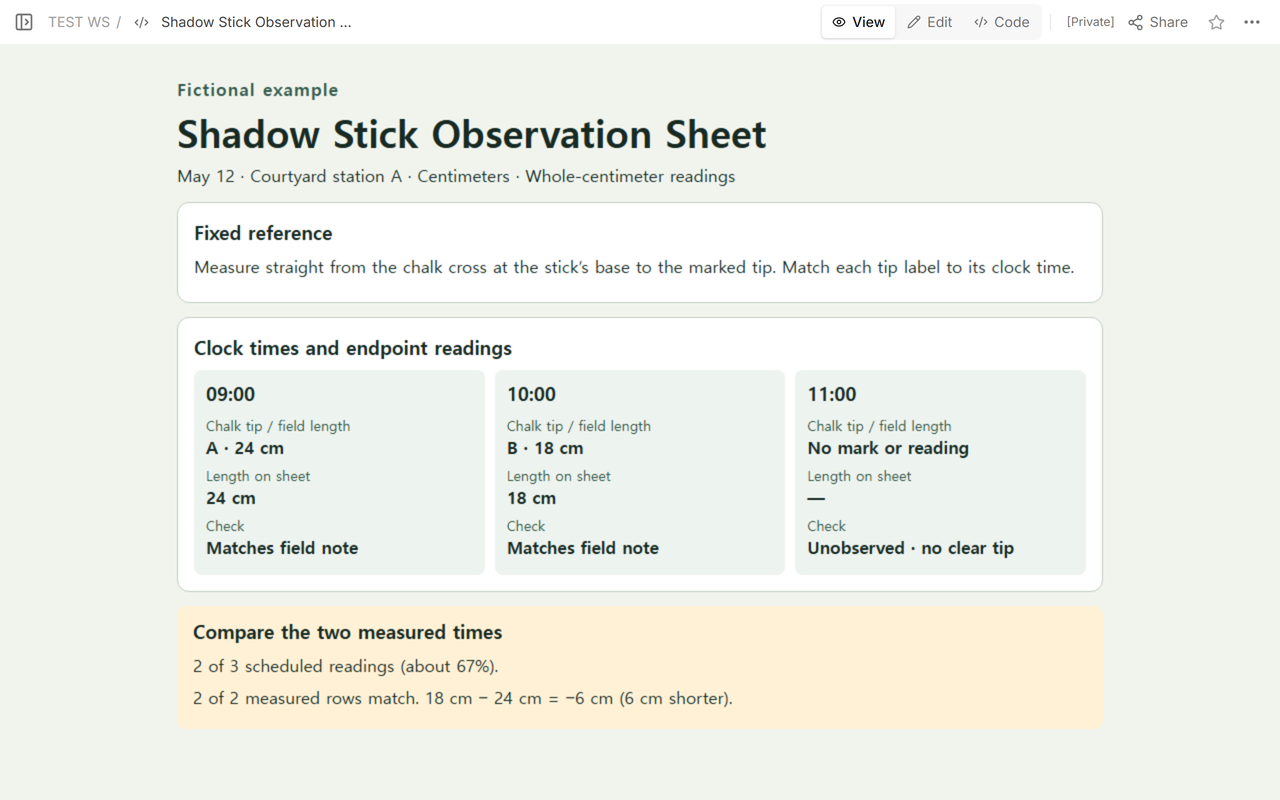
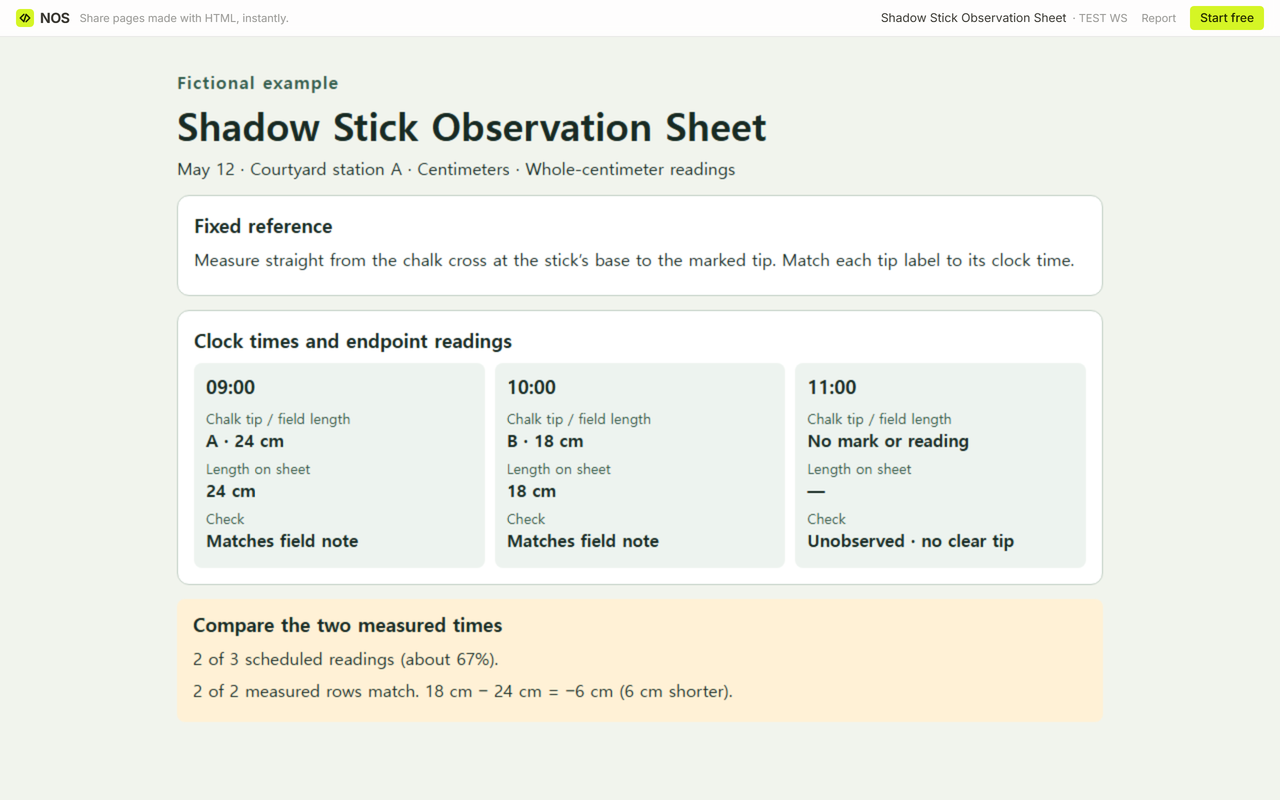
In the fictional example, the 10:00 note says 18 cm. The first sheet said 81 cm. Once corrected, the shadow was 6 cm shorter at 10:00 than at 09:00. We had 2 of 3 readings (about 67%).
Open the completed example
Download the completed example (HTML)
Download the blank observation sheet (HTML)
What goes on a shadow stick observation sheet?
Start with the date, the site, and a description of the starting point somebody else can find. Set the stick upright on a level surface and mark its base. Plan the times before going outside. If you measure late, write down the actual clock time alongside the scheduled one.
Mark each clear tip and give it a short label, such as A or B. Measure straight from the base mark to that tip. Record the unit and precision at the top so everyone reads the numbers the same way. The NASA STEREO sundial activity pairs each tip mark with its exact clock time. Harvard’s shadow-tracking activity also describes recording the measured length alongside its time.
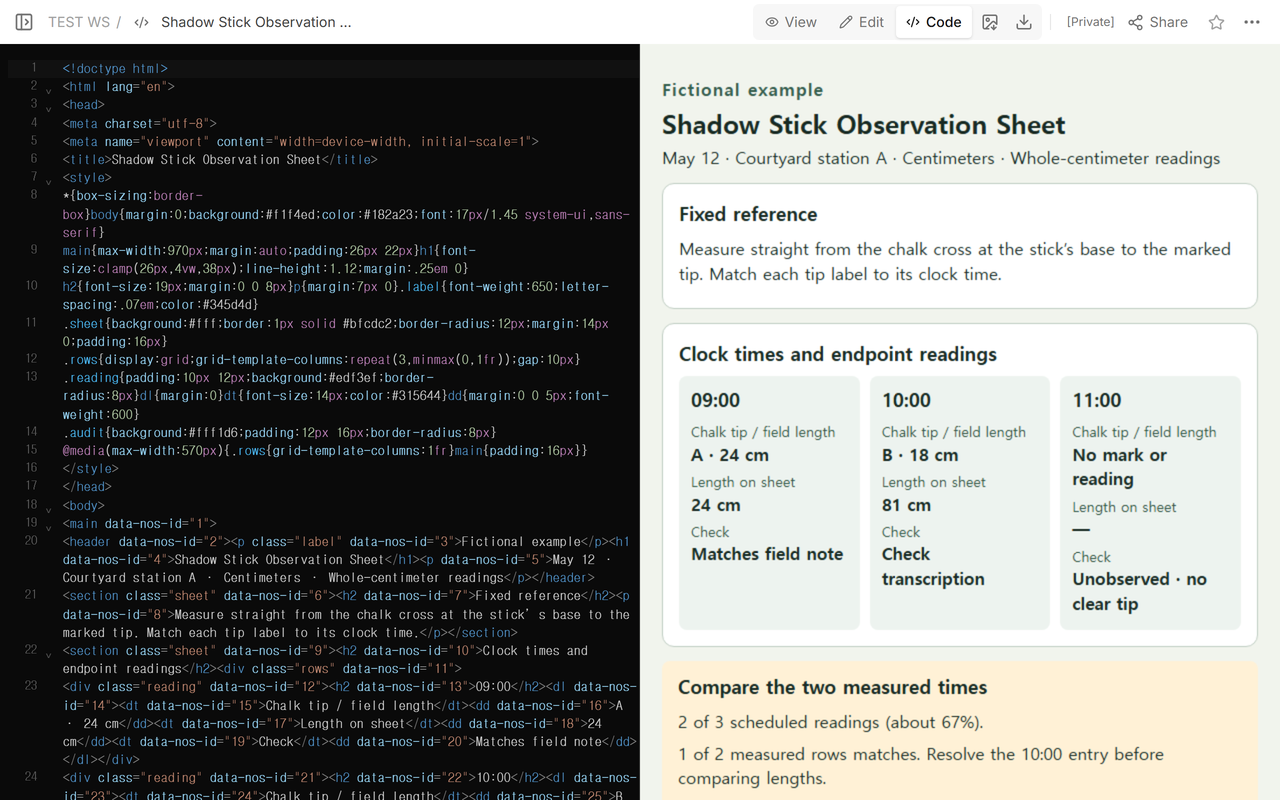
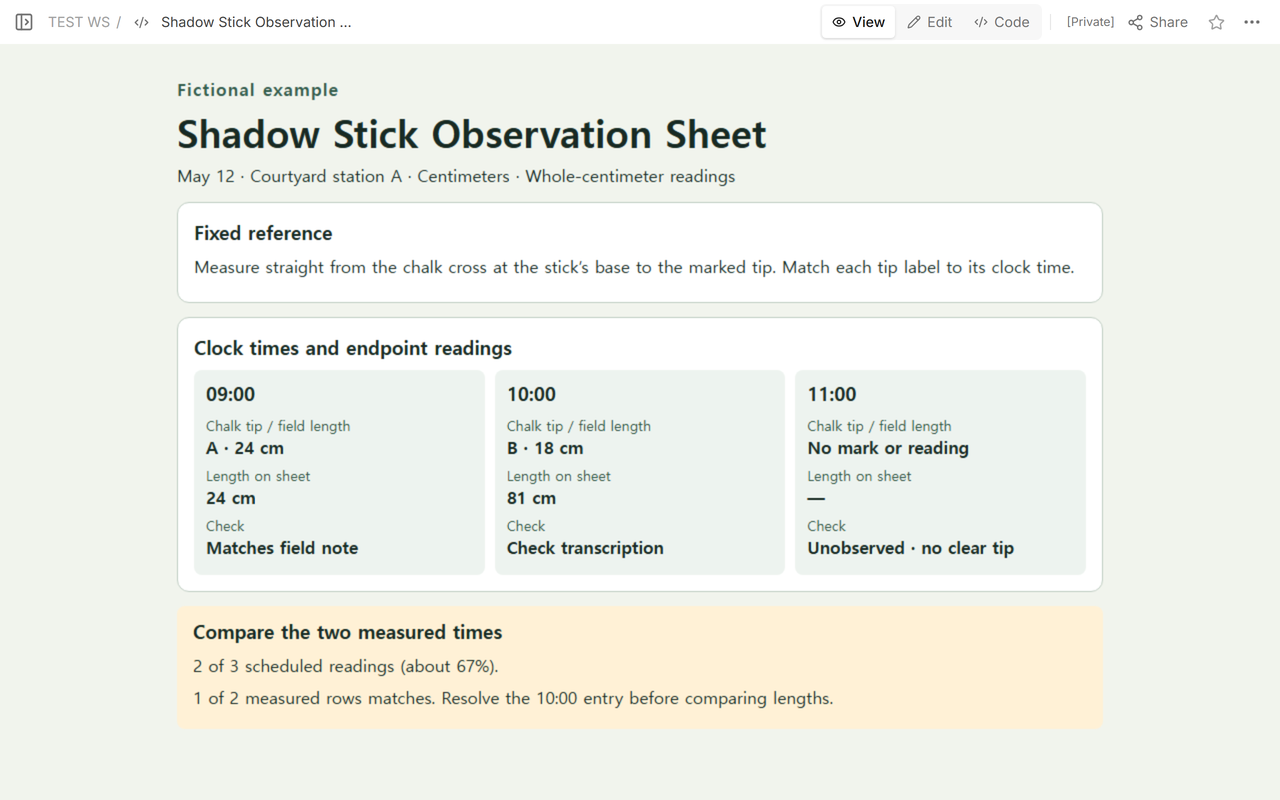
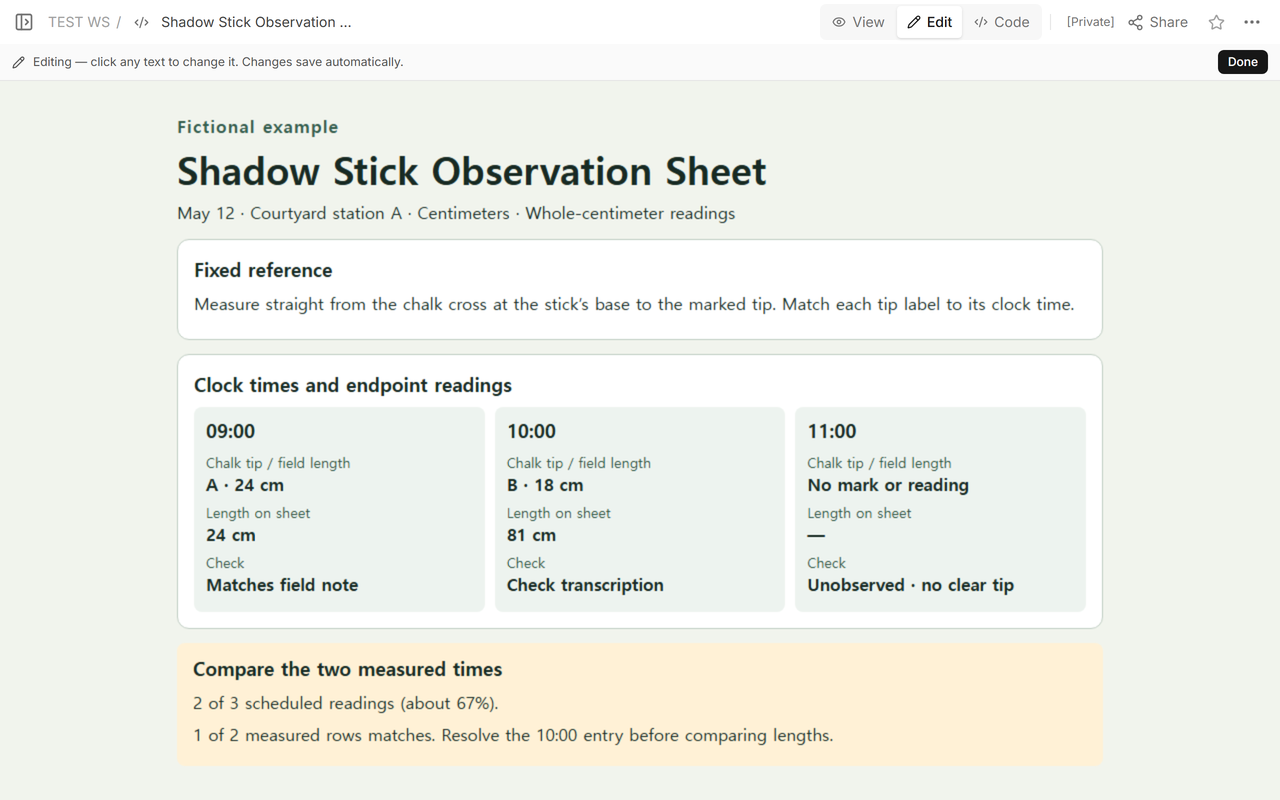
The example uses a chalk cross as the fixed starting point and whole centimeters throughout. At 09:00, tip A and its field note give 24 cm. Tip B at 10:00 gives 18 cm. At 11:00, there is no clear tip to mark. Keep the 11:00 row, label it Unobserved, and leave both its tip and length blank.
How do you tell a copied number from a missed reading?
Match the time and tip label first. Then compare the copied length with the field note. Our draft had 81 cm beside tip B, while the note recorded 18 cm. Flag the row for a transcription check, keep the field note intact, and correct the copied value. If the note is unclear, leave the discrepancy open until you can verify the original mark or measurement.
Use two verified lengths in the same unit. Later minus earlier is 18 cm − 24 cm = −6 cm, so the recorded shadow got 6 cm shorter between those two times. If a partner uses millimeters, 18 cm is 180 mm and 24 cm is 240 mm. The same subtraction gives −60 mm. Write a unit next to the difference.
Count measured readings over scheduled readings. Two divided by three, multiplied by 100, gives about 67% to the nearest whole percent. After the correction, both measured rows matched their notes. That is 2 of 2 matches among measured rows, with 2 of 3 scheduled readings covered. If you scheduled checks and missed all of them, coverage is 0%. Leave coverage blank when you planned no checks. With only one verified length, leave the change blank.
What does a reader see after the correction?
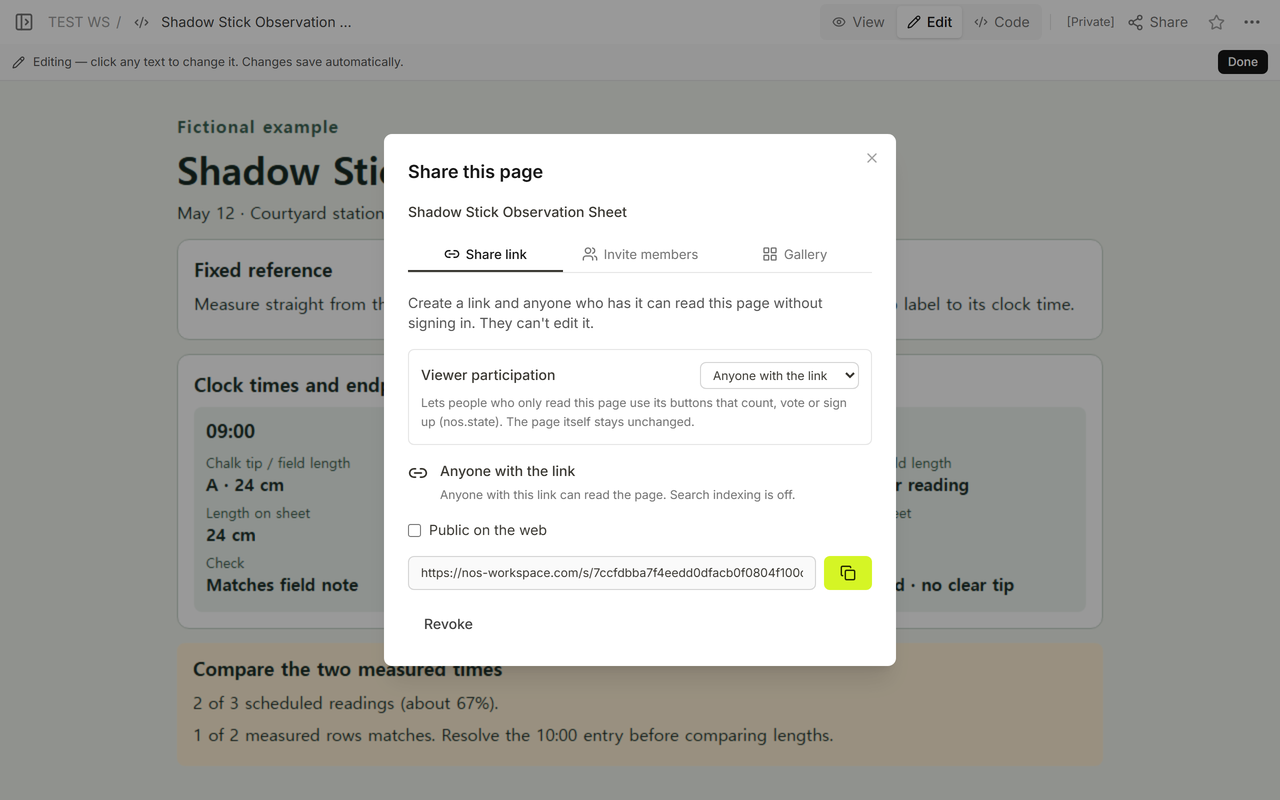
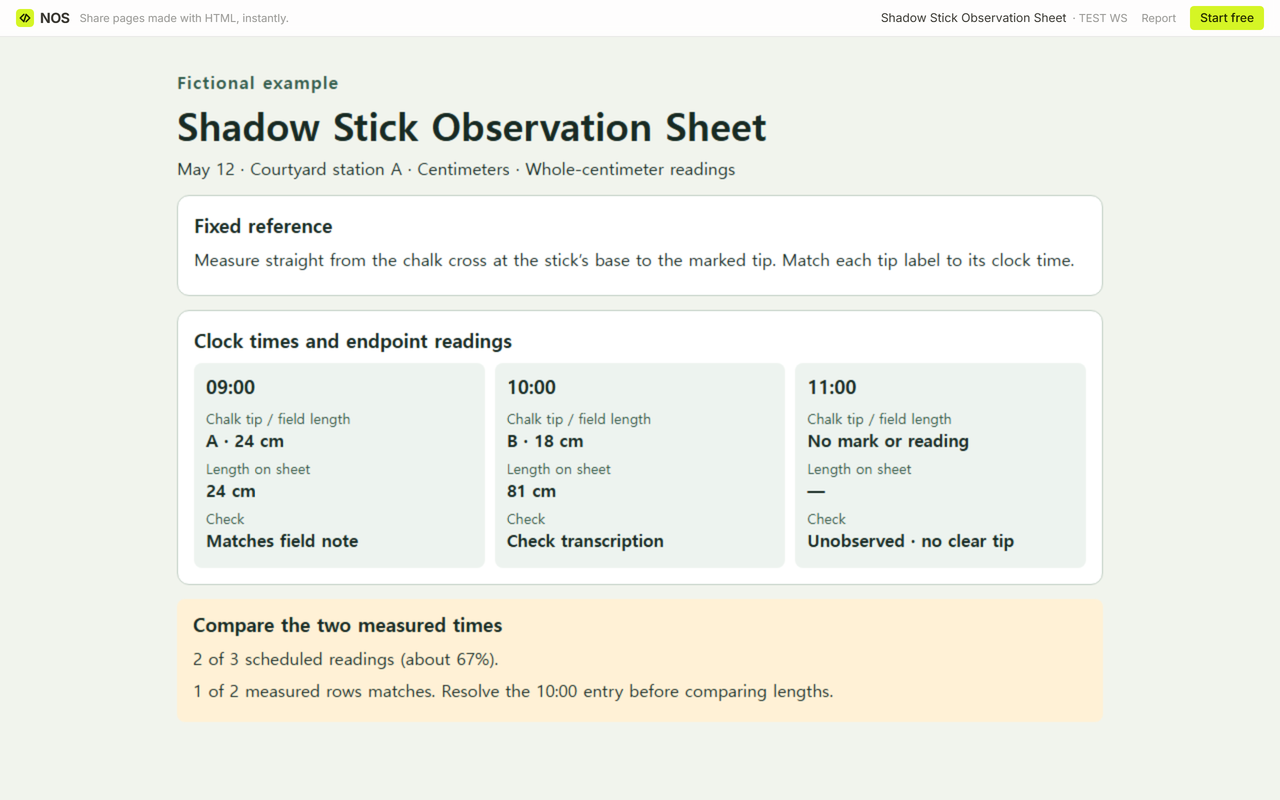
We opened the draft as a reader, corrected the 10:00 entry on the existing NOS page, and reopened the same view link while signed out. The sheet showed 18 cm, and the comparison now used both verified readings. We could open that view link while signed out; opening the editing address brought up the login screen.
When not to do this
If the stick or the base mark moved, record when it moved and start a new set from the new position. Keep the series separate when you compare from a fixed point. If you are teaching how the shadow falls when a flashlight moves, use the shadow prediction lesson plan. To record what students said or did during a lesson, use the classroom observation form.
Use the blank HTML worksheet for field notes or a printed copy. In NOS Workspace, the shared example is a reading copy for a classmate to check against the original field notes. Keep the chalk marks and original notes available in case they spot a discrepancy.