In short
Use one page as the index and the recipe book.
Record the yield and exact quantities before the method, then attach a short source note to each dish.
Add search or a few meal labels only when the collection is large enough to need them.
Share the viewer address, keep the editing address private, and check the public page after every important correction.
A family recipe book online is most useful when it preserves the small decisions that disappear from a list of dish names. “Pear oats” is not enough. The next cook needs to know that the recipe serves four, uses two pears, and softens the fruit before the oats go into the pan.
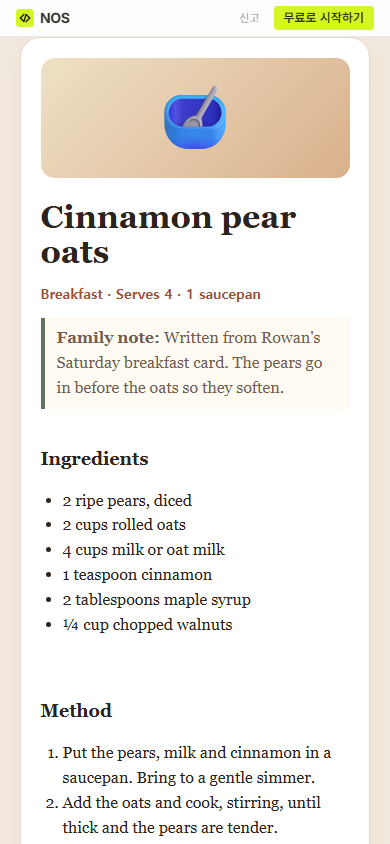
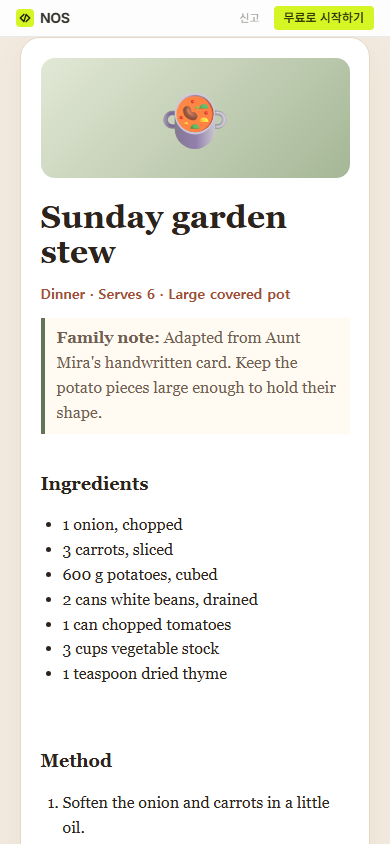
The NOS Team made a fictional collection for the Rowan family. It contains three complete recipes: cinnamon pear oats, Sunday garden stew, and orange cardamom cake. Each entry has a yield, equipment note, ingredients, ordered method, and a note explaining where the fictional recipe came from. No real family records, names, photographs, or contact details were used.
Download the complete fictional recipe book example
What should a family recipe book include?
Start with the information another person needs at the counter, not with a long family history. A practical recipe entry has six parts:
- A distinct name. “Sunday garden stew” is easier to find than “the bean one.”
- A yield. State servings, number of pieces, or pan size.
- Ingredients with quantities. Keep preparation notes beside the ingredient they change, such as “3 carrots, sliced.”
- Steps in cooking order. Put each action where it happens instead of hiding an early preparation step at the end.
- A source note. Name the card, notebook, or relative only when that information is safe and accurate.
- A tested exception. Record a useful detail such as how to loosen thick oats, not a claim that every kitchen will produce the same timing.
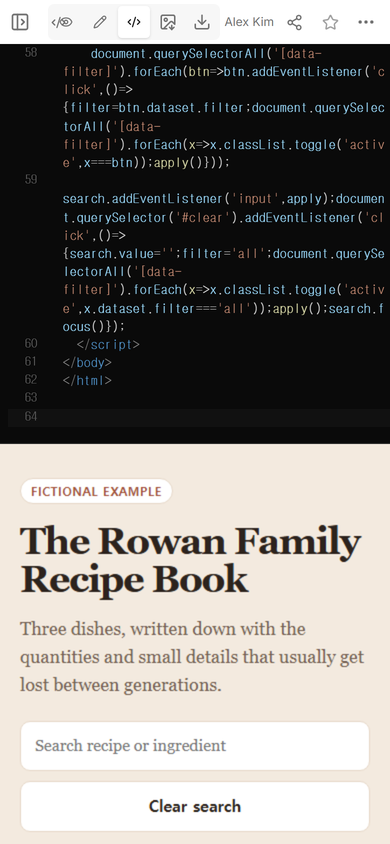
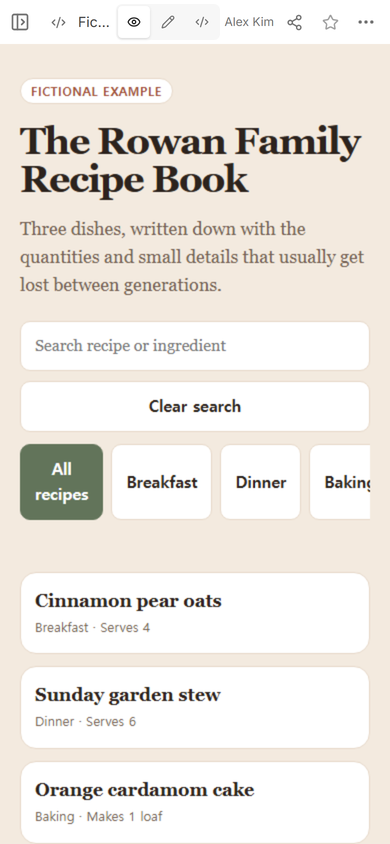
The example puts all three dishes below a short index. A search field accepts a recipe name or ingredient, while Breakfast, Dinner, and Baking buttons narrow the visible entries.
How do you organize several family recipes online?
Use the recipe as the smallest complete unit. Keep its title, yield, ingredients, method, and note together. A visitor should not have to jump between a separate ingredients table and a story page to cook one dish.
Then build a light index above the entries. Three recipes need only three links. A larger collection may justify categories such as breakfast, dinner, baking, preserves, or celebrations. Choose labels that describe how your family looks for a dish. Do not force every recipe into a complicated taxonomy before the collection needs it.
The Rowan page shows its three recipe names and yields on the opening screen. That gives the reader a useful choice before any long ingredient list appears.
If the book will include many real family photographs, plan the image work separately. The guide to a photo gallery link explains captions and phone layouts; a recipe page still needs the cooking details in text rather than only inside an image.
How do you write down a recipe that lives in someone's memory?
Cook from the spoken version before treating it as finished. Write what is added, how much, in what order, and what visible change marks the next step. If the cook says “until it looks right,” ask what right looks like: glossy, thick enough to coat a spoon, browned at the edge, or soft enough to pierce.
Keep uncertainty visible. If an old card says “loaf tin” but gives no size, do not invent one and attribute it to the card. Add a note that the size still needs a test, or clearly label the size used in your own tested version. The fictional orange cake does this: its note says the example records a specific pan size because the imaginary old note did not.
Separate preservation from improvement. First keep a faithful version with its source. If you later reduce sugar or change a temperature, mark that as a variation with a date or editor note. The collection can then retain the family record without pretending every later adjustment was part of the original.
How can relatives find one recipe quickly?
A short index is enough for a small book. Search becomes useful when a reader remembers an ingredient but not the dish name. In the example, entering “beans” leaves the Sunday garden stew as the matching recipe. The meal buttons offer another route for someone who knows only that they want breakfast or baking.
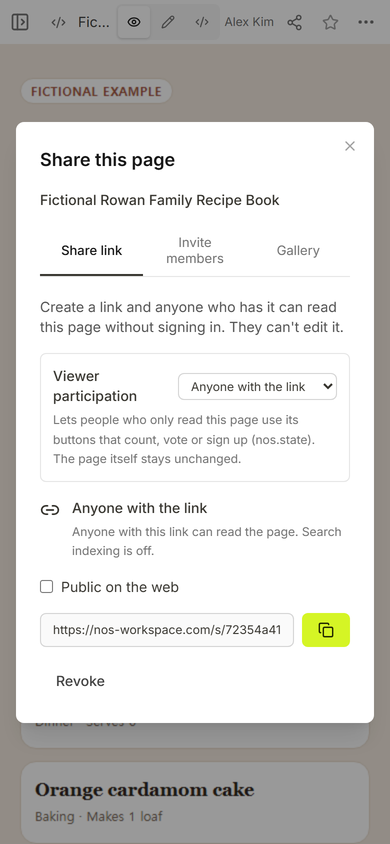
On this example's Share panel, anyone with the link could read without signing in, readers could not edit, and search indexing was off. Before sending your own book, read the settings shown on its Share panel.
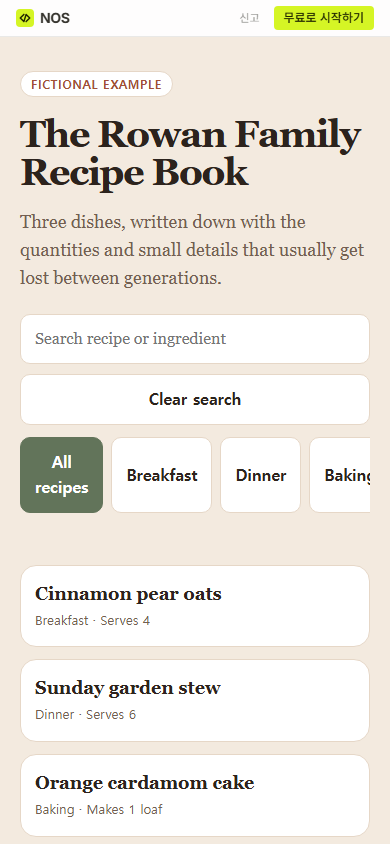
Send the viewer address rather than the workspace address. The HTML to link tool covers the basic move from a finished page to a browser address. If someone is testing a downloaded copy instead, opening an HTML file on a phone explains why a local file and a shared web address behave differently.
Does filtering help a small recipe collection?
Only if it reduces a real search. The Breakfast button in the example leaves the cinnamon pear oats visible. That makes the control easy to verify, but three recipes would still be usable without it. For a first version, clear names and a short index matter more than a large set of filters.
Search should inspect the words a relative is likely to remember. The example connects “beans” with the stew because beans appear in its ingredient data. It does not add invented tags such as “healthy,” “authentic,” or “famous.” Those labels are opinions unless the family has defined them.
What did we correct before keeping the example?
We tried to replace the heading in visual editing mode. The first change inserted the new words into the existing heading instead of replacing it. A later attempt reported that it could not find the current line in the source and left the heading split. Both failed states were kept in the work log and excluded from the article images.
We then opened Code, selected the complete damaged source, and replaced it with the preserved original file. The editor contained one document start after the replacement. View showed the normal title and three-recipe index without the earlier error banner. The same public address then opened the restored collection, and its Breakfast and beans interactions still worked.
Result: one fictional recipe book now holds three complete dishes at one viewer address, with a searchable ingredient path and meal categories that were checked on the public phone view.
When not to do this
- Do not put private family details, home addresses, health information, or photographs on an anyone-with-the-link page unless every person involved has agreed to that exposure.
- Do not use one static page when several relatives must edit at the same time, approve changes, or retain a version history.
- Do not present an untested transcription as a proven recipe. Mark missing quantities and uncertain steps for a future cooking test.
- Do not use the page as an order form, payment system, or private archive. Choose a service designed for those records and permissions.
Using NOS for a family recipe collection
NOS Workspace held the complete fictional HTML example, displayed it in View, provided a separate viewer address through Share, and allowed the damaged source to be replaced in Code. We checked the viewer address again after that repair. For current plan details, use the NOS pricing page; this guide does not copy a price that may later change.