In short
Write down the volumes you expect for one edition. Check the title and volume inside each book, then count each expected volume once. Keep the gap open when the only copy is from another edition.
Download the blank checklist · Download the completed example
What belongs on a multi-volume book set checklist?
Start with a reliable list of the volumes issued for the edition you need. In our fictional handoff, Tidewick Harbor Atlas has a known four-volume 2nd edition. Write one row for each of volumes 1–4 before you open the books. A handoff list gives you the expected range. The books give you the observed range.
For each copy, open the title page and transcribe the set title and the volume designation. Check the edition statement on that page or its reverse and record the copy ID so another person can find the same book. If an edition statement is unreadable, leave it blank and keep the row unchecked. Record the date, who checked it, and the next action for any open row.
What if the right volume number is on the wrong edition?
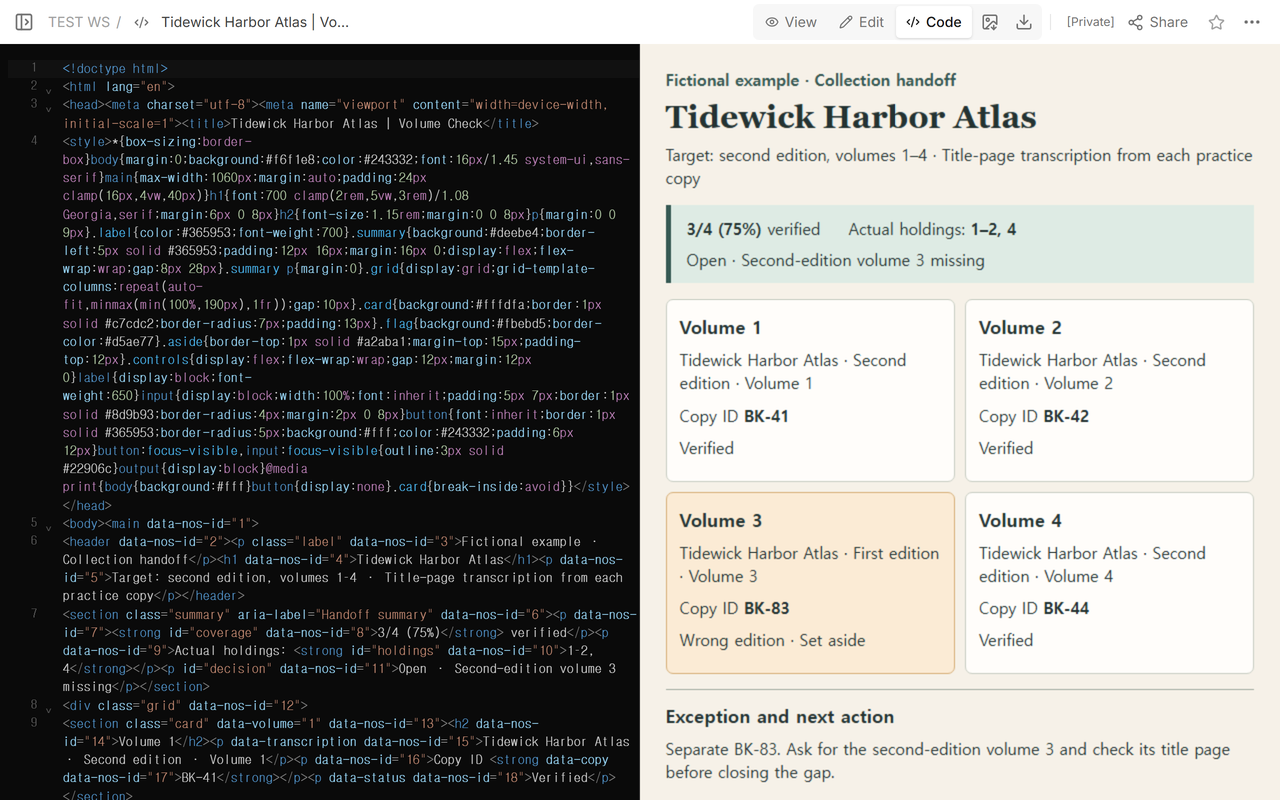
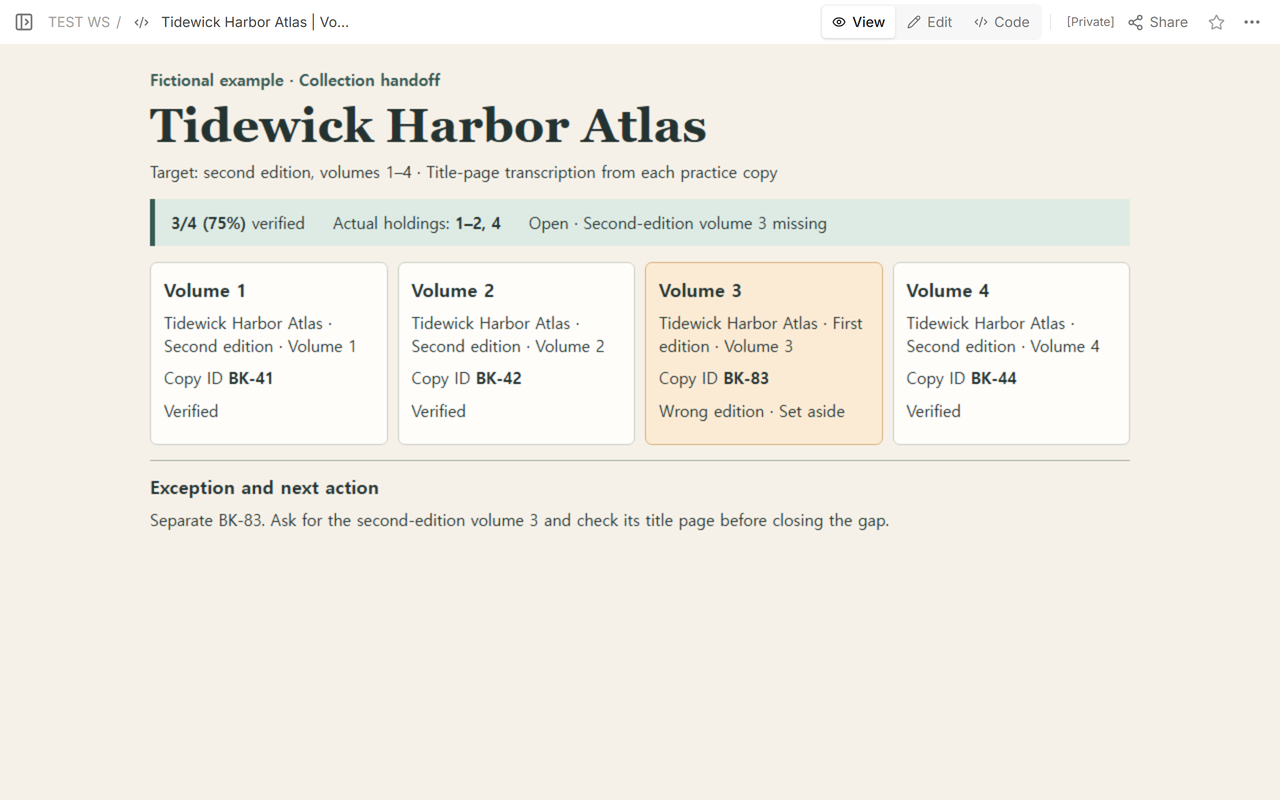
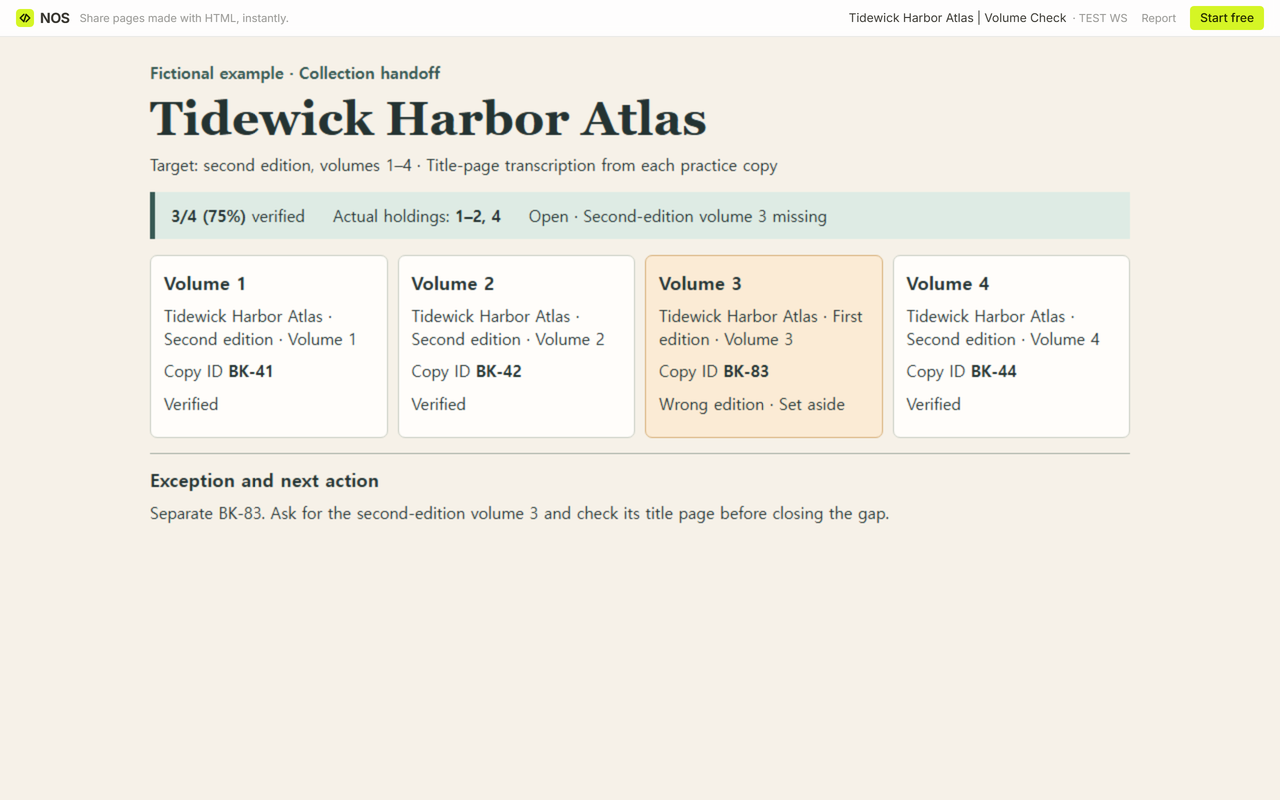
We worked through five fictional title-page transcriptions. BK-41, BK-42, and BK-44 showed the 2nd edition and matched volumes 1, 2, and 4. The copy in the volume 3 slot, BK-83, carried the same set title, but its title page read First edition · Volume 3. We set BK-83 aside and kept the 2nd-edition volume 3 slot open. Four books had arrived, with three matching the handoff list.
Write volumes 1–2, 4 for the verified holdings at intake. The comma preserves the gap in the range. Three matching volumes divided by four expected volumes gives exactly 75%. Record 3/4 (75%). The next person now knows to look specifically for the 2nd-edition volume 3.
When can you close the gap in the set?
Open the replacement before you clear the exception. In the worked example, BK-43 shows Tidewick Harbor Atlas and Volume 3. Its edition statement matches the 2nd edition on the handoff list. Record BK-43 as the verified copy and keep BK-83 in the exception note. The range becomes volumes 1–4. Four matching volumes out of four expected gives exactly 100%. Record 4/4 (100%).
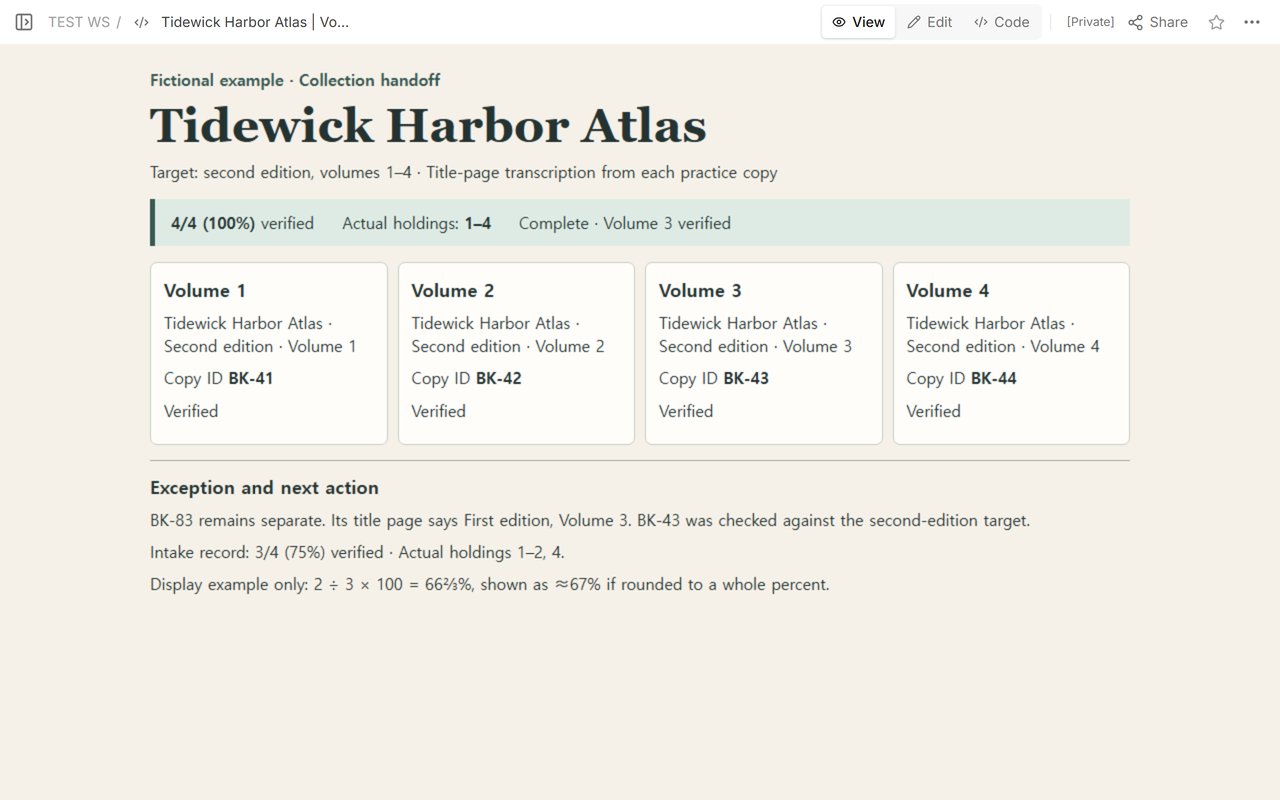
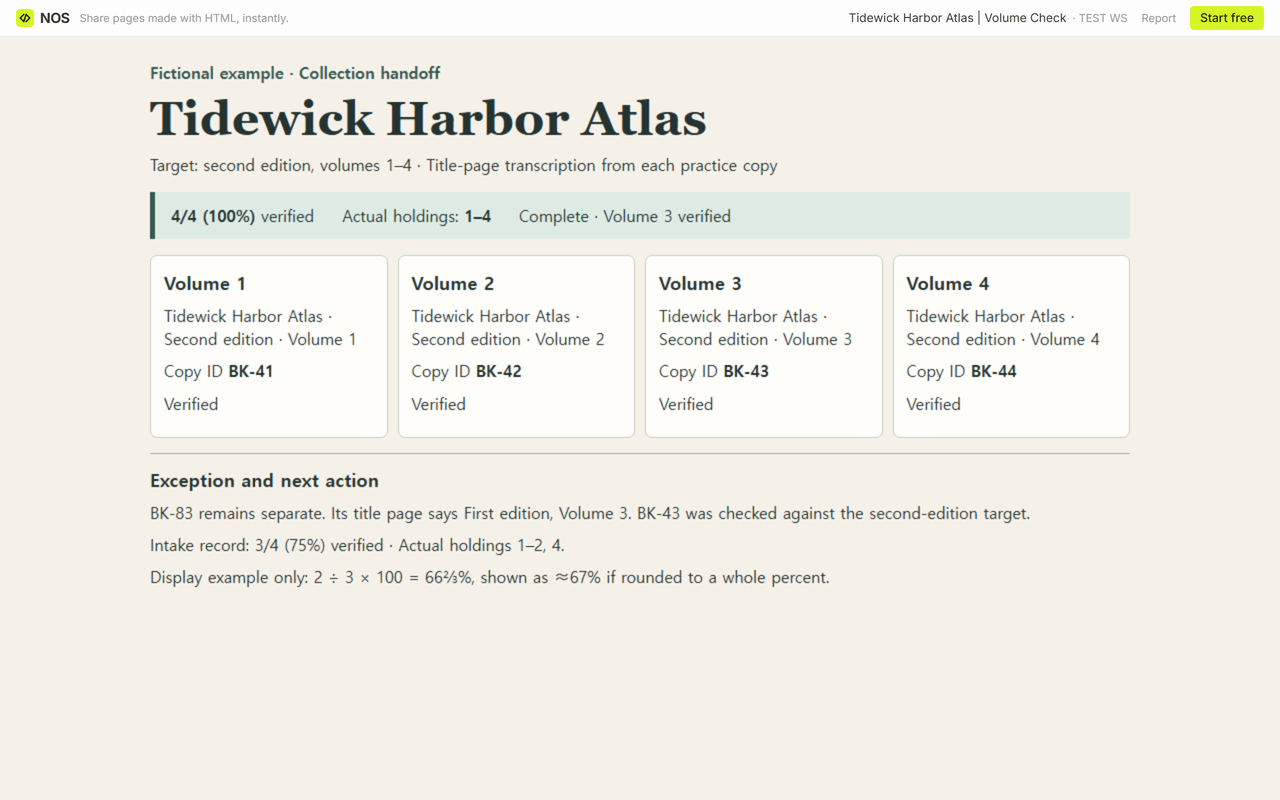
The blank download counts distinct expected volume numbers. It compares the entered title, edition, and volume and requires a copy ID before counting a row. When you have no target edition or expected rows, the summary stays blank. With a target and a list in place, zero matches is a real count. The sheet is for numbered volumes. If two of three match, 2 ÷ 3 × 100 = 66⅔%, shown as ≈67% because the display rounds to a whole percent. Both four-volume results above are exact.
When not to do this
Use the shelf reading sheet for books in the wrong shelf position. Give an absent map or foldout inside a verified volume its own condition note. Follow your circulation process for a book on loan and your library’s rules for catalog changes. This handoff tracks the numbered volumes you actually checked.
The Library of Congress field 866 documentation describes textual holdings in MARC 21. Yale Library’s multipart monograph instructions describe how Yale records an unbroken range for a complete set. The range on this worksheet is a plain-language handoff. If the set is still being published or the expected list is uncertain, confirm the denominator before calling it complete.
How can the next checker see the corrected handoff?
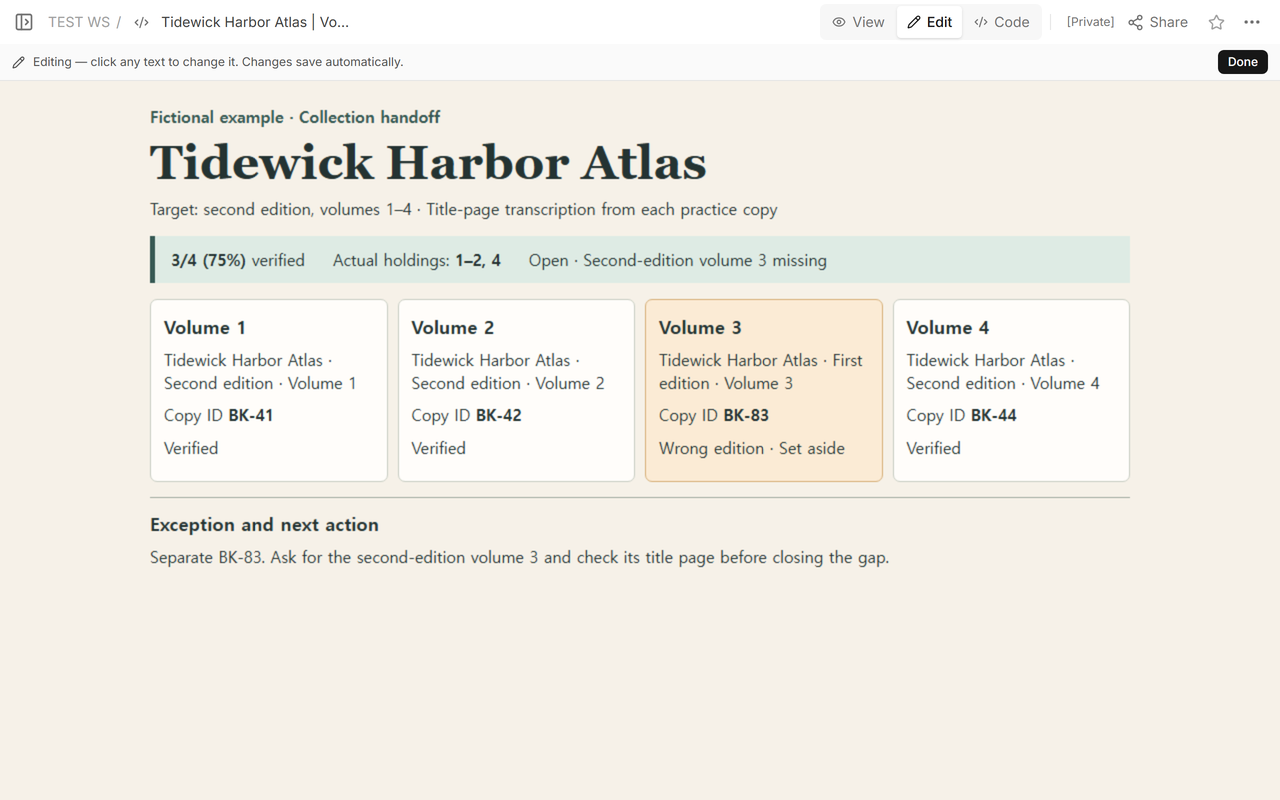
We opened the fictional handoff in NOS signed out before and after updating it. The same Share address displayed the revised copy and range after the update. Send that address when someone needs to read the handoff. Use your authorized records for restricted copy details. To track reading sessions after the handoff, use the reading log template.