In short
Start a new row at each handoff. Record observed arrival and receipt evidence in separate fields.
When the object comes back before its receipt does, keep the arrival date and leave the receipt reference blank. Match the evidence to that row when it comes in.
Which file should I start with?
- Copy the blank loan register (CSV) to record your own practice case.
- Download the pending sample (CSV) to see the empty return reference.
- Download the corrected sample (CSV) to compare the return row after the receipt arrived.
- Download the completed register (HTML) to read the worked example with its correction note.
The blank sheet has labels for dispatch, venue receipt, and return receipt. The remaining cells are empty. Copy a row if you need another leg.
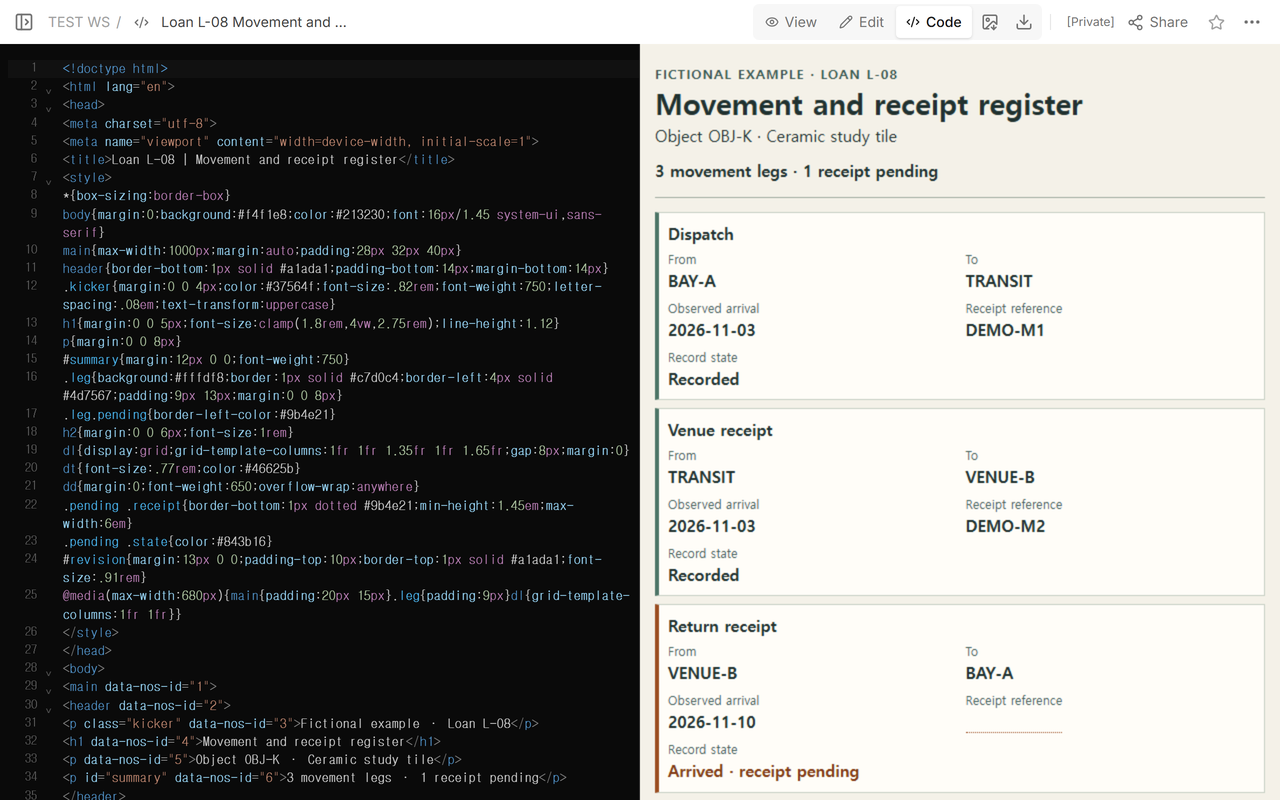
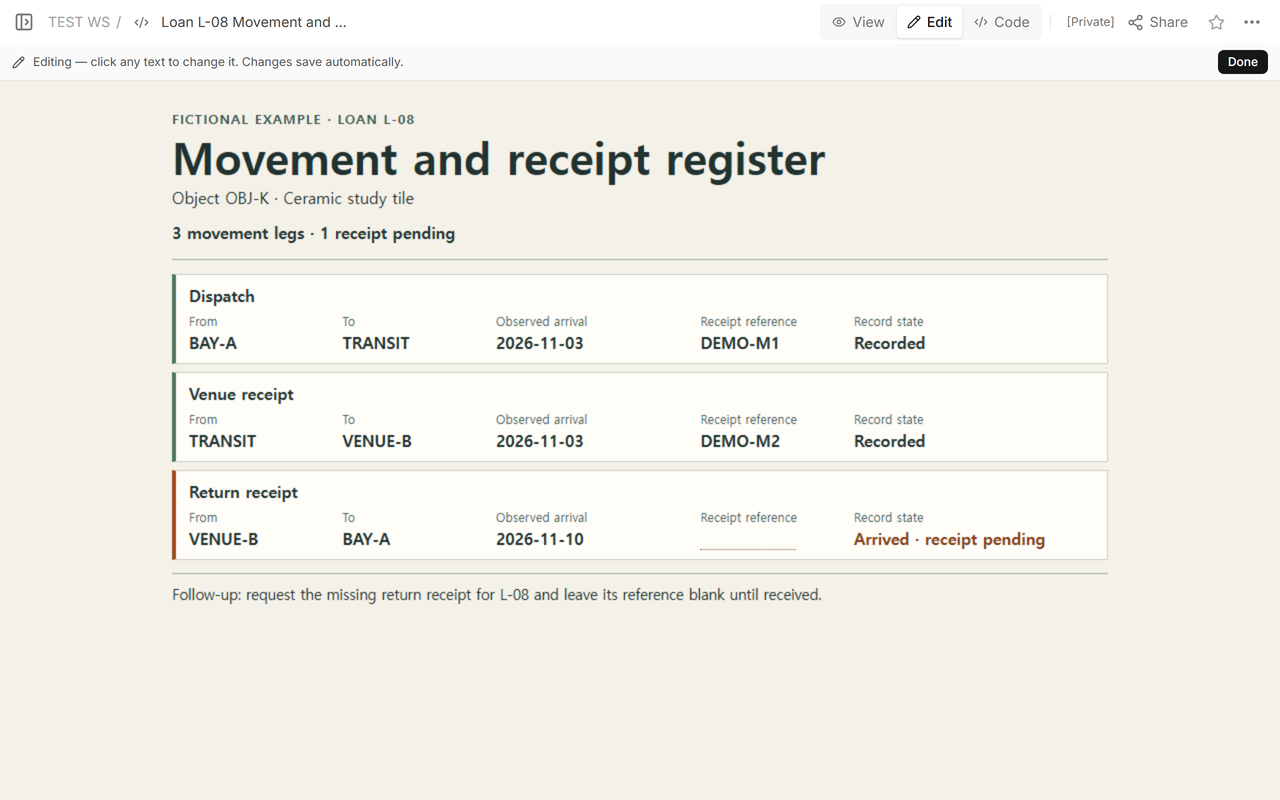
We made a register for a fictional ceramic study tile, OBJ-K, under loan L-08. The tile was observed back at BAY-A on November 10, 2026. At that point, the return receipt reference was still blank. That gap was easy to see because the register kept each movement and its evidence on the same row.
What goes on each movement row?
Repeat the loan and object references on every row so the entries stay together if you sort the sheet. Name the leg and enter where it began and ended. In Observed arrival, use the date the destination received the object in that leg. Leave it empty if nobody has reported an arrival.
Use the receipt reference to point to evidence for that exact handoff. The Museums & Galleries of NSW loan guide describes requesting the receipt after the borrowing organization receives the object. The Collections Trust movement procedure calls for a delivery receipt after arrival and a separate condition report where appropriate. The example below uses that distinction to keep an evidence gap visible after arrival.
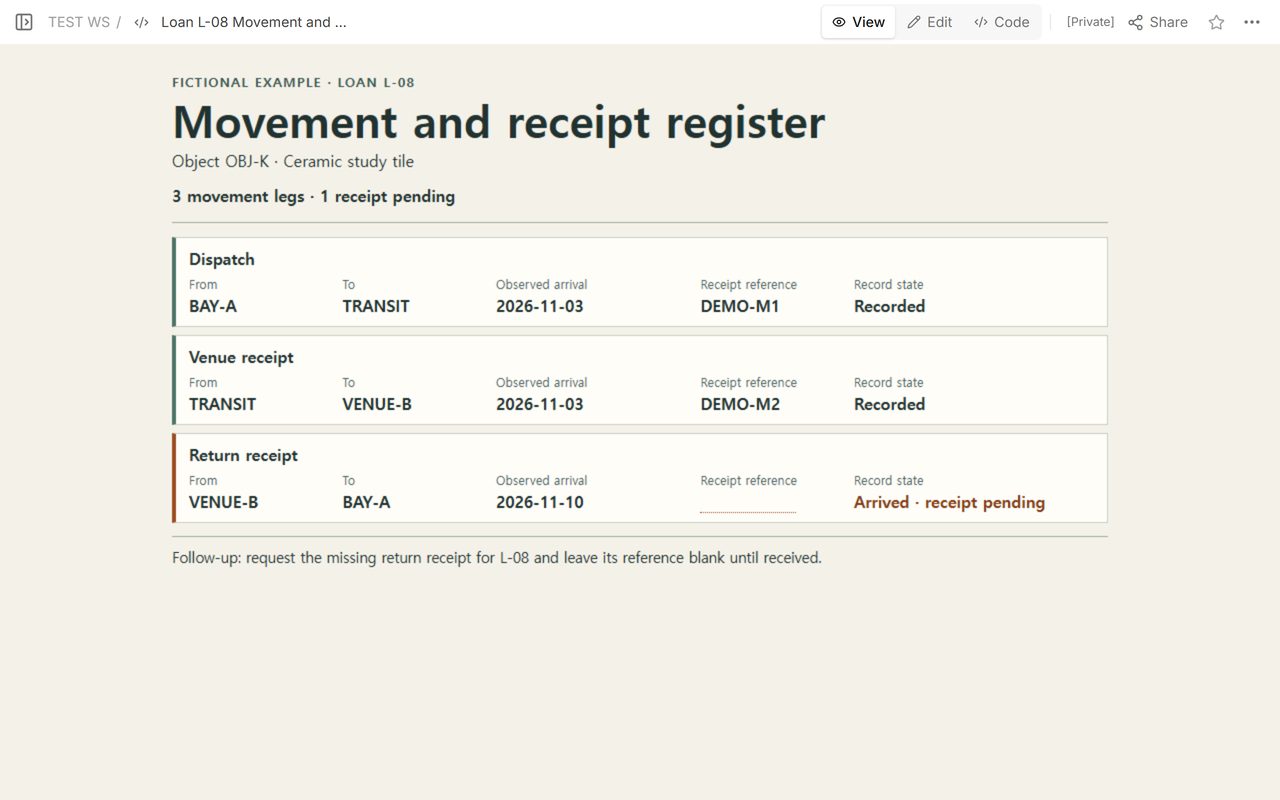
- Dispatch. BAY-A to TRANSIT. Observed on 2026-11-03. DEMO-M1. Recorded.
- Venue receipt. TRANSIT to VENUE-B. Observed on 2026-11-03. DEMO-M2. Recorded.
- Return receipt. VENUE-B to BAY-A. Observed on 2026-11-10. Receipt reference blank. Arrived · receipt pending.
How do you follow up on a missing return receipt?
Start with rows that have an observed arrival and an empty receipt reference. In the first version, 1 of the 3 movement legs still needed evidence. The return row tells you which evidence to ask for. Copy the loan reference and identify the return leg when you request the receipt. The venue's receipt already belongs to a different row.
What changes when the receipt arrives?
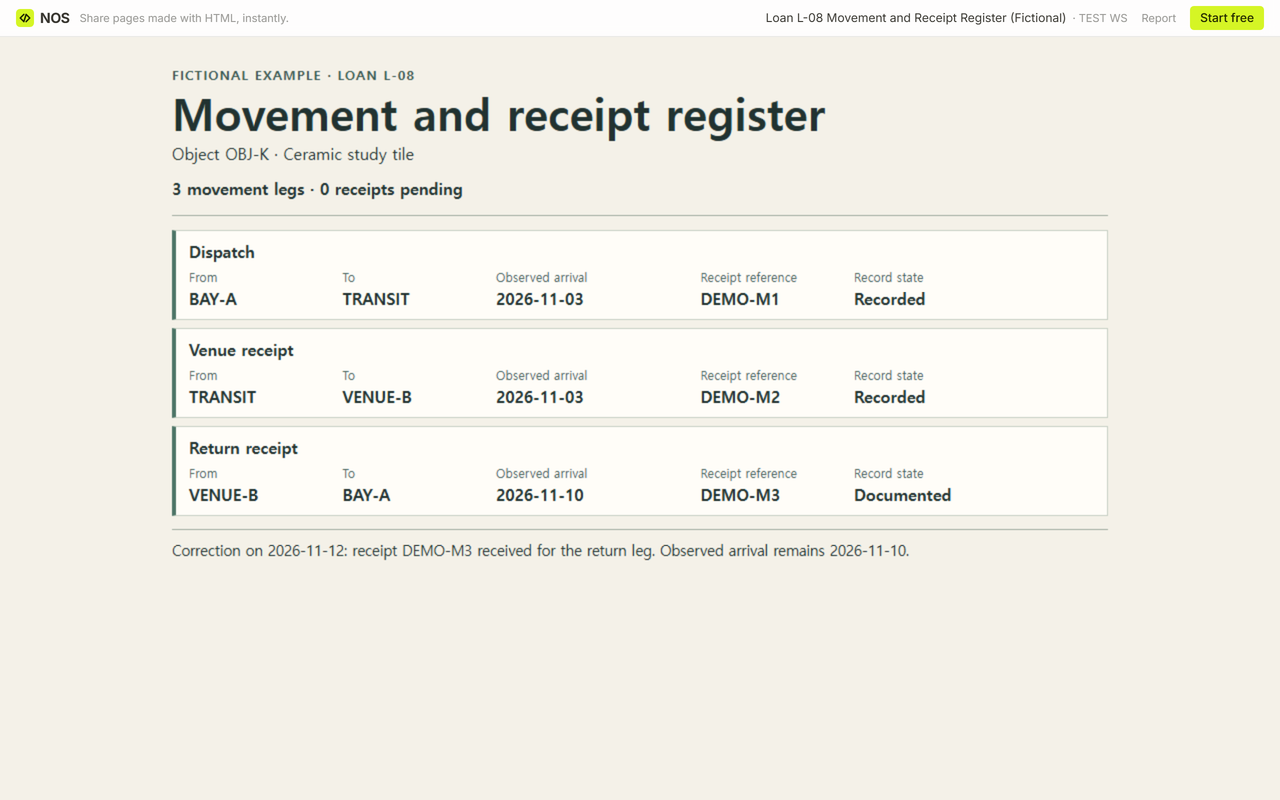
In our example, DEMO-M3 arrived on November 12, 2026, for the return leg. We opened the existing register in Edit and made the correction in Code. We entered DEMO-M3 on the return row, changed its state to Documented, and recorded November 12 in the correction note. In the corrected CSV, that date is in receipt_received_on. The earlier two rows have receipt references, and their evidence receipt dates are left blank because the example supplies no dates for them.
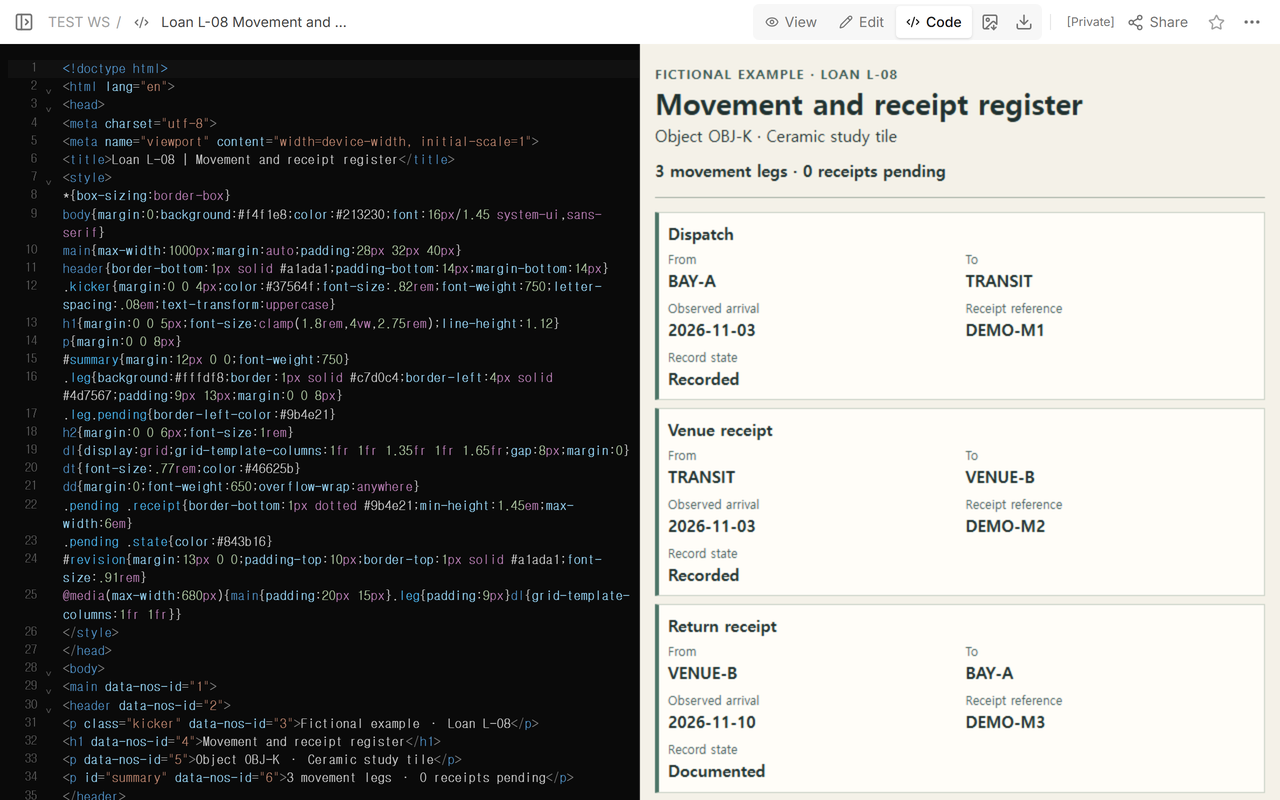
The arrival date stayed 2026-11-10. The evidence gap went from 1 of 3 legs to 0 of 3. The other two rows kept their locations, dates, references, and states.
When not to do this
Use your institution's designated systems for actual loan and collections records. Keep operational locations, names, access details, original receipts, and restricted documents there. Use this example to practice recording what was observed and what evidence came in. Keep transport arrangements, contract decisions, and condition assessments in their own records.
Using NOS to share the worked example
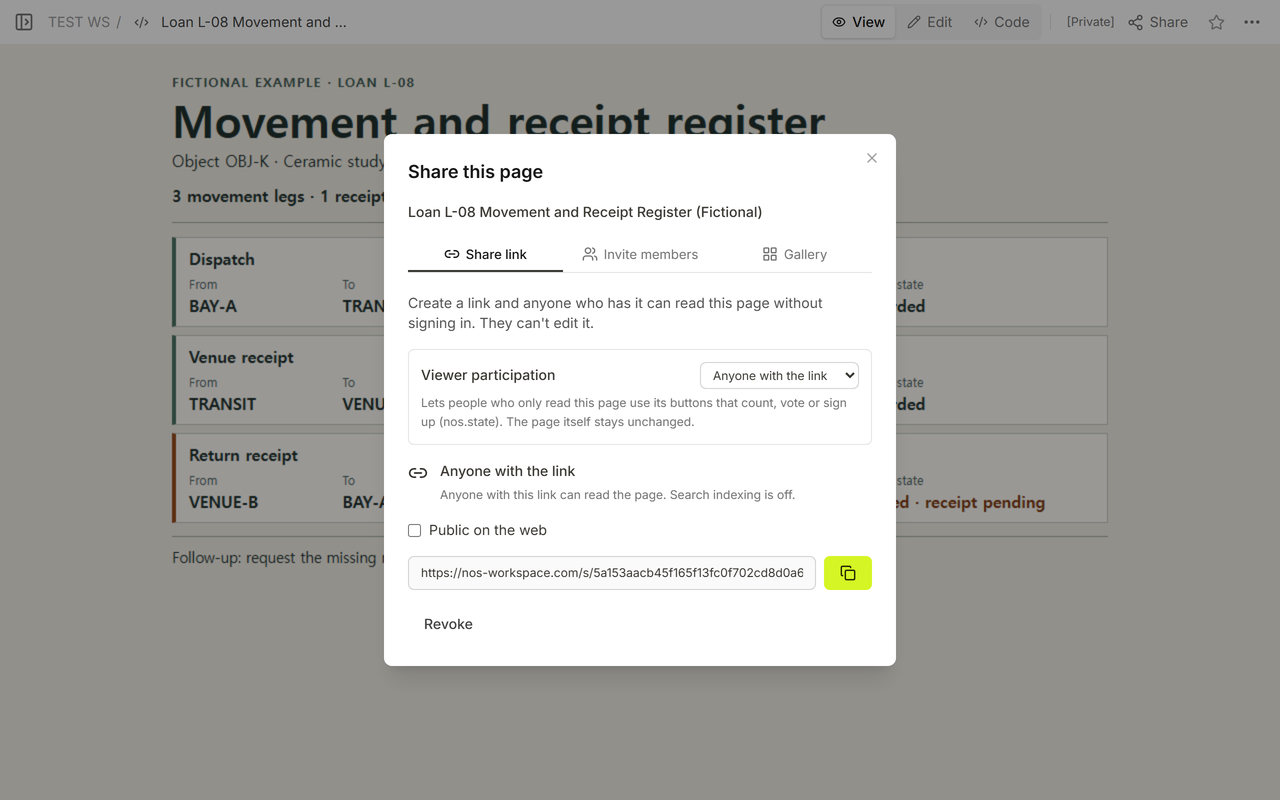
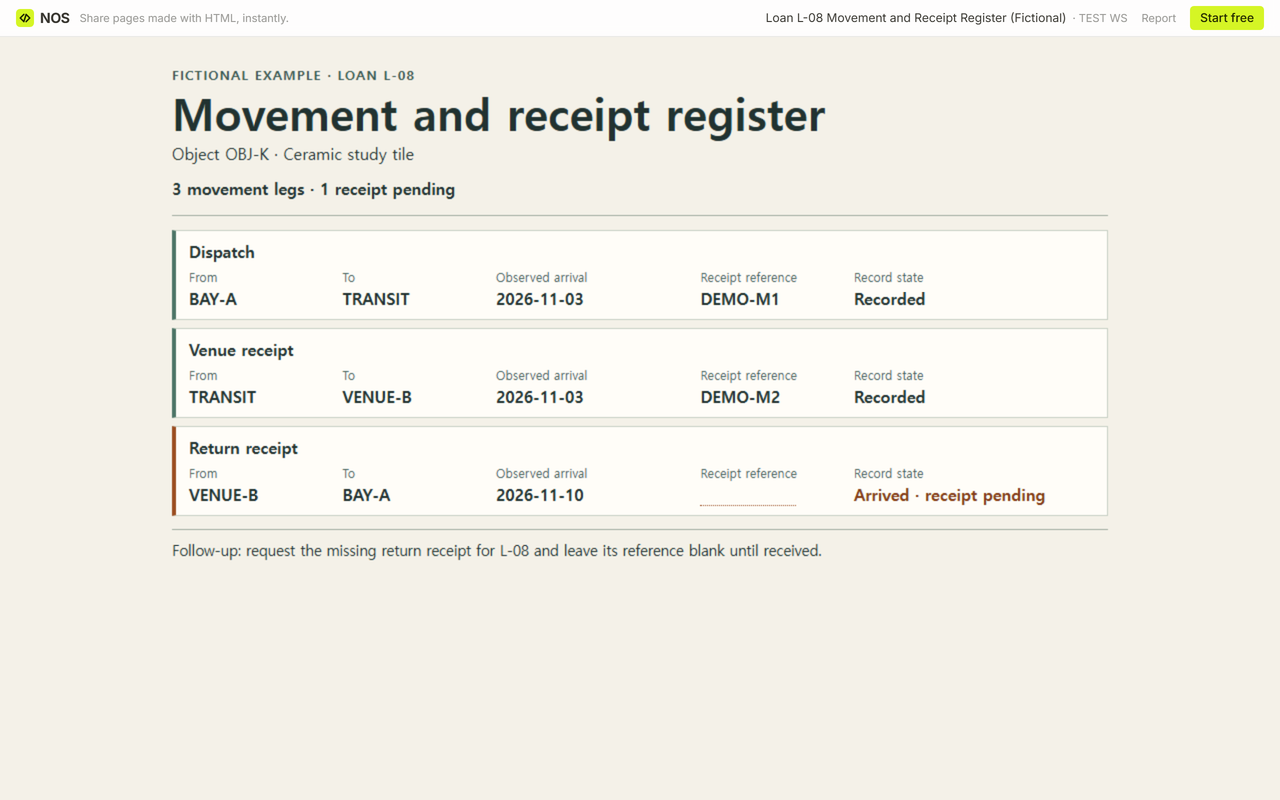
We used NOS Workspace to keep the fictional register at one reader address. The signed-out reader showed the open return row before the correction and the recorded reference after we saved it in the same document. Use the blank file for practice and the reader link to compare your result with the completed example.
Related guides
- Use the equipment checkout log for a borrow-and-return transaction with a due date.
- Use the museum object condition report to compare what you observe on the object before and after a loan.