“Get better at writing” is easy to write on a goal sheet. On Thursday, with an unfinished paragraph on the desk, it offers a student little help.
Make the next practice visible. Choose one writing move, decide when the student can try it, and agree on what you will look at together. A goal sheet then becomes something you can reopen during the work instead of a promise filed away after the first lesson.
Blank template and worked example

Open the complete example · Blank PDF · Worked PDF
Download the HTML version to adapt the browser page. The worked material is fictional. Use the blank PDF for a printed activity or record; the browser preview switches between versions.
Choose the practice opportunity while planning the lesson. If the goal concerns writing, an essay rubric can help identify a specific revision to practice.
Copy this student goal sheet
Use a private document or paper sheet with space for the student’s own words:
What I want to improve, and why it matters to me: [ ]
What my recent work shows: [specific example, with date]
My next goal: By [date], when [task/opportunity], I will [observable action] using [agreed support].
My practice plan: [when, where, and what I will try]
Help or materials I need: [ ]
How we will check: [work sample or observation]
Check-in date: [ ]
At check-in: What changed? What helped? What will I try next?
A student goal-setting resource connects specific, achievable goals with a timeline and progress monitoring. The sheet here turns those elements into questions a student and teacher can answer together.
This is a classroom planning format. Use the required process and documents for any formal education plan.
A filled example: explaining evidence in a paragraph
This example student and work record are fictional.
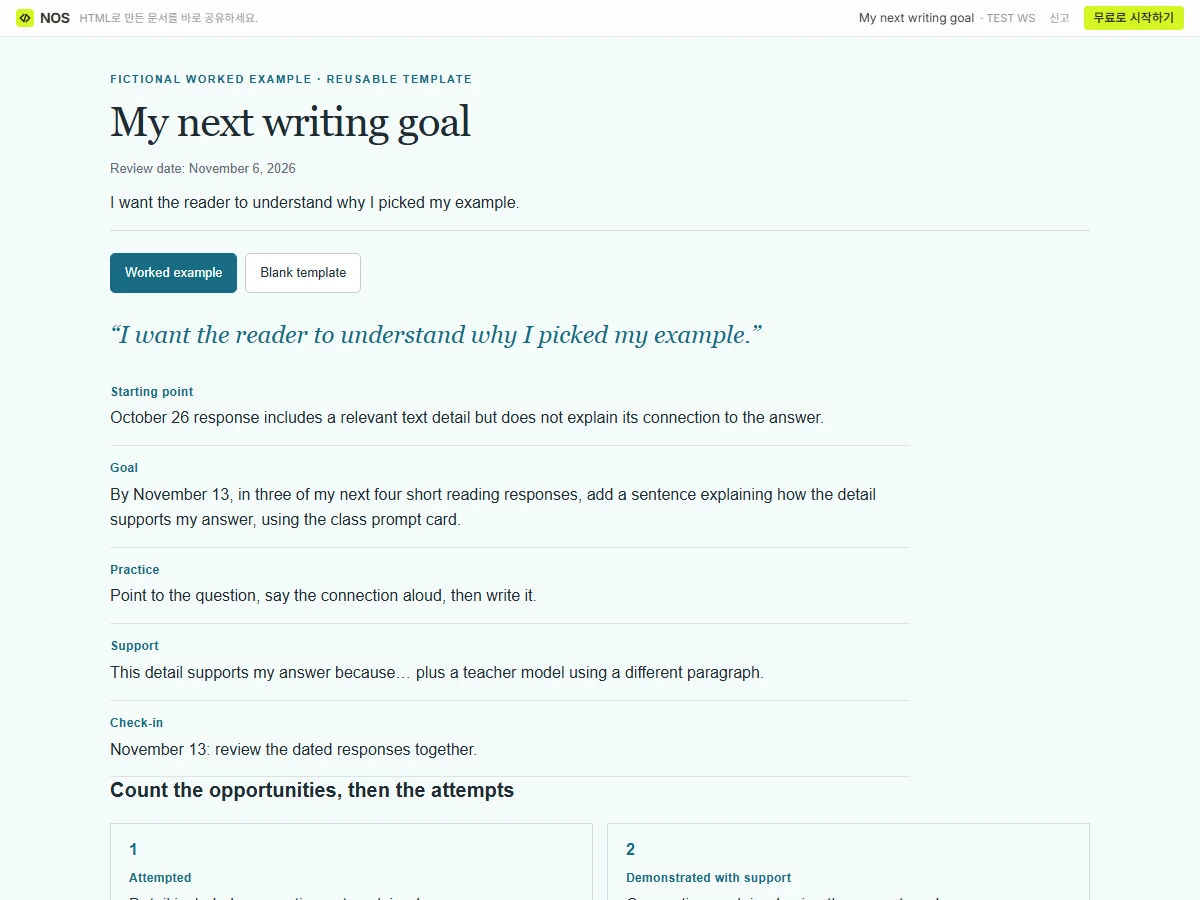
Student’s choice: “I want the reader to understand why I picked my example.”
Recent work: In a response written on October 26, the student included a relevant detail from the supplied text but ended the paragraph without explaining its connection to the answer.
Goal: “By November 13, in three of my next four short reading responses, I will add a sentence explaining how my chosen detail supports my answer. I can use the class sentence prompts.”
Practice: After selecting a detail, the student points to the question, says the connection aloud, and writes the explanation.
Support: A prompt card reading “This detail supports my answer because…” and a brief teacher model using a different paragraph.
Evidence: The four dated responses, with the explanation sentence underlined.
Check-in: November 13, using the same meaning of “explains the connection” agreed at the start.
The goal is a proposal for this example. A real student and teacher should decide whether the target and support fit the student’s starting point.
Record opportunities before judging the result
Use one entry for each planned response:
- Response 1: Attempted. Detail included; explanation named the topic but did not connect it to the answer.
- Response 2: Attempted. Explanation connected the detail to the answer with the prompt card.
- Response 3: No opportunity. The lesson became an oral discussion.
- Response 4: Attempted. Explanation connected the detail to the answer with the prompt card.
At that check-in, the student demonstrated the target in two of three attempted responses. Only three of the four planned opportunities occurred. Record both facts. Do not count the changed lesson as a failed student attempt or describe the original target as met.
If another response is needed, agree on when it can happen. Preserve the first check-in record instead of changing the dates to make the plan appear successful.
Use the check-in to choose the next teaching move
Read the explanation from Response 2 together. Ask what the prompt card helped the student do. Then compare Response 1: did the student misunderstand the question, choose a weak detail, or struggle to express the connection?
Those are different next lessons. “Try harder” does not tell the student which one to practice.
Keep support visible when recording progress. A response completed with a prompt card demonstrates work with that support. If the next goal involves less support, agree on that change rather than silently applying a stricter rule.
Do not rewrite a student’s personal reason into a more impressive adult sentence. The goal needs to remain recognizable to the person doing the work.
Ask AI to format the plan after the conversation
Turn these anonymized student-and-teacher notes into a student goal sheet: [notes]. Learner language level: [ ]. Recent work evidence: [ ]. Goal chosen with the student: [ ]. Available practice opportunities: [ ]. Agreed support: [ ]. Review date: [ ]. Use plain, student-readable language. Include the starting evidence, one observable goal, a practice plan, needed support, dated opportunity entries, and reflection questions. Distinguish “no opportunity,” “attempted,” and “demonstrated with the stated support.” Do not invent scores, diagnoses, learning standards, student preferences, or progress. Leave missing decisions as visible blanks for our conversation. Return an editable document version and a blank version. Also create an HTML layout only if I request one.
Use the output to check your notes, not to replace the student’s choice. Keep names and actual work records in your school’s approved environment.
Share the blank method with colleagues
Open this example’s NOS share link.
Finish the individual plan in the format your class uses. For colleagues planning a similar activity, a blank sheet and a fictional completed example are more useful than a real student’s record.
If you make those examples into an HTML page, NOS gives you a saved page to share by link. Correcting a prompt in that page lets colleagues reopen the same link for the revised wording. Keep private student evidence in the school’s approved system and make a fresh printed sheet when the student’s plan changes.