In short
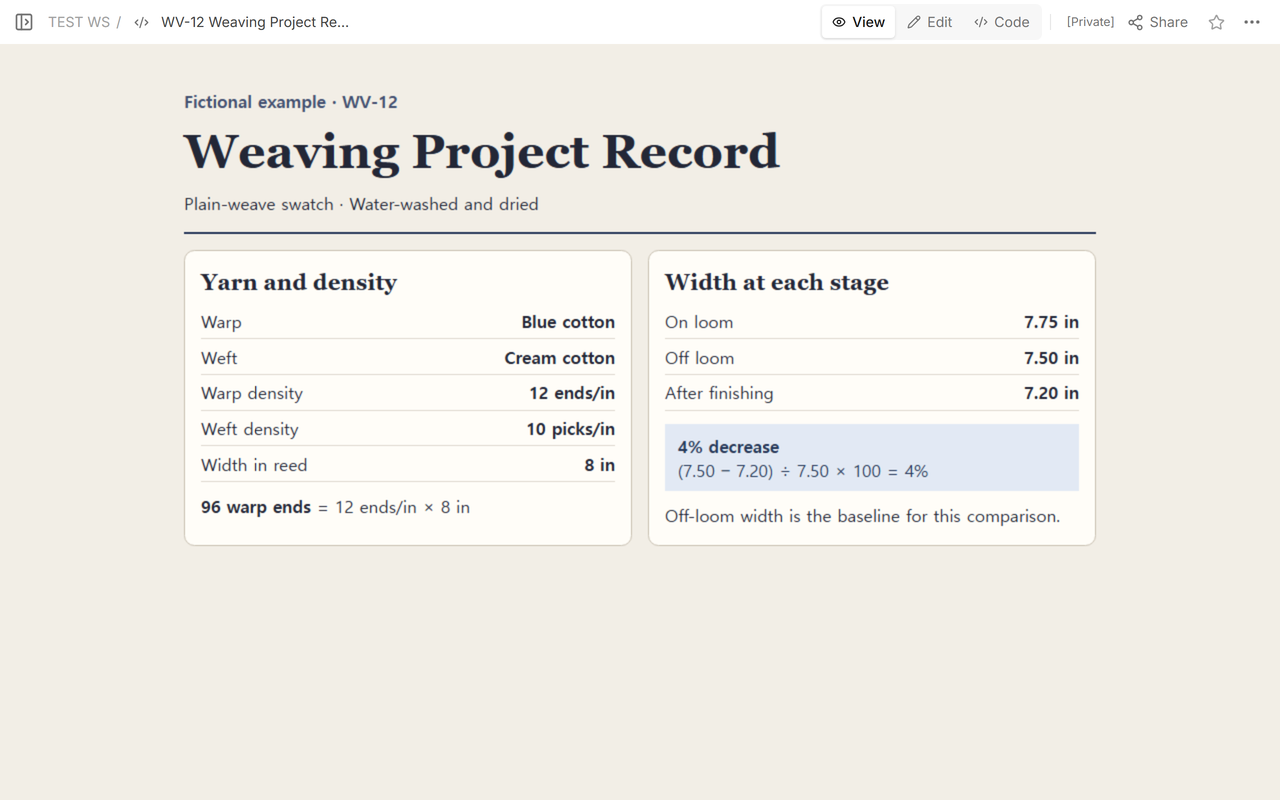
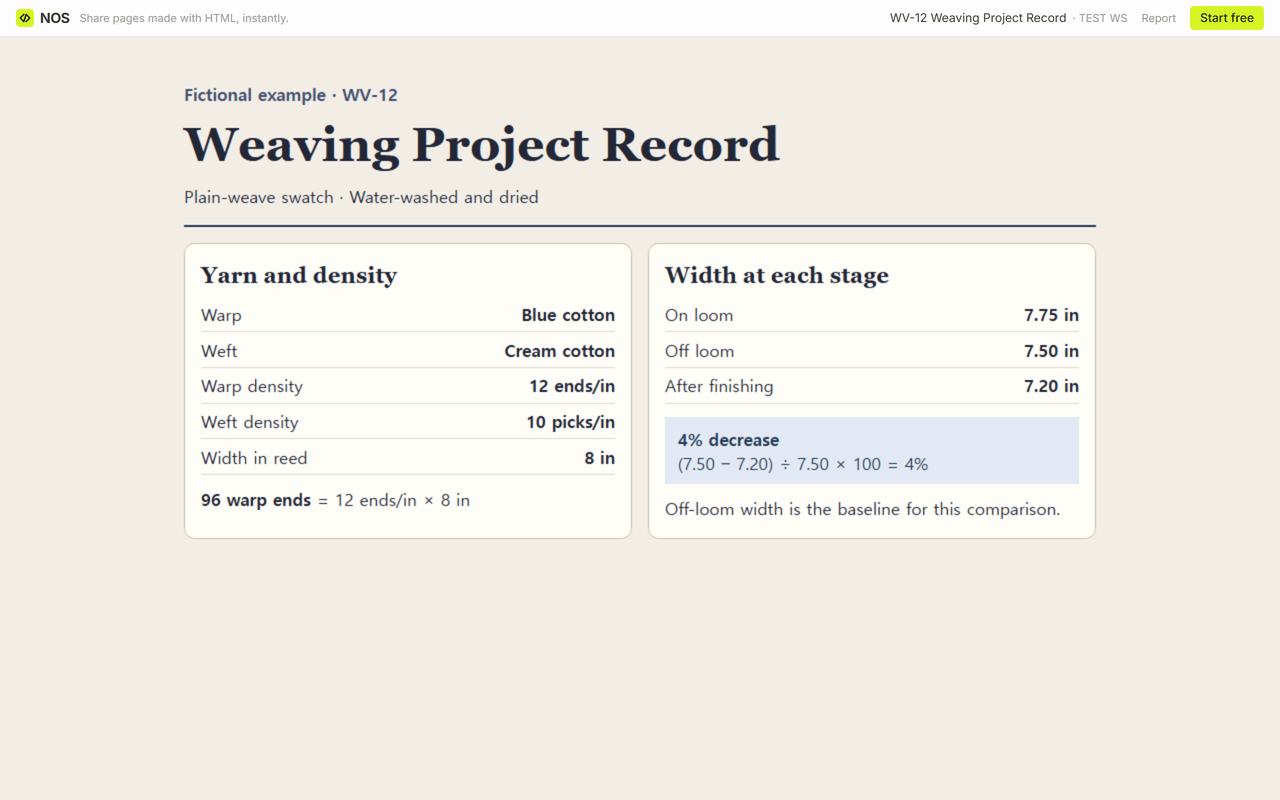
Keep three widths on your weaving record: on the loom, off the loom, and after finishing. The finished WV-12 swatch is 7.20 in, a 4% decrease from its 7.50 in off-loom width.
Download the blank weaving project record sheet or open the completed WV-12 example.
What goes on a weaving project record sheet?
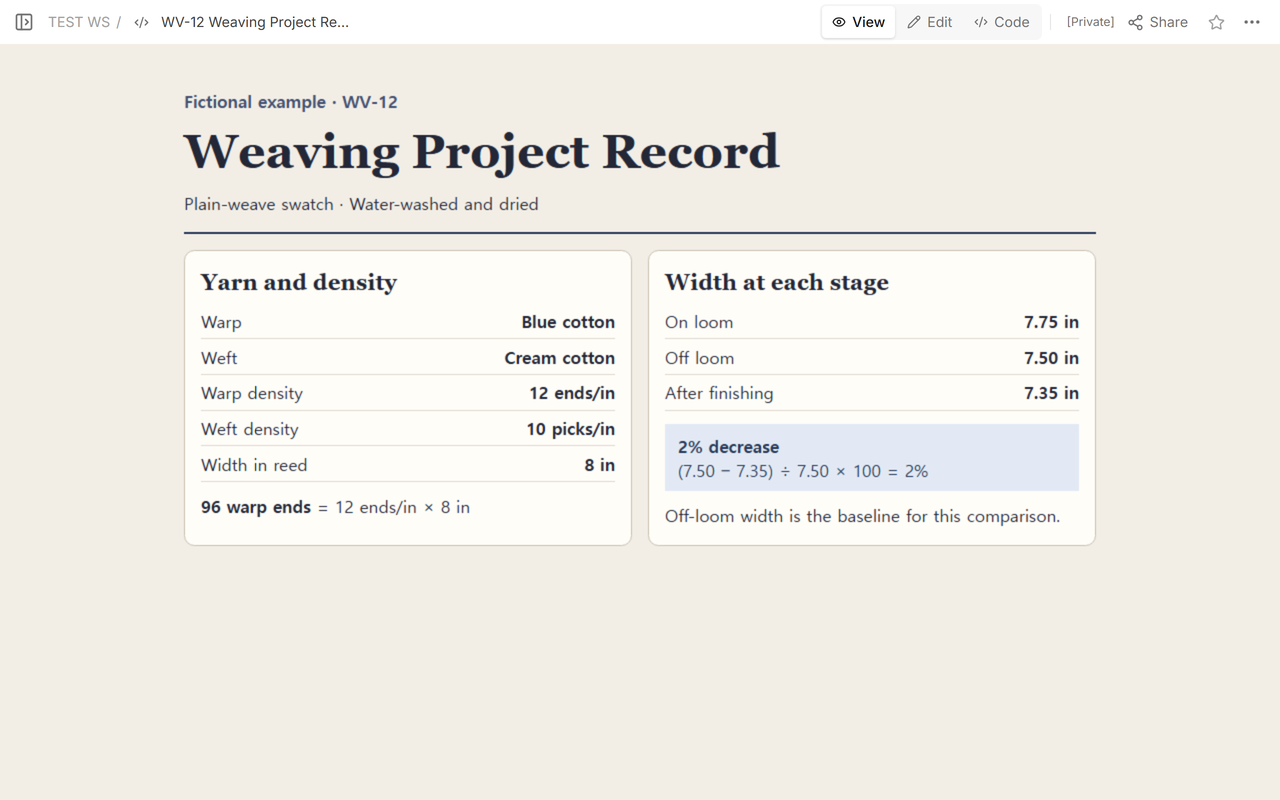
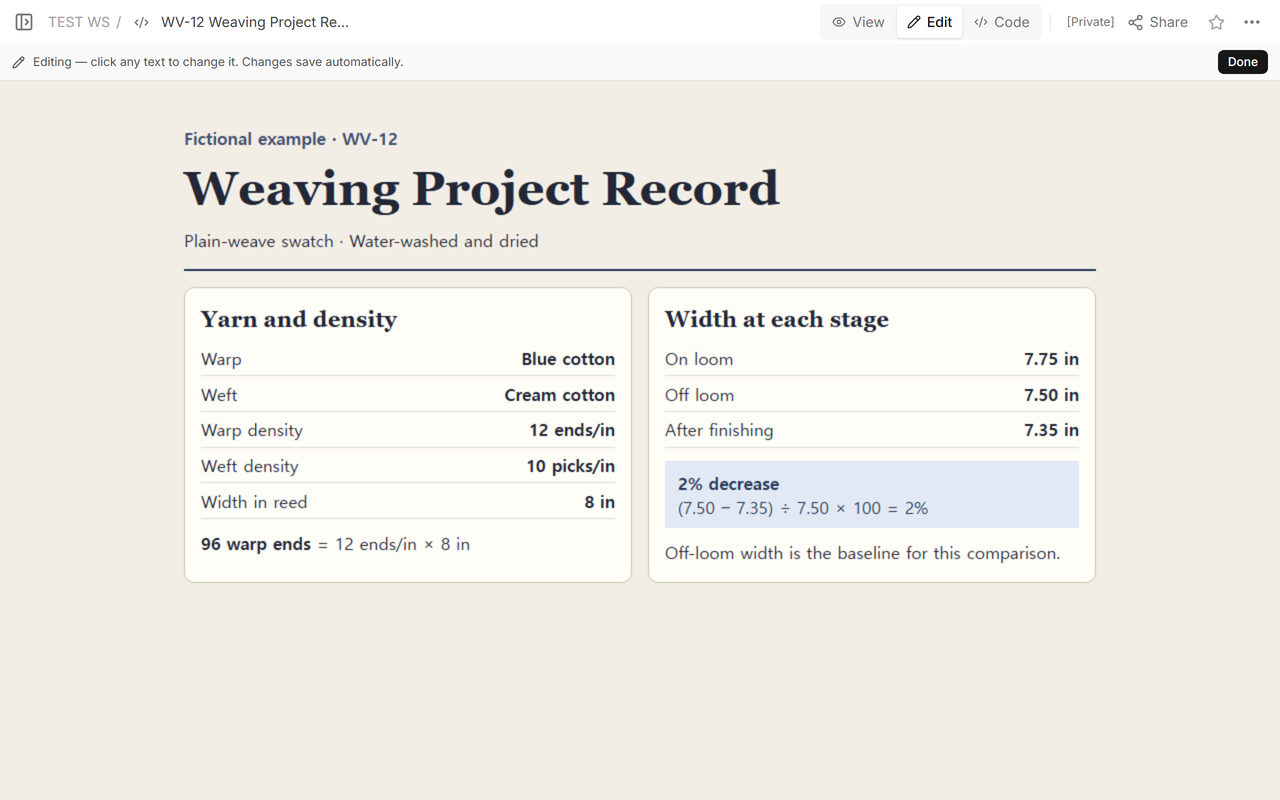
Give the swatch an ID you can write on its tag. Record the weave structure and identify the warp and weft separately. WV-12 is a fictional plain-weave swatch with blue cotton warp and cream cotton weft. The finish note says it was water-washed and dried. For your own record, add yarn identifiers and the finish details you would need when you make the swatch again.
Write the warp density in ends per inch (EPI) and the weft density in picks per inch (PPI). One end is a warp thread. One pick is a pass of the weft. WV-12 records 12 ends/in and 10 picks/in. The Boise Valley guild record has separate spaces for these densities, the yarns and each measurement stage. The Seattle Weavers’ Guild describes keeping project details together so you can repeat a weave.
Which width gives 96 warp ends?
Use the warp density and width that describe the same setup. Here, the 12 ends/in applies across 8 in in the reed, so 12 ends/in × 8 in = 96 ends. The 10 picks/in counts weft passes along the length of the cloth and stays in its own field.
The record also has an on-loom cloth width of 7.75 in and an off-loom width of 7.50 in. Multiplying 12 ends/in by 7.50 in gives 90, which pairs the setup density with a later cloth measurement. The yarn count in this swatch is still 96. Keep the measured widths separate so they can tell you how the cloth changed.
Which width is the baseline for finishing?
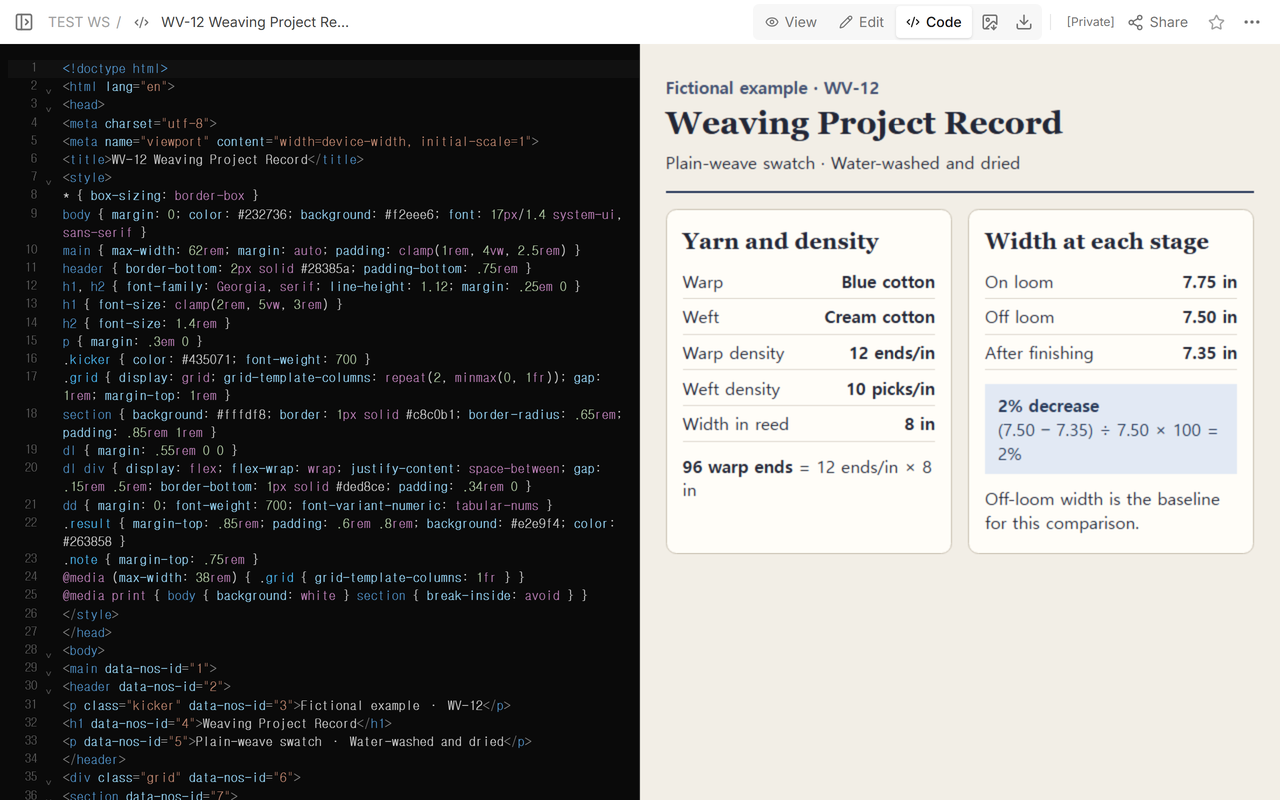
Use the off-loom width. It is the measurement immediately before the finishing step in this record. Subtract the finished width from that baseline, divide by the baseline, then multiply by 100.
The first entry showed (7.50 − 7.35) ÷ 7.50 × 100 = 2%. Correcting it to 7.20 in gives (7.50 − 7.20) ÷ 7.50 × 100 = 4%. Using 7.75 in instead would give (7.75 − 7.20) ÷ 7.75 × 100 ≈ 7.10%, a comparison that includes the width change between the loom and the off-loom measurement.
How do you fill in the blank record?
Fill in each stage as you measure it. If a width is missing, leave its field empty. The finishing result stays blank until both the off-loom and finished widths are present. An exact 0% means the two widths match. The sheet uses = for an exact displayed result and ≈ for a percentage rounded to two decimal places. With 7.50 in off the loom and 7.24 in finished, it shows ≈ 3.47% decrease. Print the completed sheet to keep your entries.
When not to do this
If you only have on-loom and finished measurements, label the comparison as on-loom to finished. Leave the finishing-only result blank. Keep plans for a different yarn or weave on a separate sheet so the WV-12 measurements remain traceable to the swatch they describe.
How can you share the corrected record?
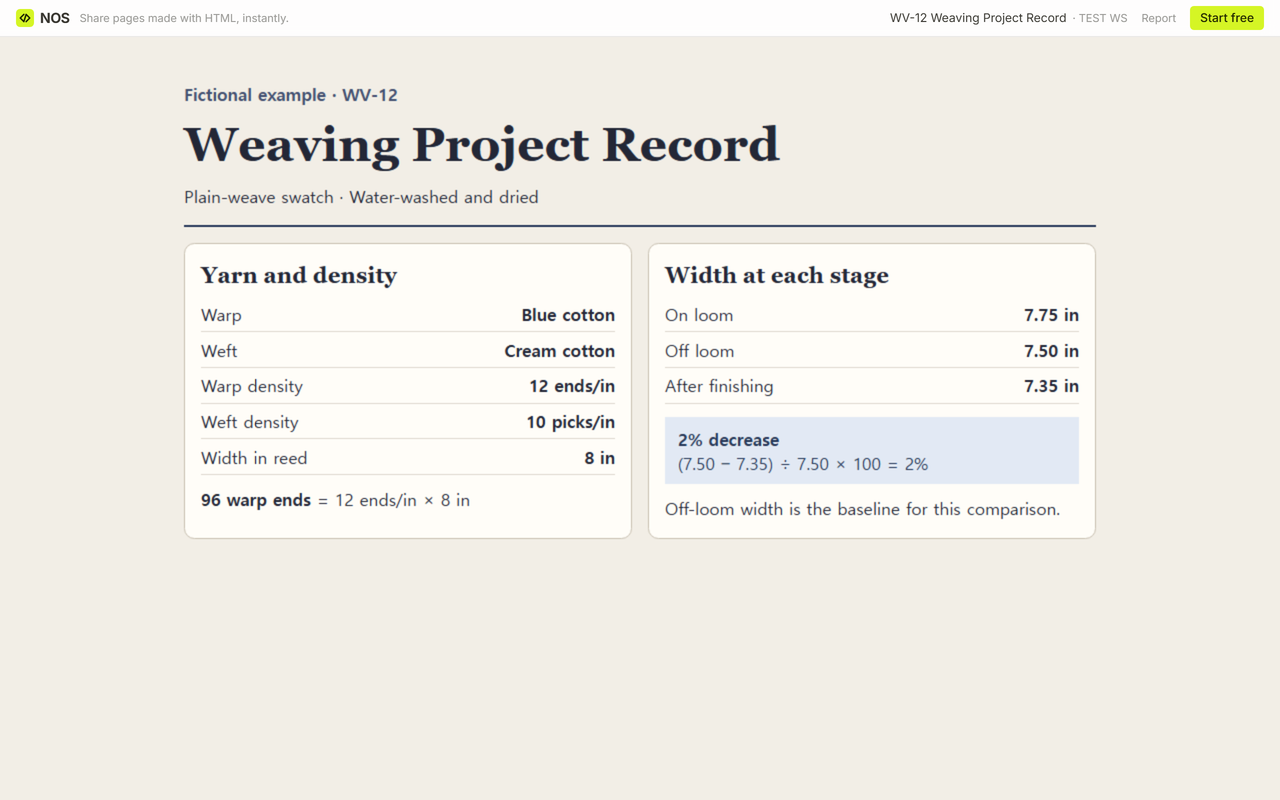
In NOS, we opened the record in Edit, corrected the finished width and calculation in Code, and checked the saved card in View. Share gave us a reader address. Opening that same address again while signed out showed 7.20 in and a 4% decrease. Open the shared WV-12 record to see the corrected card.
Related guides
Use the yarn substitution calculator if you need to work out how many skeins to buy. For a sewing project with known panel dimensions, use the curtain fabric yardage calculator to estimate the fabric length. If you want to share another working sheet, see Calculator to Link. The area converter guide offers another example of keeping units explicit in a result.