These products are marketed on how quickly they produce a page. They all do that. The differences are in four places nobody mentions.
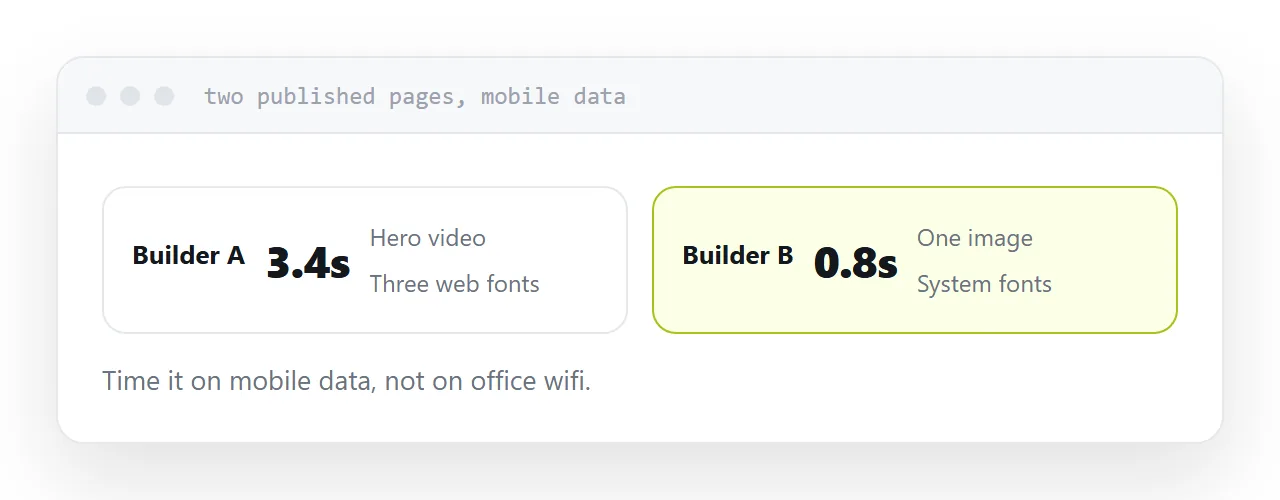
One: speed on a phone
Visitors arriving from an advert are on mobile data with low commitment. Every second before the page becomes usable loses a share of them.
Generated pages are frequently heavy: a hero video, several web fonts, an animation library, analytics loading before the text renders.
Build a page, publish it, and open it on a phone on mobile data rather than office wifi. Time how long until you can read the headline. Three seconds is common and it is expensive.
This is the most important thing to compare and the one least likely to appear in a feature table.
| What to check | Why | How |
|---|---|---|
| Speed on a phone | Conversion | Time it on mobile data |
| Export | Can you leave | Try it before you need it |
| Custom domain on free tier | Who owns the address | Read the tier limits |
| Badge removal | Appearance | Check the price |
Two: export
The page exists inside the product. Export is the only route out.
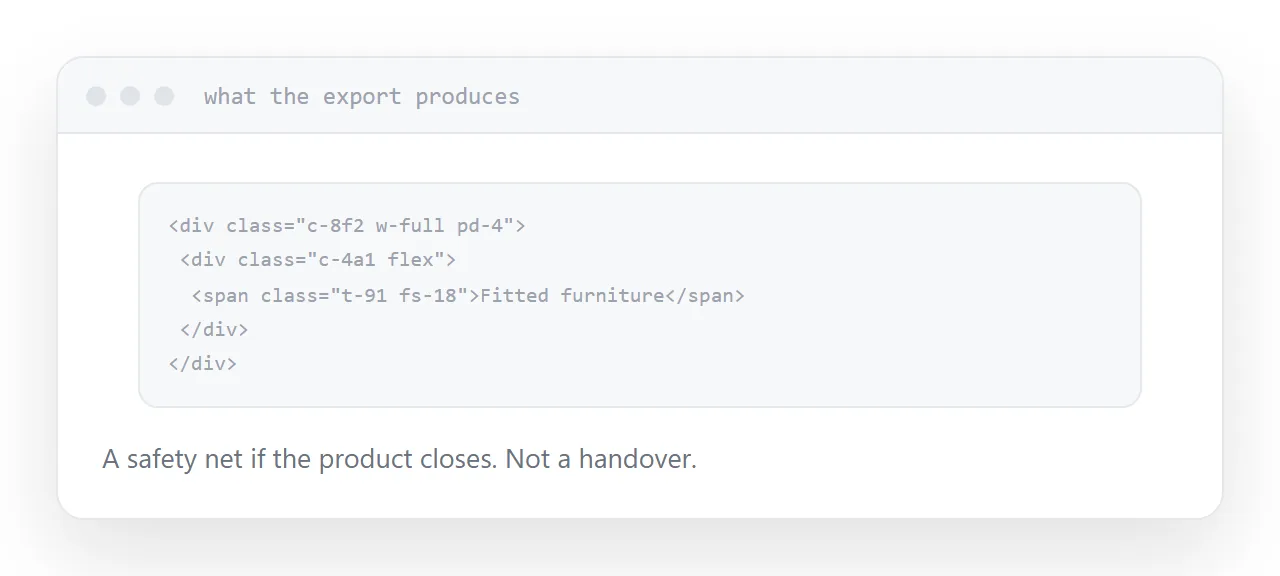
Check whether it exists at all, and what it produces. Generated markup with machine-named classes is a safety net rather than a handover, and knowing which you have changes how you feel about depending on it.
Test the export in the first week, not in the month you need it.
Three: the domain on the free tier
Custom domains are commonly the first thing behind the paid plan.
That matters more than any feature, because it decides whether the address belongs to you. With your own domain, moving is a redirect. Without it, every published link dies when you leave.
If the paid tier exists mainly to sell you the domain feature, compare that price against simply hosting a page yourself, because at that point the comparison changes.
Four: the badge
Most free tiers put a badge on your page.
Honest, and a small signal on anything client-facing. Check what removing it costs, because it is frequently bundled with the tier you were going to need anyway.
The test that takes twenty minutes
Build the same page in two products. The same headline, the same image, the same form.
Publish both. Open both on a phone. Try to export both.
That produces an honest answer in less time than reading comparison articles, including this one.
Closely related: Choosing a Carrd alternative, and How to make a product landing page for the adjacent problem.
Put it at an address
Time the published page on a phone on mobile data, test the export before you need it, check whether custom domains are on the free tier, price the badge removal, and build the same page twice.
Then you are choosing on the things that affect the result.