When building is cheap, scope is the whole cost. The projects that reach an address are the ones that cut early.
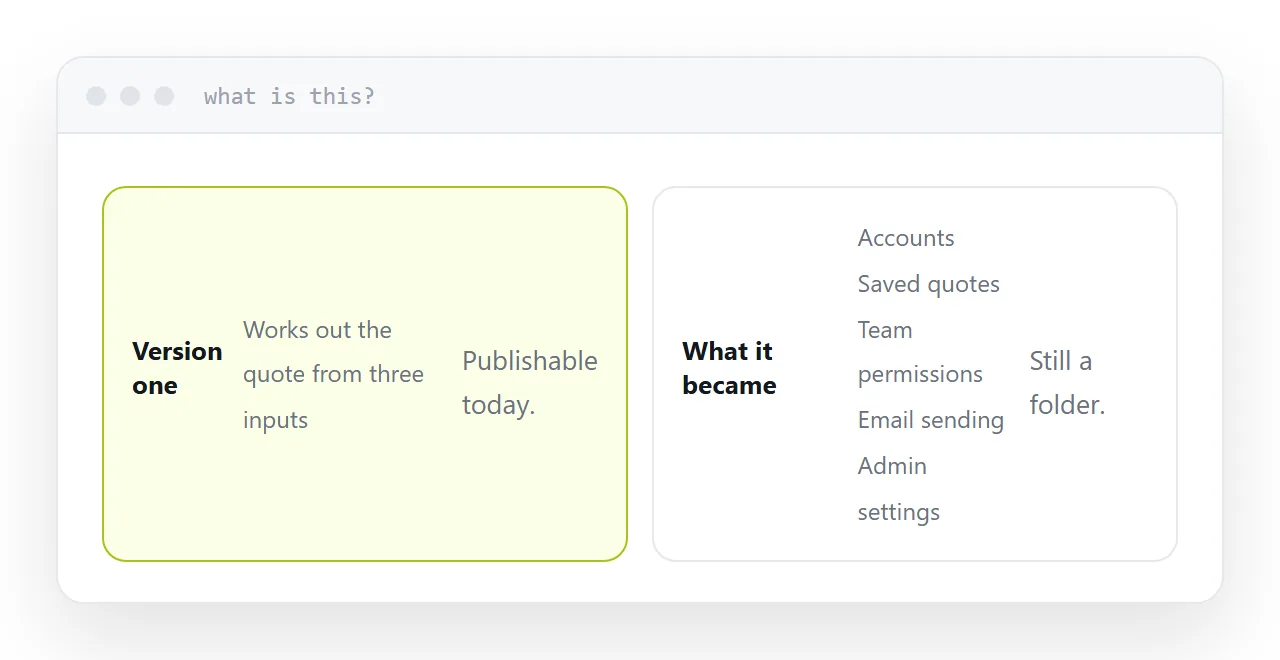
Publish first, then add
The strongest habit available: get the smallest working version to a real address before adding anything.
A published tool that does one thing is used. An unpublished tool that does six is a folder.
Publishing early also surfaces every publishing problem while the project is small, rather than at the end when it is tangled into everything else.
What one page can do
More than people assume, and the boundary is memory rather than complexity.
Calculators, converters, quizzes, checklists, dashboards over data written into the page, interactive charts, timers, generators, small games, teaching tools. All of it runs in a browser with nothing behind it.
| Wants | Needs |
|---|---|
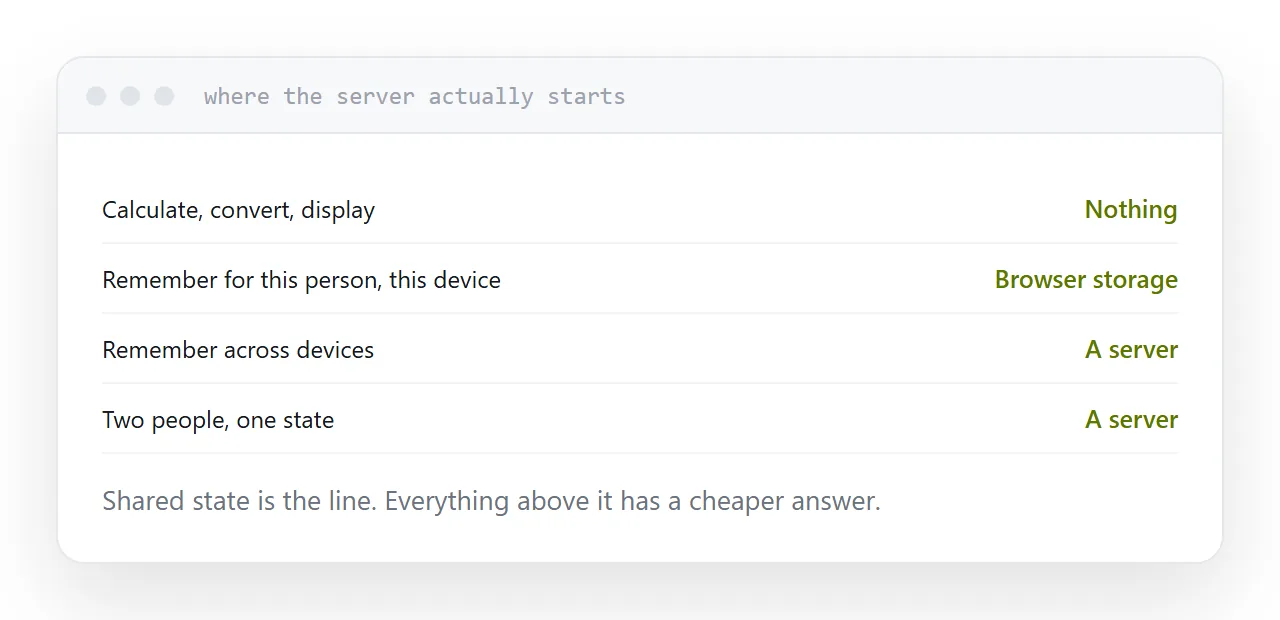
| Calculate, convert, display | Nothing |
| Remember for this person, this device | Browser storage |
| Remember across devices | A server |
| Two people see the same state | A server |
| A key that must stay private | A server |
| Accounts | A server, and more besides |
The line that actually matters
Shared state.
If one visitor's action has to be visible to another visitor, you need a server. Everything else has a cheaper answer.
If it only has to persist for the same person on the same device, browser storage handles it in about a line, and it covers a surprising share of what people ask a server for: saved preferences, a draft in progress, a list they are building, where they got to.
Where scope grows
Always the same three: accounts, saving, and permissions.
Each is easy to request and each changes the shape of the project. Accounts bring password resets, verification, sessions and the obligation to hold personal data properly.
For version one, ask whether the thing is useful without them. Usually it is. A calculator that does not know who you are is still a calculator, and the version that knows who you are is a different project with a launch date.
Assisted editors will say yes
Ask for accounts and you get accounts. The editor does not push back on scope, and it does not tell you that this version cannot be published by uploading a folder.
That is the one judgement you have to supply yourself, and it is the difference between a published tool and a local folder.
For the surrounding ground, see Publishing something built with coding assistance and Publishing what you built in a browser IDE.
Put it at an address
Write the purpose in one sentence, cut anything needing memory from version one, publish before adding anything, use browser storage before reaching for a server, and add a server only when two people must see the same thing.