Generated pages usually work in the preview and break when published, and the reasons are the same four every time.
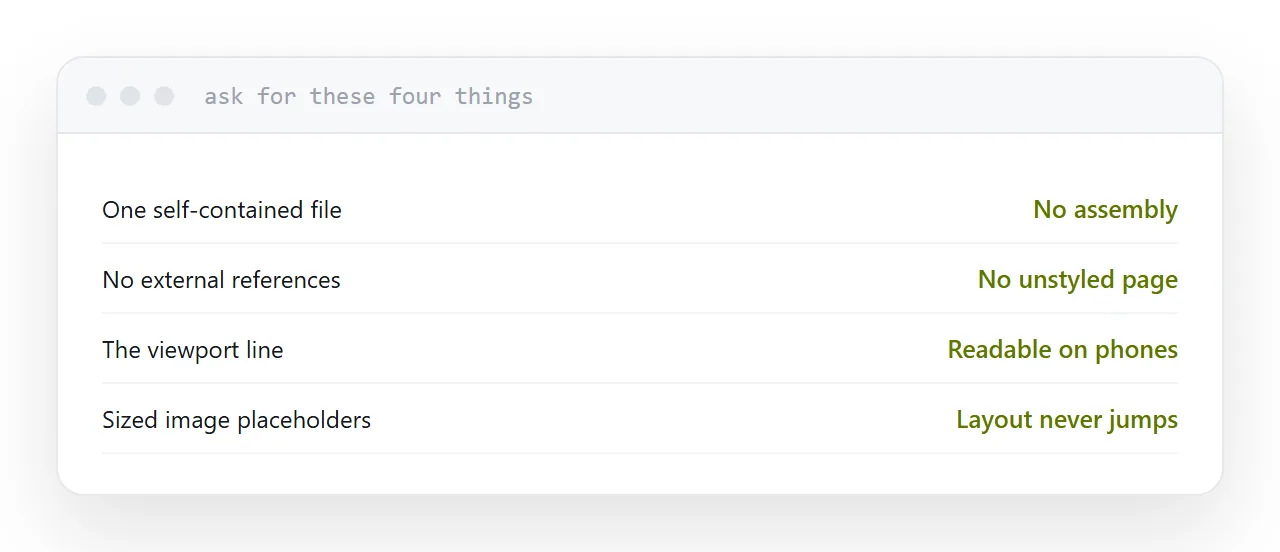
The four things to ask for
One self-contained file. Styles and behaviour written into the document. Nothing to assemble, nothing to upload in the right order, and moving it anywhere is copying one file.
No external references. The most common break. A framework loaded by the preview environment is not loaded by a bare file, and the page arrives unstyled. Ask for the styles to be written in.
The viewport line. One line in the head. Without it, a phone renders the page at desktop width and shows it far smaller than intended, which is the single most common complaint about generated pages.
Sized image placeholders. Invented image paths point at nothing. Ask for placeholder blocks with explicit dimensions so the layout is final before anything loads and nothing shifts.
| Ask | What it prevents |
|---|---|
| Self-contained file | Assembly and missing pieces |
| No external references | The unstyled page |
| Viewport line | Tiny text on phones |
| Sized placeholders | Layout jumping |
| Plain, current markup | Silent failures in older browsers |
Describing what it is for
Vague requests produce generic pages, and the generic page is always a landing page with a large heading and three columns.
Say who reads it, on what, and what they do. A price list read on a phone in a shop is a different page from a price list read at a desk, and the request is what determines which one you get.
Include the real content where you have it. Generated placeholder text has to be replaced anyway, and replacing it usually breaks the spacing that was designed around it.
Asking for corrections
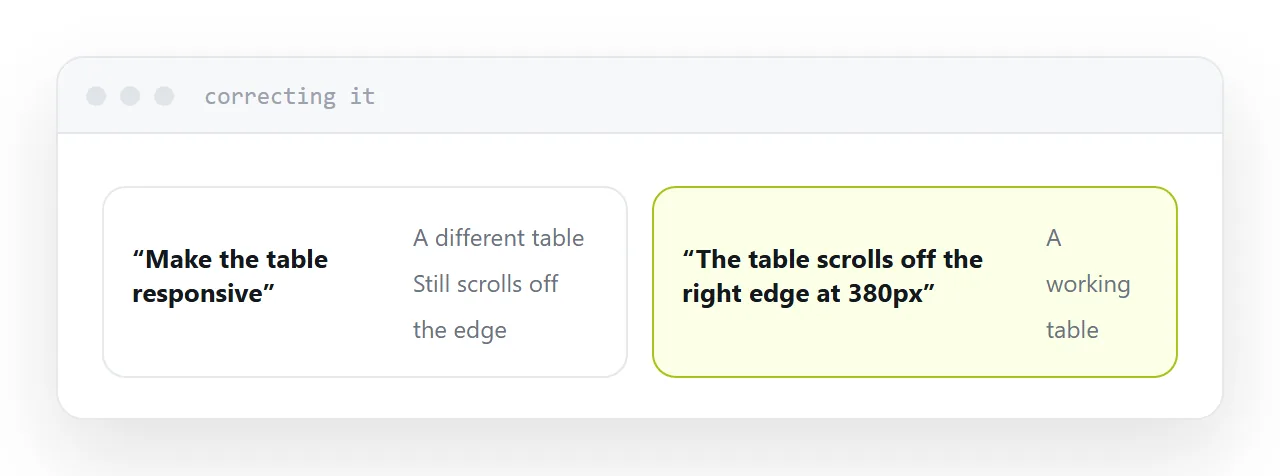
Describe the symptom, not the fix.
"The table scrolls off the right edge on a phone" produces a working table. "Make the table responsive" produces a different table that may scroll off the right edge on a phone.
Paste the exact error text when there is one. Summarising an error removes the part that identifies it.
Open the file before publishing
The preview is a friendly environment. A bare file in a browser is not, and it is what your reader gets.
Save the file, open it directly, and narrow the window to phone width. Missing references, broken images and layout that does not reflow all appear immediately.
Two minutes, and it catches nearly everything that would otherwise be discovered by whoever you sent the address to.
If this is near what you are doing, How to host HTML output from ChatGPT and How to host AI generated HTML cover the cases on either side.
Put it at an address
Ask for one self-contained file with no external references, ask for the viewport line and sized placeholders, describe the reader rather than the look, report symptoms when correcting, and open the file before it goes anywhere.