A project document is read by people looking for reasons not to trust it. How it is published is part of the answer.
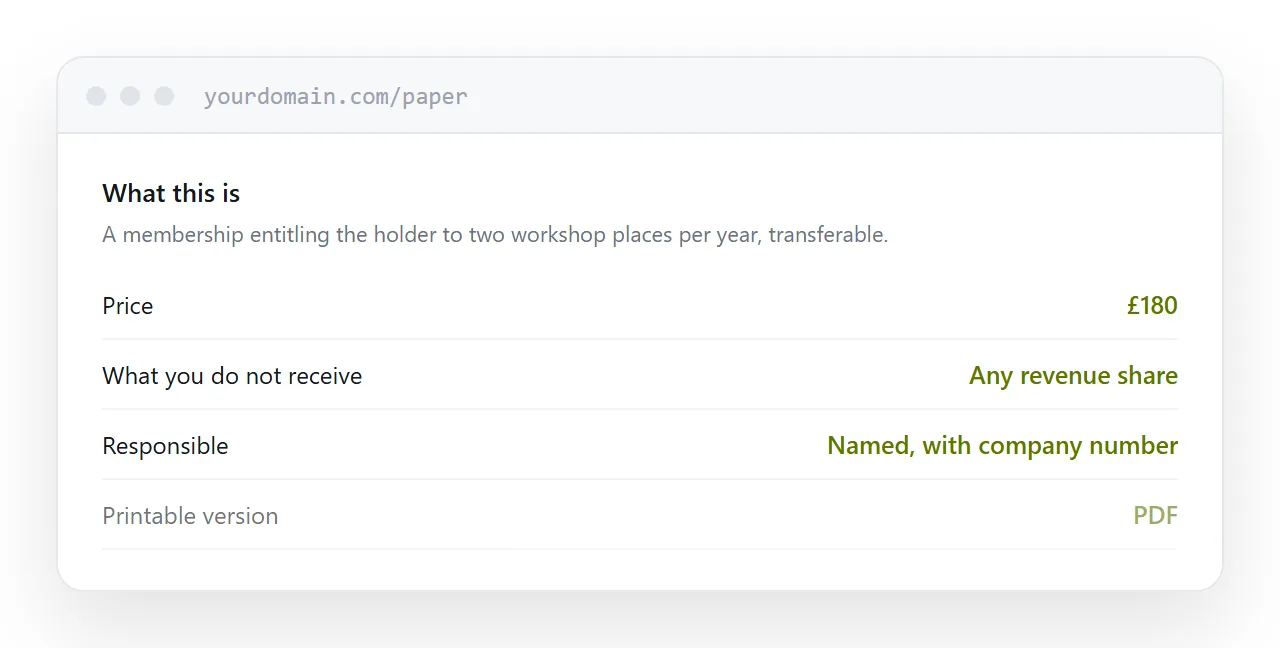
A page, with the document linked
The audience reads on phones.
A fixed-layout document on a phone is a third of the screen wide, which means zooming and panning for every line. In practice it does not get read; it gets skimmed and closed.
Publish as a page that reflows, with the fixed document linked for anyone who wants to file or print it. That order, not the reverse.
| Element | Where |
|---|---|
| The document itself | A page |
| Printable version | Linked from it |
| Change history | On the page, dated |
| Who is responsible | Named, near the top |
| Contract or legal terms | Separate page, linked |
Show the changes
This is the decision that matters most for credibility.
Sceptical readers check whether a document has changed since they last saw it, and whether anything was removed. A quiet edit, discovered later, ends trust immediately and permanently.
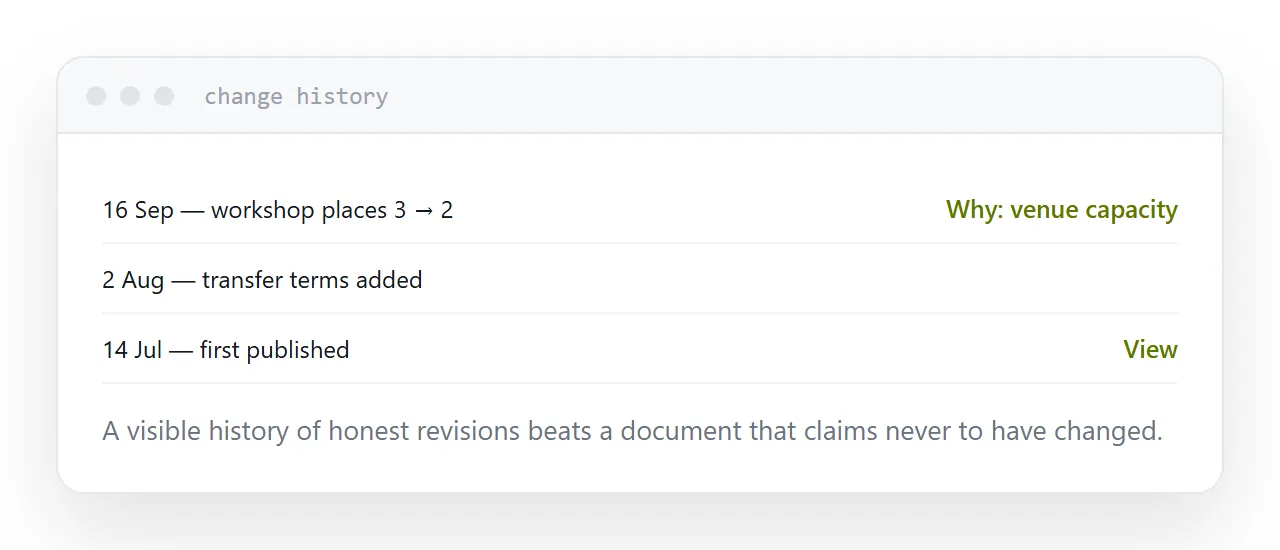
So publish the changes yourself. A dated list at the end: what changed, when, and why. Keep previous versions available.
A document with a visible history of honest revisions is more credible than one that claims never to have changed.
Put the specifics first
The common structure opens with several pages about the size of the market and the problems with the industry.
Readers skip it, because they are looking for four things.
What is this, concretely. What does it cost. What does a buyer actually receive, and what do they not receive. Who is responsible if it does not happen.
Put those first, in plain language, in the first screen. Everything else after.
Naming who is behind it
Anonymity combined with concrete financial claims is the pattern readers have learned to treat as a warning.
If there is a genuine reason for pseudonymity, say what it is. If not, name the people and link somewhere they can be verified.
It is the cheapest credibility available and the most frequently skipped.
The address is the identity
Your own domain, permanent.
Not a shortener, which can go away and takes everything with it. Not a storage link, which looks like an internal file reference. Not a platform address, which ends when the platform does.
The document will be quoted, archived and linked from places you cannot see. All of that depends on the address continuing to work.
If this is near what you are doing, How to host terms and conditions and How to host a changelog cover the cases on either side.
Put it at an address
Publish as a page with the fixed document linked, show a dated change history, put the specifics in the first screen, name who is responsible, and use a permanent address on your own domain.