A case study is read by somebody checking whether you have handled something like their situation. Everything about it should make that check fast.
This guide covers structure, numbers, and approval.
Lead with the problem
The prospect is scanning for their own situation.
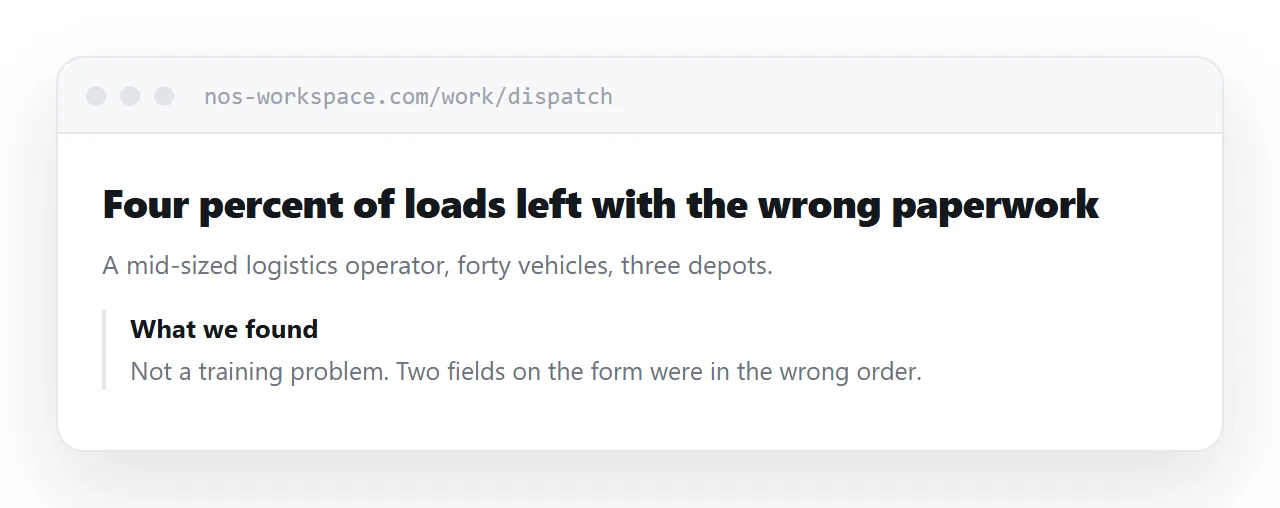
So the first thing on the page is the problem, described the way somebody in that industry would describe it. Not your client's name, not your company, not a headline about transformation.
Then what you did, briefly. Then what changed.
The client's name, if you have permission, is supporting evidence rather than the headline. A prospect who does not recognise the name learns nothing from it, and most will not.
One address per case study
This is what makes them usable.
A prospect mentions their situation. Sales sends the one case study that matches, with a line saying why. That is a strong reply.
A link to a page listing twelve case studies is a weak one, because the prospect has to find theirs and most will not bother.
Per-case addresses also mean each one is findable in search by somebody describing their problem, which is how prospects arrive who have never heard of you.
| One page, all studies | One address each | |
|---|---|---|
| Sales sends the relevant one | No | Yes |
| Found in search by problem | Rarely | Yes |
| Prospect does the matching | Yes | No |
| Forwardable alone | No | Yes |
Numbers, honestly
Real numbers, where you have them and are permitted to use them, are the strongest thing in a case study.
Where you do not have them, describe what changed concretely. The team stopped doing a weekly reconciliation that took two days. Support stopped receiving a particular question.
Invented percentages are recognisable. Readers in your industry know which numbers are plausible and which appear in every case study, and one obviously inflated figure discredits everything around it.
Getting approval
Ask at the moment the project succeeds.
The client is pleased, the outcome is fresh, and saying yes is easy. Three months later they have moved on, the person you worked with may have changed roles, and the request goes to legal.
Send a draft rather than a request. Asking somebody to approve a case study is work; approving a page they can read in a minute is not.
Offer the anonymous version at the same time. A client who cannot approve being named will frequently approve a sector description, and you get most of the value.
When you cannot name them
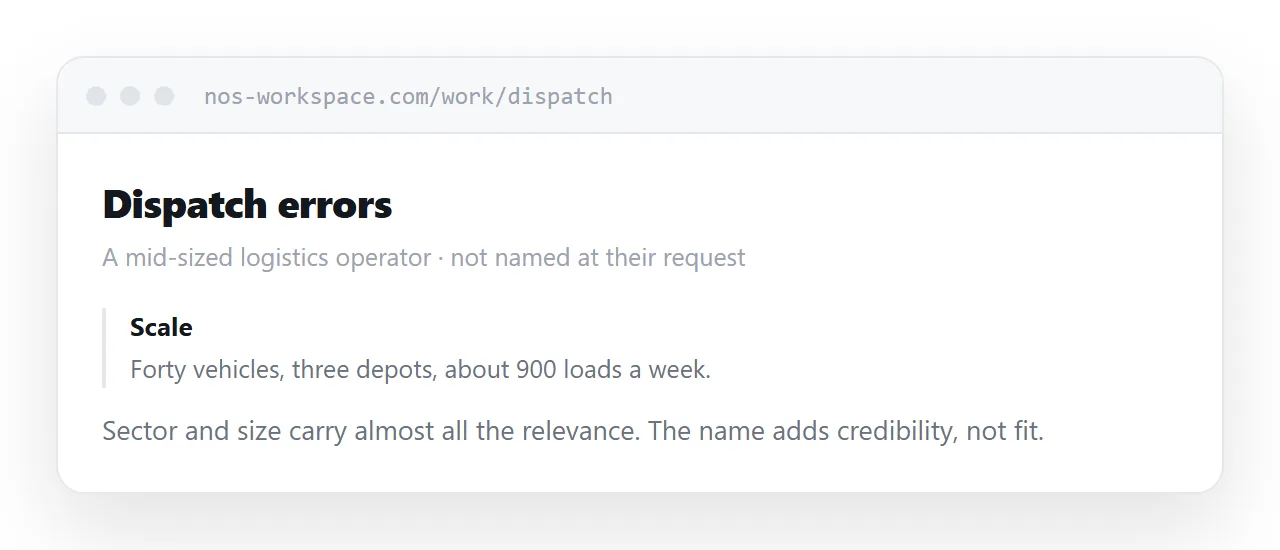
A mid-sized logistics operator with forty vehicles carries almost all of the useful information.
The prospect is matching on situation, not on brand. Sector, size and the shape of the problem tell them whether it is relevant, and the name adds credibility rather than relevance.
Say plainly that the client is not named at their request. That reads as discretion, which is itself reassuring to somebody deciding whether to hire you.
Two neighbouring cases are worth a look: How to share a case study as a link and How to share a portfolio with a client.
Put it at an address
Lead with the problem in the prospect's language, give each study its own address, use real numbers or concrete description, ask for approval at the moment of success, and offer the anonymous version.
Then a prospect checking whether you have done this before finds the answer in ten seconds.