A proposal has two readers. The person you have been talking to, and the person they forward it to. The second one decides and has never met you.
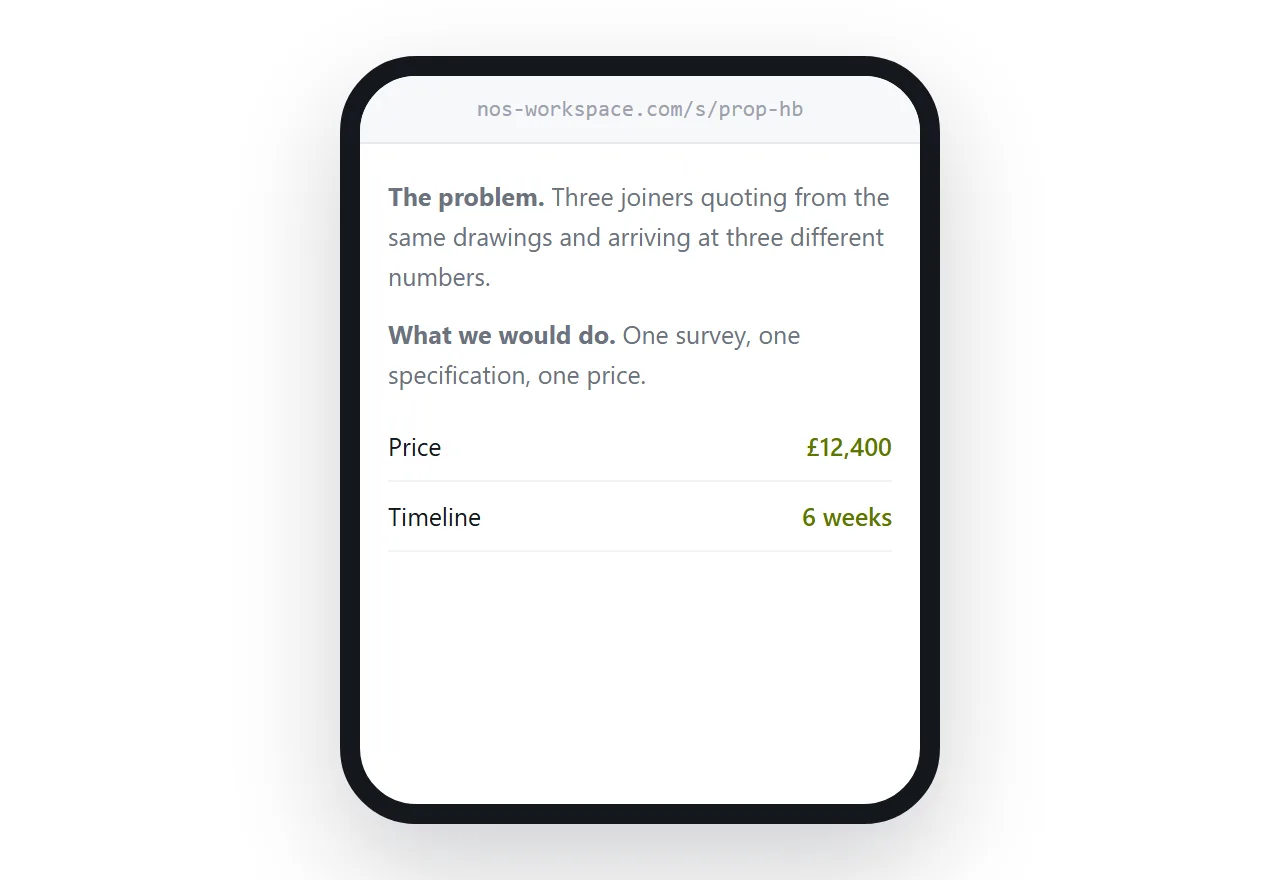
This guide covers writing for the second reader, surviving the forward, and length.
Write the first page for a stranger
Your contact has context. They know the conversation, the constraints, what you agreed in the meeting.
The person who receives the forward has none of that. They open it between other things, on a phone, and give it thirty seconds before deciding whether it is worth reading properly.
So the first screen carries four things.
The problem, stated as the client would state it.
What you will do about it, in a sentence.
What it costs.
How long it takes.
Everything else follows. Method, credentials, case studies, terms. Those are read by someone who has already decided the first four are interesting.
Surviving the forward
This is where an attachment loses.
Forwarded, it becomes a frozen copy inside a forwarded email, quoting whatever was true when you sent it. If you revise the scope or correct a figure, the second reader never learns, and you have no way to reach them because you do not know they exist.
An address is forwarded as an address. Everyone who opens it sees the current version, including people three steps removed from your contact.
| Attachment | Address | |
|---|---|---|
| Second reader gets | A frozen copy | The current version |
| Revision reaches them | No | Yes |
| Opens on a phone | Downloads | Opens |
| You learn it circulated | No | Repeated opens |
| Version confusion | Common | None |
Length is usually defensive
Long proposals are frequently long because the writer is uncertain and is covering everything.
Readers experience that as padding. A proposal that says the necessary things and stops reads as someone who knows what the job is.
Cut the company history, the generic methodology section, and anything that would be true of any project. Keep what is specific to this client and this problem.
If a procurement process demands sections, include them and keep them brief.
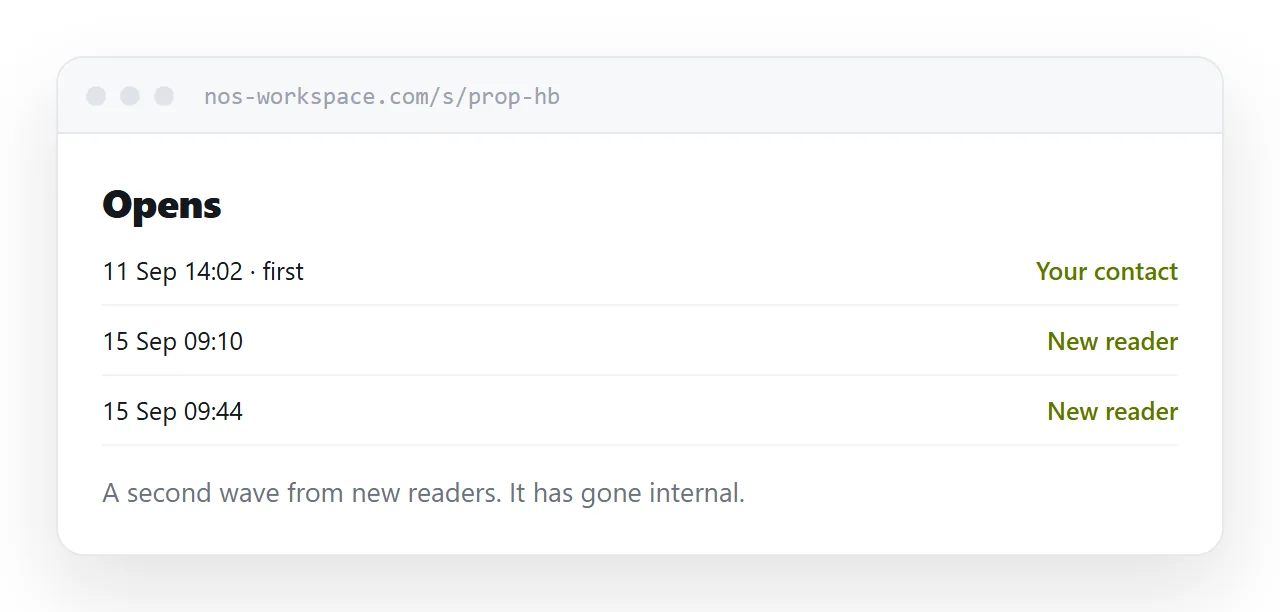
What the opens tell you
Two useful patterns.
One open, then nothing. Your contact read it and has not circulated it. The question is what is stopping them, and usually it is something you can help with.
A second wave of opens days later. It has gone internal. That is the best signal available short of a reply, and it is the moment to offer to answer questions rather than to chase.
Neither is available from an attachment.
Keep a PDF
Procurement systems want files, and some clients file everything.
Link it from the page rather than attaching it. Attaching reintroduces the frozen copy that the address was solving.
Two neighbouring cases are worth a look: How to send a proposal as a link and How to send a quote to a client.
Put it at an address
Write the first screen for a stranger, lead with problem, approach, price and timeline, send an address so forwards stay current, cut anything defensive, and read the open pattern before following up.
Then the person who actually decides sees the version you meant them to see.