Document tracking answers one question: was it opened. That is a smaller thing than it sounds and it changes how you work.
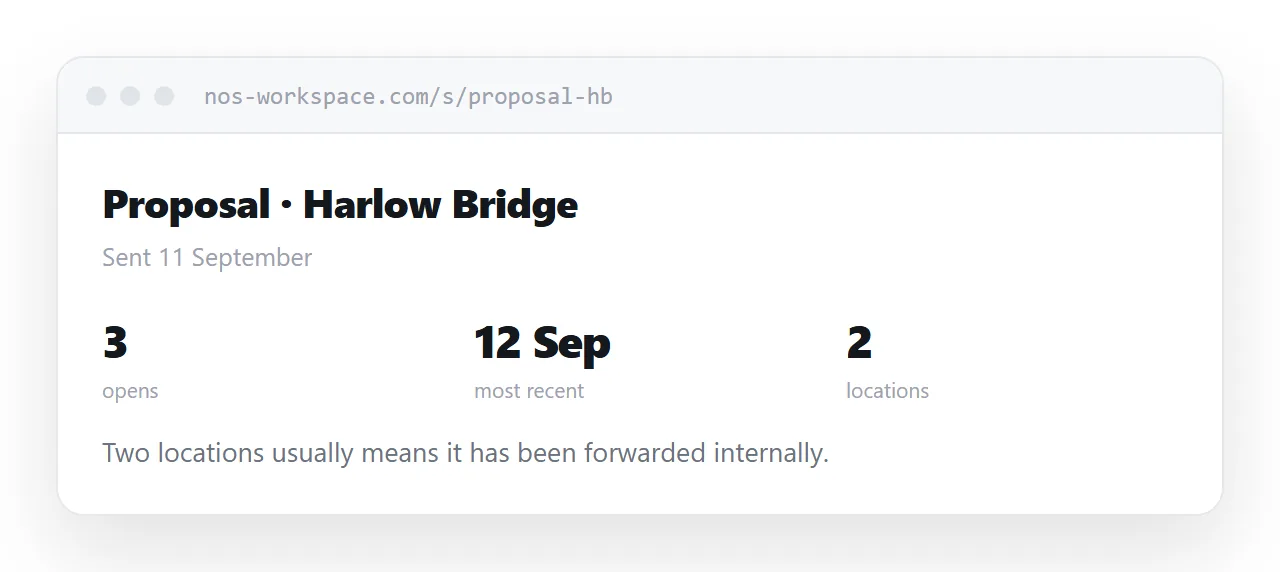
This guide covers what is knowable, what is not, and how to use it without damaging the relationship.
The problem it solves
You sent a proposal on Monday. It is Thursday and there has been no reply.
Without any information, both explanations are equally plausible. They read it and are thinking about it, or it is sitting unopened under forty other emails. Those two situations call for completely different follow-ups, and you are guessing.
An address removes the guess. Unopened means send a short reminder. Opened twice on Tuesday and no reply means something else is happening, and the conversation to have is about that.
What is knowable
That it was opened, and when. Reliable.
How many times. Also reliable, and often the more interesting figure. A document opened five times over two days is usually being shown to other people.
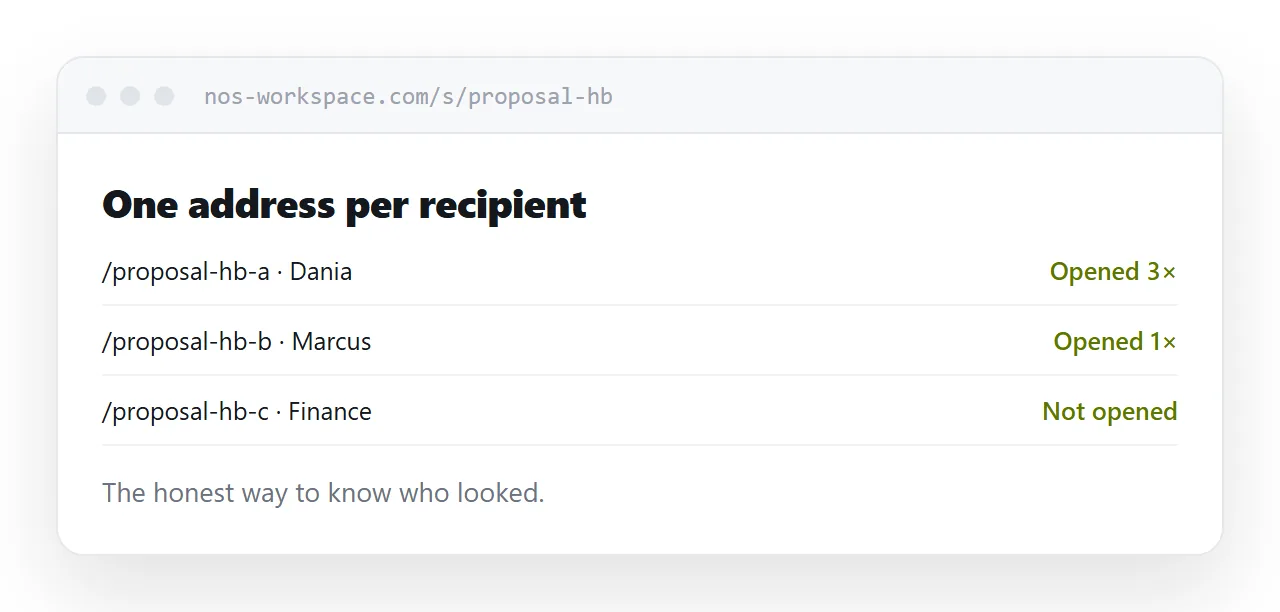
Which address was opened, if you sent a different one to each recipient. This is how you know which of three people looked, and it is the honest form of per-person tracking because each person genuinely has their own link.
What is not knowable
Who opened it, from a single shared address. If you sent one link to a whole company, the opens are anonymous.
Whether they read it. Scroll depth is measurable and weak. A page left open in a background tab produces the same signal as careful reading. Treat it as a hint.
Whether they liked it. Obvious when stated and worth stating, because open counts are routinely over-interpreted into enthusiasm that is not there.
| Attachment | Email read receipt | Address | |
|---|---|---|---|
| Opened | Unknown | Unreliable | Yes |
| When | Unknown | Sometimes | Yes |
| How many times | Unknown | No | Yes |
| Which recipient | Unknown | Sometimes | With separate links |
| Blocked by default | Usually | No |
Why email read receipts do not work
Receipts depend on the recipient's mail client loading a small image, and most clients block remote images until the reader allows it.
So no receipt means either they did not open it, or they did open it with images off. Those are not distinguishable, which makes the signal worthless for the case you care about.
An address does not have this problem, because opening the page is the event.
Say that it is tracked
One line is enough, in the message or on the page.
It costs nothing. Most people assume it already. And the downside of being found out having not mentioned it is considerably worse than the mild awkwardness of mentioning it, particularly with a client.
Do not use the information in a way that reveals you were watching closely. "I noticed you opened it four times yesterday" makes people uncomfortable regardless of what you meant by it.
Use it for timing, not for arguments
The good use is deciding when and how to follow up.
Unopened after three days: a short reminder, no pressure, possibly a different channel.
Opened and no reply: the document did its job and something else is in the way. Ask what.
Opened repeatedly: it is circulating internally. That is a good sign and the moment to offer to answer questions.
For the surrounding ground, see How link tracking works and How to share a PDF as a link. How to share wedding details with guests is also close.
Put it at an address
Send an address, use per-recipient links when you need names, treat reading signals as hints, say that it is tracked, and use what you learn to time the follow-up.
Then chasing becomes a decision rather than a guess.