Link tracking is knowing which channel sent a reader. The simplest version needs no tools at all: publish a different address in each place.
This guide covers the separate-address method, tagged links, and where shorteners cause damage.
One address per channel
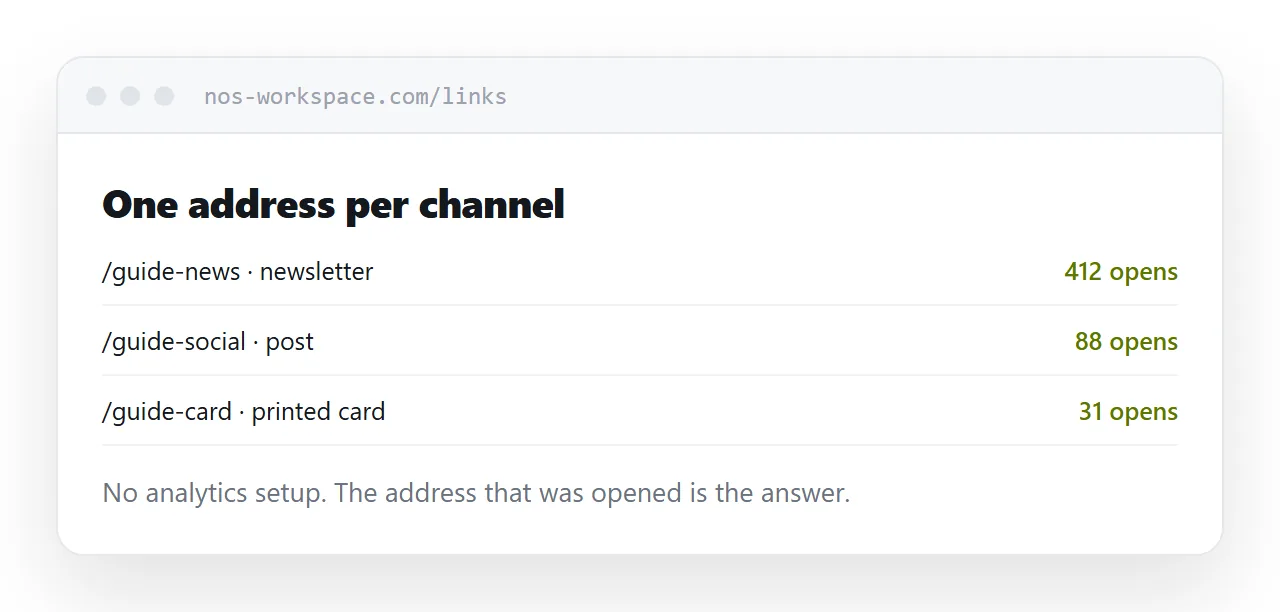
Give the newsletter one address, the social post another, the printed card a third. All three lead to the same content.
Now the open counts tell you which channel produced readers. No analytics setup, no tags, nothing to configure, and it works identically for a printed card and an email.
This is the method most people skip because it sounds too simple, and it answers the question they actually had.
The cost is that you maintain three addresses instead of one. For a campaign that is trivial; for an evergreen page it becomes housekeeping, which is where tagging is the better tool.
Tagged links
The parameters on the end of a link name the source and the campaign so analytics software can group the visits.
https://example.com/guide?utm_source=newsletter&utm_campaign=spring
They work well for online channels and they have two costs.
The address becomes long and ugly, which rules it out for anything printed, read aloud, or put on a card. And if the analytics setup is not actually in place, the tags do nothing at all while still making the address unpleasant.
| Separate addresses | Tagged links | |
|---|---|---|
| Setup required | None | Analytics |
| Works on a printed card | Yes | No |
| Address stays short | Yes | No |
| Groups campaigns automatically | No | Yes |
| Survives a shortener | Yes | Sometimes not |
Shorteners are where links die
Two problems, and both are quiet.
Some shorteners strip parameters, so a carefully tagged address arrives untagged and every visit lands in the wrong bucket. You find out when the campaign report shows nothing.
Worse, a shortened address depends on the shortening service continuing to exist. When one closes, every link ever published through it stops working, including the ones on printed material, in old posts, and in other people's pages. This has happened repeatedly and it is not recoverable.
If you use one, use one on a domain you control.
Printed material needs short addresses
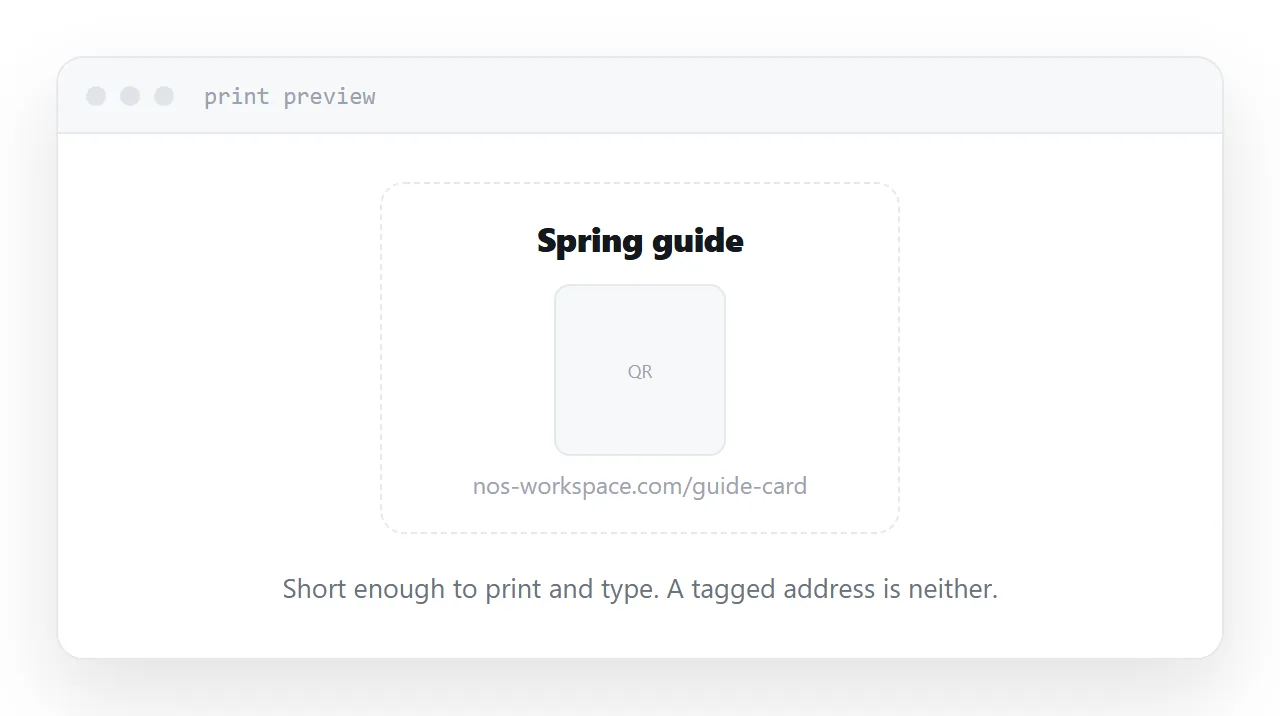
Anything printed has to be typeable, and anything read aloud has to be sayable.
That rules out tagged addresses entirely and argues for the separate-address method. A short address named after the campaign is both trackable and printable, which nothing else manages.
Keep it lowercase, keep it short, and avoid characters that are ambiguous when read out.
Never retire a published address
This is the rule that gets broken most.
A campaign ends, someone tidies up, and the address is removed. Meanwhile the printed cards are still in circulation, the old posts still link to it, and every one of those now leads nowhere.
Keep published addresses alive permanently. When the campaign content is gone, leave a page that says so and points somewhere current. A redirect is cheaper than the readers you lose.
Two neighbouring cases are worth a look: How document tracking works and Canonical URL: which address is the real one. How to upload a catalog online is also close.
Put it at an address
Give each channel its own address, tag online links if you have analytics, keep printed addresses short, be careful with shorteners, and never retire a published address.
Then you know what worked, without any tooling at all.