Sharing a candidate as a link means one private address carries the summary, the experience and the CV, and that address goes to whoever is deciding.
The alternative is an attachment, which is a permanent uncontrolled copy of somebody's personal information.
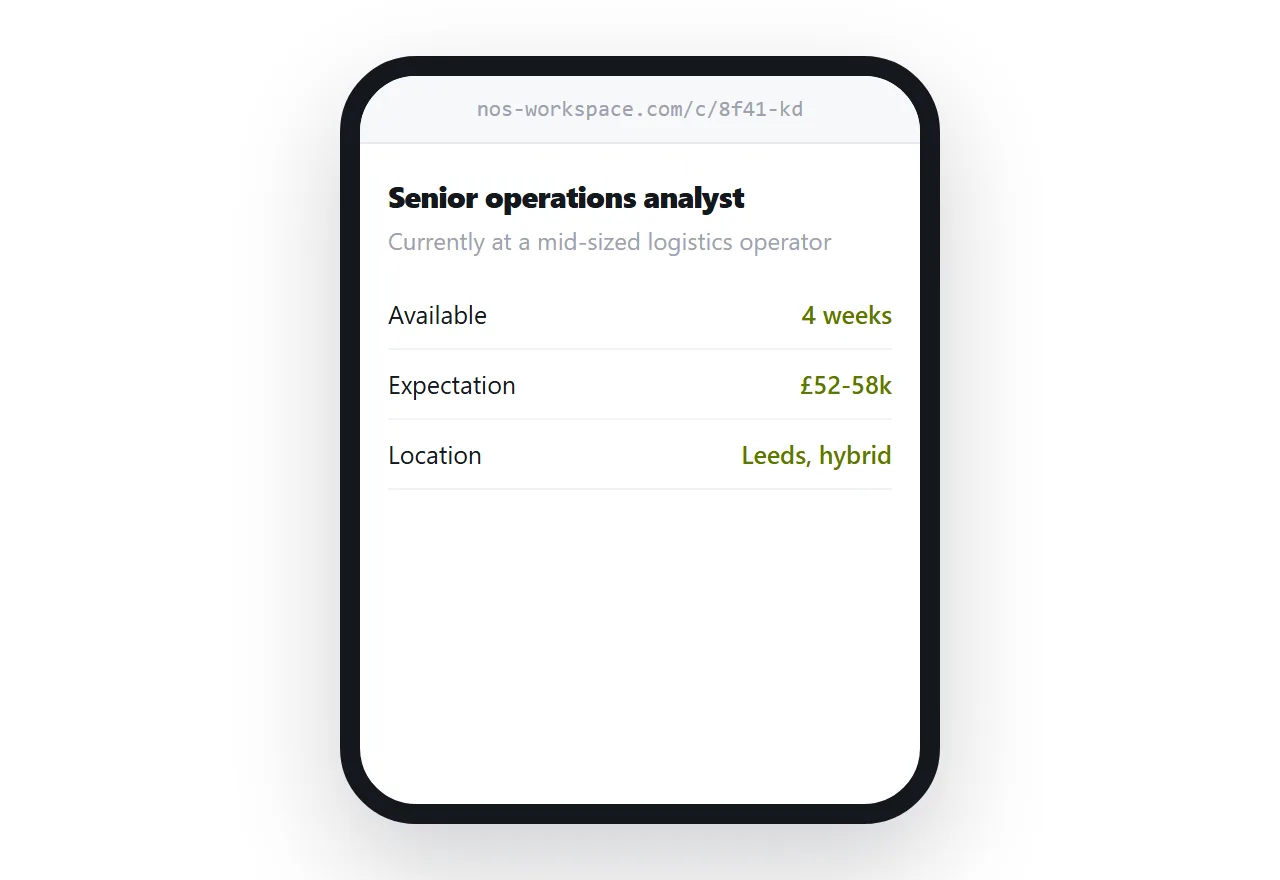
This guide covers what goes at the top, data protection, and knowing whether it was read.
The hiring manager decides in twenty seconds
A hiring manager reads candidate profiles between other things, usually on a phone, usually quickly.
They are answering one question first: is this worth a proper look. Everything else follows from a yes.
So the top of the page carries the short answer. Current role, relevant experience in one line, availability, and salary expectation if that is part of the conversation. Four facts.
The CV goes below. It is read by someone who has already decided to read it, and putting it first makes the manager do the summarising that is your job.
Personal data behaves differently
A CV is personal information about someone who trusted you with it.
Emailed as an attachment it becomes copies you cannot count, in inboxes you do not control, forwarded to people you did not choose, retained for as long as those inboxes exist. When the candidate asks you to delete their data, you cannot honestly say you have.
At a private address you can. Take the page down, record the date, and the profile is gone from everywhere at once.
| CV as an attachment | Profile at an address | |
|---|---|---|
| Number of copies | Unknown | One |
| Withdraw it later | Impossible | Take the page down |
| Forwarded without you knowing | Yes | The address, not the data |
| You can tell it was opened | No | Yes |
| Update after sending | New email | Edit the page |
Hold the contact details back
Put the candidate's phone number and email behind the decision rather than in front of it.
Two reasons. It protects the candidate from being contacted by anyone the profile was forwarded to. And it keeps the conversation running through you, which matters commercially if you are placing the candidate.
Say plainly that details are available on request. Nobody finds this odd, and it removes the awkward situation where a profile shared internally reaches someone outside.
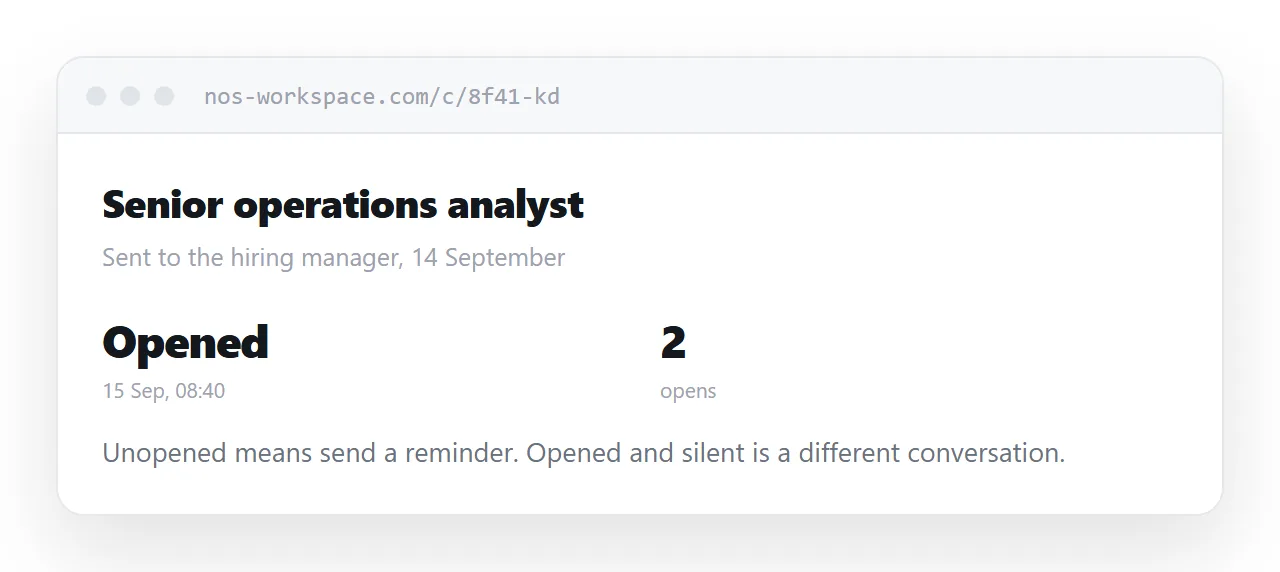
Knowing it was opened changes the follow-up
Most of the chasing in recruitment is guesswork. The manager has not replied, and you do not know whether they read the profile and are thinking, or never opened the email.
An open count answers that. Unopened, send a reminder. Opened three days ago with no reply, the conversation to have is a different one.
It is a small thing that removes a large amount of pointless chasing.
Keep the address unguessable
This is a page containing someone's employment history. It should not be findable.
A long unguessable address keeps it out of search results and out of reach of anyone not given the link. Add a password if the role or the candidate is sensitive.
And take it down when the process ends. Not eventually, on a schedule you keep.
Closely related: How to send your CV as a link, and How to share your resume as a link for the adjacent problem. Sharing a script as a link is also close.
Put it at an address
Lead with the summary and availability, hold contact details back, use an unguessable address, check whether it was opened before chasing, and take it down when the process closes.
Then you are sharing a candidate rather than distributing their personal data.