A resume at an address opens in a tap on a recruiter's phone, can be corrected after it has been sent, and tells you whether anyone read it.
The file still exists for the systems that demand one. It stops being the thing you send to people.
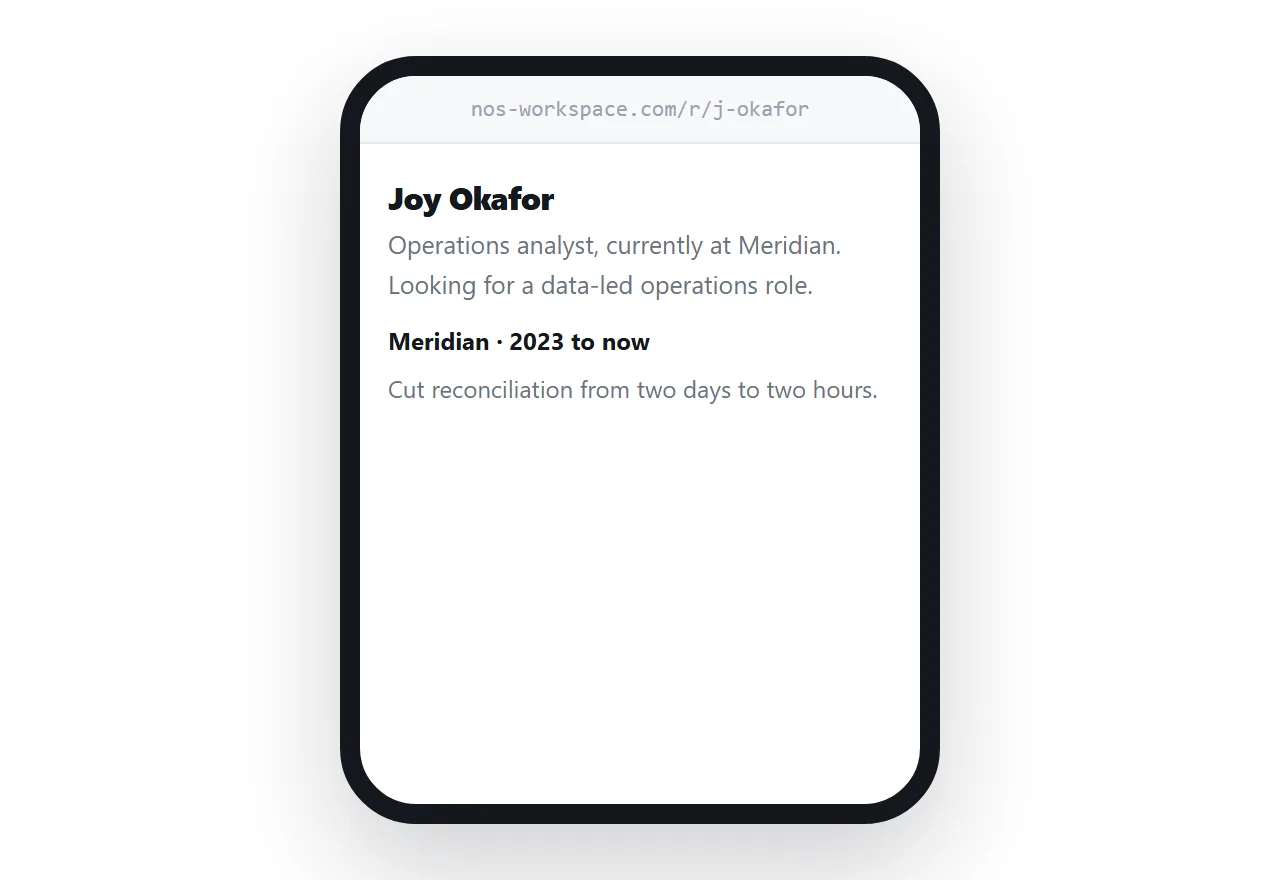
This guide covers what to lead with, where the file is still required, and privacy.
The recruiter is on a phone
They received forty applications this morning. They are reading between other things, on a phone, deciding in seconds whether to look properly.
An attached document on a phone means a download, then a reader app, then a page laid out for A4 scaled to five centimetres. A meaningful number of recruiters simply postpone it, and postponed means never.
A page opens immediately and reflows to the screen. That is the whole difference, and it happens at the exact moment someone is deciding whether to bother.
For the phone side of this, see Opening an HTML file on a phone.
Lead with the two things they are checking
Current role and what you are looking for. Both in the first screen.
Recruiters are matching, not reading. They have a role in mind and are checking whether you plausibly fit it. Making that easy is not dumbing anything down; it is answering the question they actually have.
Then the experience, most recent first, with the outcome rather than the responsibilities. Then education, briefly. Then links.
| Resume as a file | Resume at an address | |
|---|---|---|
| Opens on a phone | Downloads | Opens |
| Fix a mistake | Embarrassed follow-up | Edit the page |
| Forwarded internally | Old version | Current one |
| You can tell it was read | No | Yes |
| Accepted by application systems | Yes | Usually not |
Keep the file for the systems
This is the honest limitation. Applicant tracking systems want a file upload and parse the text out of it.
So keep a PDF, keep it current, and upload it where it is asked for. The link is for the parallel track: the recruiter who messaged you, the manager who asked for something to look at, the contact who offered to pass your details on. That track is where most senior hiring moves.
Put the link in the file too, so a resume that entered through a system still leads to the better version.
Link the detail, do not include it
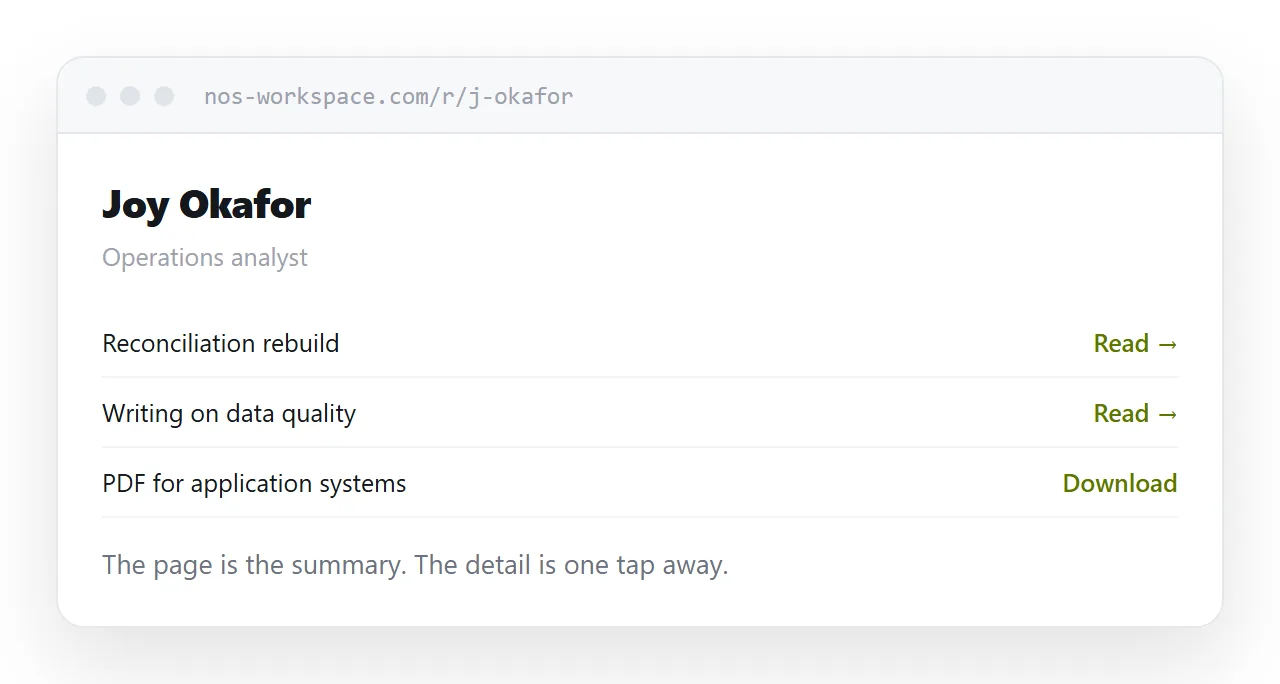
The page should be a summary that opens onto detail.
Projects, writing, a portfolio, a code repository. Each at its own address, linked from the relevant line. The recruiter reads the page. The hiring manager, who is genuinely interested, follows two or three links and learns much more than a longer resume would have told them.
This is something a file cannot do well, and it is the main reason a resume as a page is a better artefact rather than just a more convenient one.
Privacy
A resume is personal data about you: employment history, sometimes your address, usually your phone number.
Use an unguessable address rather than a public page, unless you genuinely want it findable. Consider leaving the phone number off; an email address is enough for a first reply and you can give the number when a conversation is happening.
If this is near what you are doing, How to send your CV as a link and How to share candidate details with a hiring manager cover the cases on either side. How to share a document with a team is also close.
Put it at an address
Lead with your current role and target, keep a PDF for application systems, use an unguessable address, link the detail, and correct mistakes on the page.
Then the recruiter reading on a phone actually reads it.