A pitch deck is forwarded more than almost any other business document. It goes from the associate to the partner, from the partner to the meeting, from the meeting to someone at another firm.
Everything about how you send it should assume that.
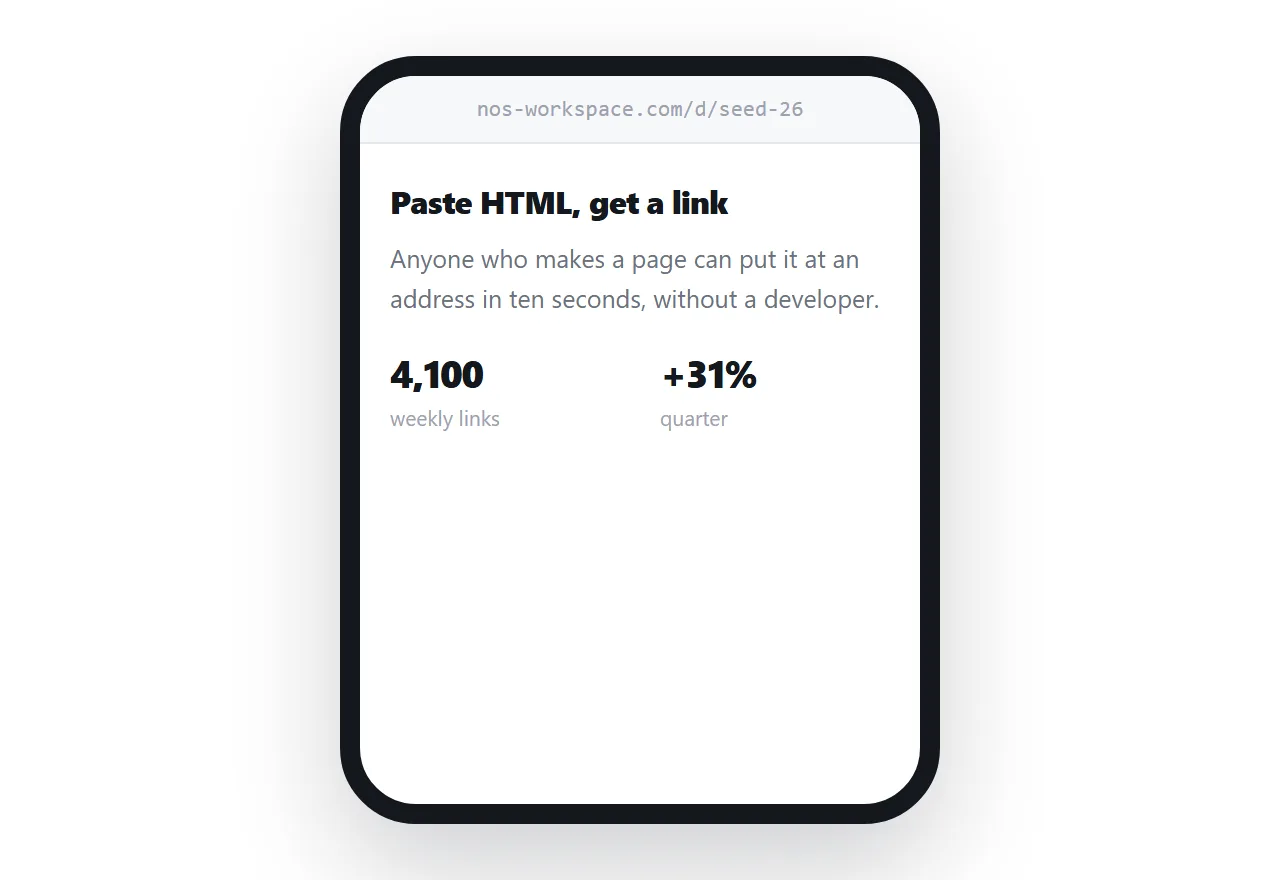
This guide covers the forward, updating mid-raise, and what tracking is worth.
The forward is the whole design problem
You send the deck to one person. Within a week several people you have never met have looked at it.
As an attachment, each of those is a frozen copy. Your revenue number from three weeks ago is being discussed in a meeting you are not in, and there is no mechanism by which the correction reaches that room.
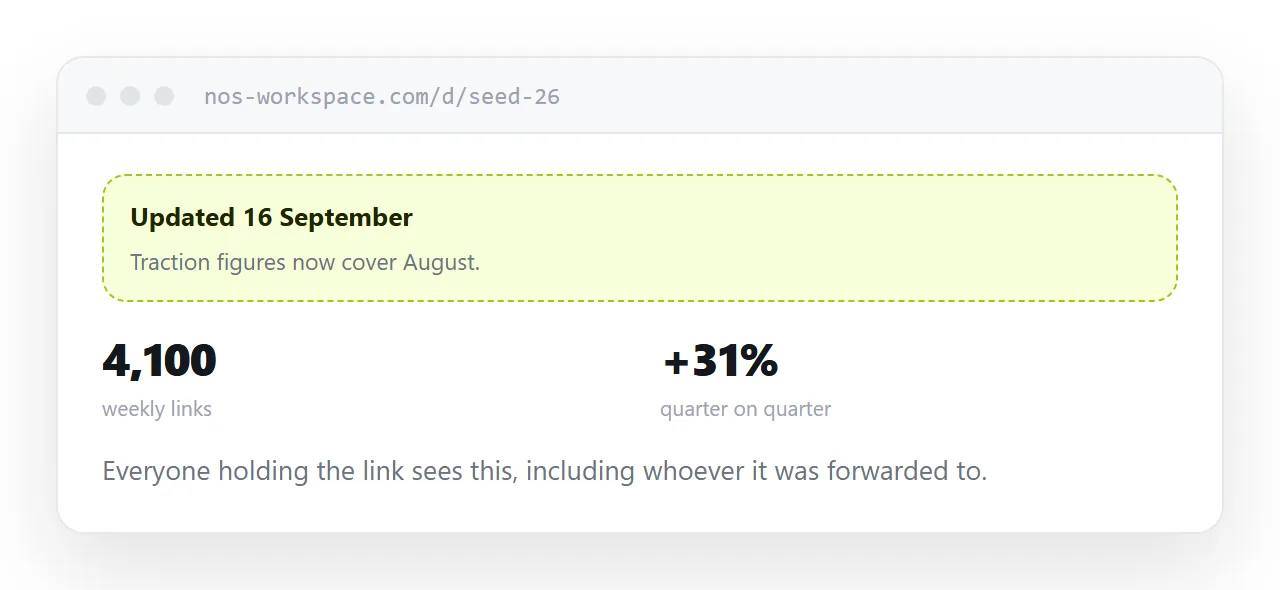
As an address, every one of those readers gets the current version. You revise the traction slide on Tuesday and the partner meeting on Thursday sees Tuesday's figure.
That is not a convenience. During a raise, where numbers move weekly, it is the difference between being current and being wrong in front of the people deciding.
| Deck as an attachment | Deck at an address | |
|---|---|---|
| Forwarded internally | Frozen copy | Current version |
| Numbers revised | Everyone has the old ones | Everyone has the new ones |
| Opens on a phone | Downloads, 40MB | Opens |
| You know it reached the partner | No | Opens from new readers |
| Withdraw after the round | Impossible | Take it down |
Keep a PDF anyway
Some firms have a process. The deck goes into their system, gets circulated by their operations team, and that system wants a file.
Do not argue with it. Keep a current PDF, send it when it is asked for, and put the address on the first slide so the file still leads back to the live version.
The link is for the conversations. The file is for the process.
What the open signal is worth
Knowing the deck was opened, and roughly when, is useful. It tells you whether the silence is consideration or an unread inbox, and that changes what your follow-up should say.
A second wave of opens a week later usually means it has been circulated internally, which is the best signal available short of a reply.
Resist reading more than that into it. Slide-by-slide timing data is noisy, a deck left open in a tab looks like intense study, and mentioning any of it to an investor reads badly.
Privacy
A deck contains your revenue, your burn, your plans and often your customers.
Use an unguessable address rather than a public one. Add a password for anything with detailed financials. Never let it be findable, because a deck in search results is close to impossible to unwind.
When the round closes, take it down and note the date. Copies taken while it was live still exist somewhere, and ending ongoing access is still worth doing.
The first slide
Since the deck now opens on a phone, the first slide has to work at that size.
One line saying what the company does, in words a partner could repeat to a colleague. Not a tagline, not a mission statement. The sentence they will use when they describe you to somebody else.
If this is near what you are doing, How to send a proposal as a link and How document tracking works cover the cases on either side.
Put it at an address
Use an unguessable address, keep a PDF for firms that need one, revise in place as the raise moves, use the open signal for timing only, and take it down when the round closes.
Then the partner meeting you were not in sees the right numbers.