A data room is a set of documents at private addresses with an index in front of them, and a way to take access away when the process ends.
Dedicated software adds proof of who saw what. Whether you need that depends on whether anyone will ever have to prove it.
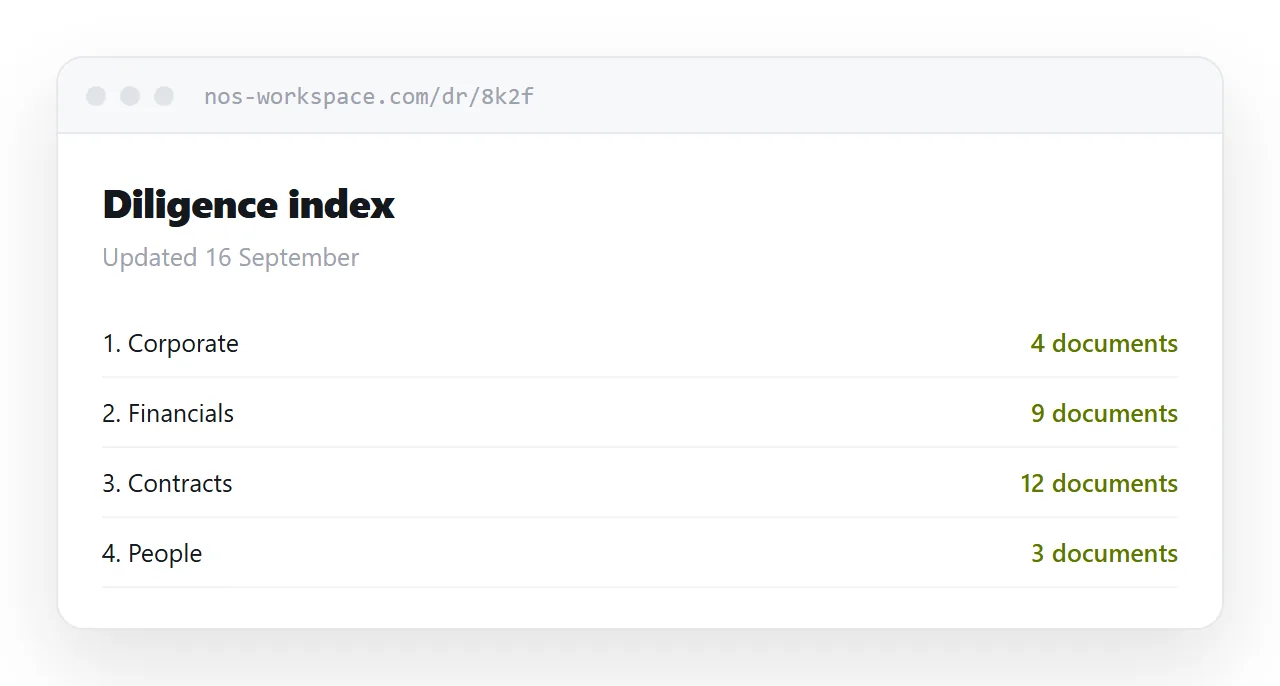
This guide covers the index, what the paid tools add, and why emailing a pack is the one thing not to do.
The index is what you are judged on
The other side forms an opinion of how you run things within about a minute of arriving, and the index is all they have seen at that point.
A clear index with sensible categories, everything named the way a reader would name it, and nothing obviously missing reads as a business that has its affairs in order. A folder called Documents containing forty files with internal names reads as the opposite, whatever is in them.
Spend time on the index. It is the cheapest credibility available in the whole process.
What the paid tools add
Dedicated data room software provides per-user permissions, a full audit trail, watermarking, and the ability to demonstrate afterwards exactly who accessed what.
That matters when the transaction is regulated, when there are competing bidders who must not see each other's activity, or when a dispute later could turn on who saw which document.
It matters much less for a seed round or a small acquisition, where the practical requirements are: the documents are available, they are not public, and access ends when the process does.
| Emailed pack | Private addresses | Data room software | |
|---|---|---|---|
| Withdraw access | Impossible | Take pages down | Per user |
| See what was read | No | Per document | Per person per document |
| Provable afterwards | No | Partially | Yes |
| Setup effort | None | Small | Significant |
| Cost | None | Low | High |
Never email the pack
This is the specific mistake worth avoiding.
A diligence pack sent as attachments is permanent. It sits in inboxes at the other firm, gets forwarded internally to people you did not choose, and remains readable indefinitely after the deal falls over. There is no version of asking for it back that works.
Addresses you can withdraw. When the process ends, the pages come down, and whatever was forwarded is now a set of links that lead nowhere.
One address per document
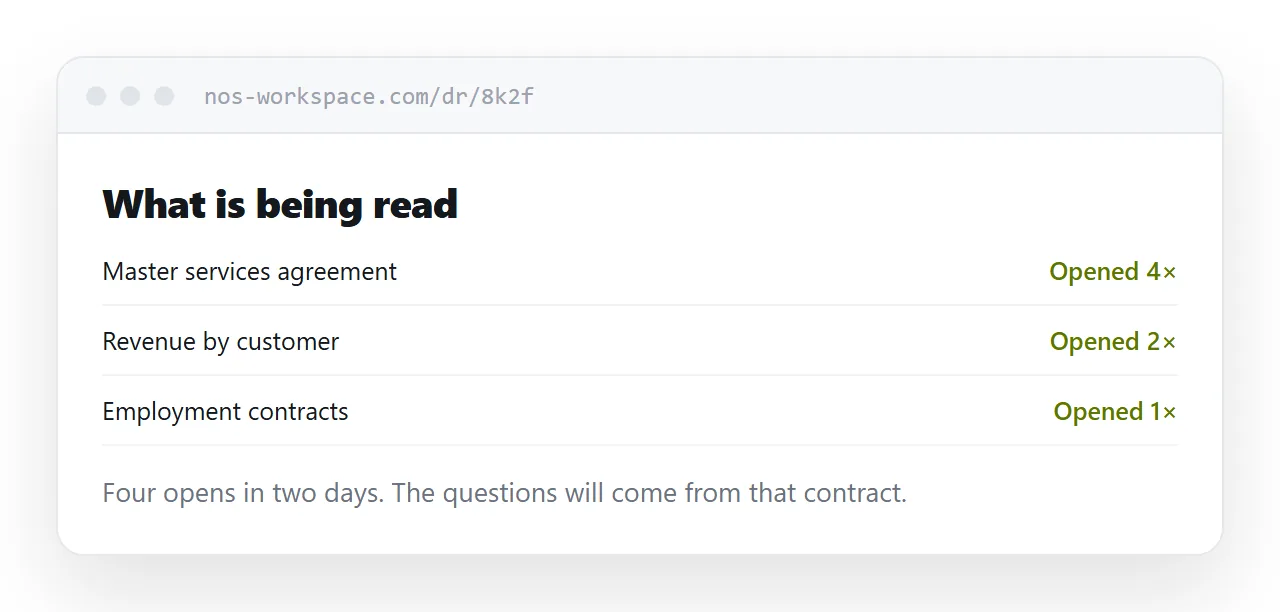
Splitting the room into per-document addresses gives you something useful during the process.
You see which documents are being opened and, more tellingly, which are being reopened. A contract read four times in two days is the subject of an internal argument, and the questions are coming.
That is a few days of warning to prepare an answer, which is worth more than most things in a diligence process.
Access control, honestly
Unguessable addresses keep documents out of search and away from anyone not given the link. For most of what goes in a data room that is sufficient.
Add a password for the genuinely sensitive material: the cap table, employment contracts, anything with personal data in it.
What none of this stops is the other side saving a copy while access is open. Assume they have. The purpose of withdrawal is to end ongoing access, not to un-see anything.
Closely related: How document tracking works, and How to share a PDF as a link for the adjacent problem. How to share a video as a link is also close.
Put it at an address
Write the index first, give each document its own address, keep the addresses unguessable, watch what gets reread, and take it down when the process ends.
Then the pack stays yours after the deal moves on.