A media kit link is a creator or publisher media kit kept at one address, so the numbers are current whenever a brand opens it and the same link can be sent every time.
Media kits have a short shelf life by nature. The figures in them are the point, and figures move.
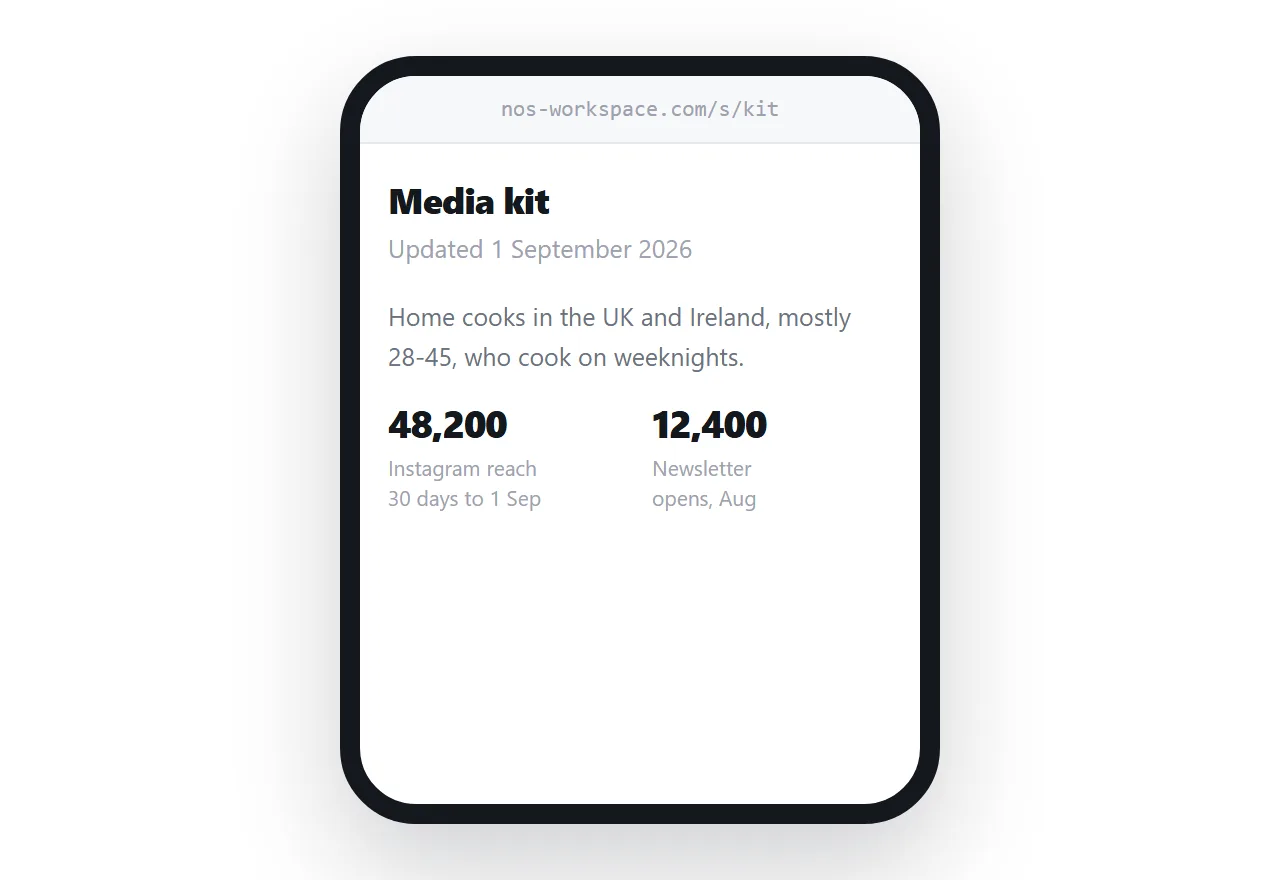
This guide covers what belongs on it, how to present numbers so they are believed, why a link beats a rebuilt PDF each quarter, and how rates should be handled.
Lead with the audience, not the count
A follower number on its own says almost nothing. Brands are buying access to a particular kind of person, and the kit that describes that person wins against the kit that shouts a bigger number.
Two or three sentences: who they are, what they are interested in, where they are. Then the figures underneath as supporting evidence.
| What brands ask internally | What answers it |
|---|---|
| Are these our customers? | Audience description, location, age band |
| How many will see it? | Reach, dated, per platform |
| Do they act? | Saves, clicks, a past campaign result |
| Has this person done it before? | Two or three named pieces of work |
| What does it cost? | A starting figure or what shapes one |
Date every number
Brands have read a lot of optimistic media kits. Specificity is the differentiator.
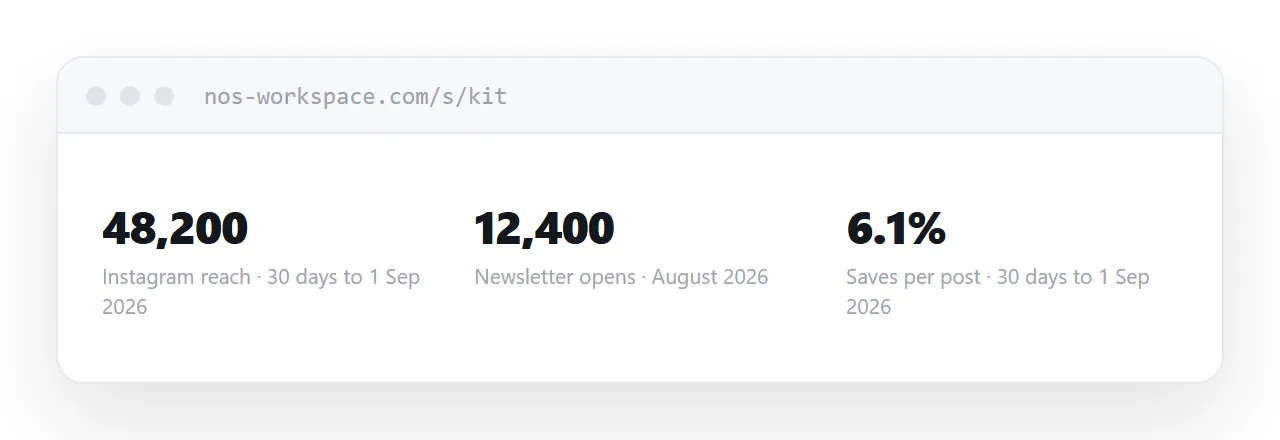
<div class="stat">
  <span class="n">48,200</span>
  <span class="l">Instagram reach · 30 days to 1 Sep 2026</span>
</div>
A figure with a platform and a period attached is checkable and therefore credible. A round number with neither reads as a best month from some time last year, because that is usually what it is.
Include the unflattering numbers where they are relevant. A modest audience with strong engagement is a stronger pitch than a large one with none, and saying so plainly is more persuasive than hiding it.
Past work as links, not screenshots
The common pattern is screenshots of previous posts pasted into the document. They are small, they cannot be clicked, and they prove nothing.
Link to the actual work. A brand that wants to check whether the comments were real can do so in one click, and the fact that you let them look is itself part of the pitch.
Where a piece is no longer public, describe what it was and what happened, with the result dated.
Rates, and what to do if you do not publish them
Putting a starting figure on the page costs you nothing you wanted. It filters out enquiries with no budget before either side spends an email on them.
If you genuinely price case by case, do not leave the section empty. Say what moves the number.
- Usage rights. Organic only, paid amplification, or full buyout.
- Exclusivity. Whether you are agreeing not to work with competitors, and for how long.
- Duration. How long the content stays up and how long any exclusivity runs.
- Volume. What a series costs relative to one piece.
That paragraph does the same filtering job as a number and keeps the negotiation open.
Why the link matters more here than elsewhere
Most documents go stale slowly. A media kit goes stale monthly, and the direction is upward.
A creator who sends a PDF in January is pitching with January's numbers in June, which undersells them. Rebuilding the file every month is work nobody sustains, so in practice the file gets sent long after it stopped being true.
With a page, updating is a few numbers and a date. The link you gave a brand in January is a current kit when they come back in June, which is exactly when they come back.
Keep it to one kit
The temptation is a version per sector. It fails in a predictable way: the versions drift, and the one you grab in a hurry is the old one.
Keep a single kit and vary the covering email, which is where tailoring actually belongs. If a sector needs genuinely different evidence, add a second page and link it rather than forking the kit.
Put it at an address
Write the kit as a page, paste it into a document, create a share link, and use that one address in every pitch.
Update the numbers when they move. The brand that saved your link months ago opens a kit that reflects where you are now rather than where you were.