A press kit link is a single address holding the facts, images and contact a journalist needs, so they can write accurately without emailing you first.
Press kits are used under time pressure. That single fact should decide every choice in how you build one.
This guide covers what a journalist actually needs, why a zip loses to a page, how to handle images at two sizes, and the permission line that saves you an email every time.
Write the paragraph they will quote
Most coverage contains a sentence describing your company that came from somewhere. If you do not supply it, the journalist writes their own from whatever they found, and that version then gets copied by the next outlet.
So write it. One paragraph, factual, no adjectives that cannot be checked.
<section class="boiler">
  <h2>Boilerplate</h2>
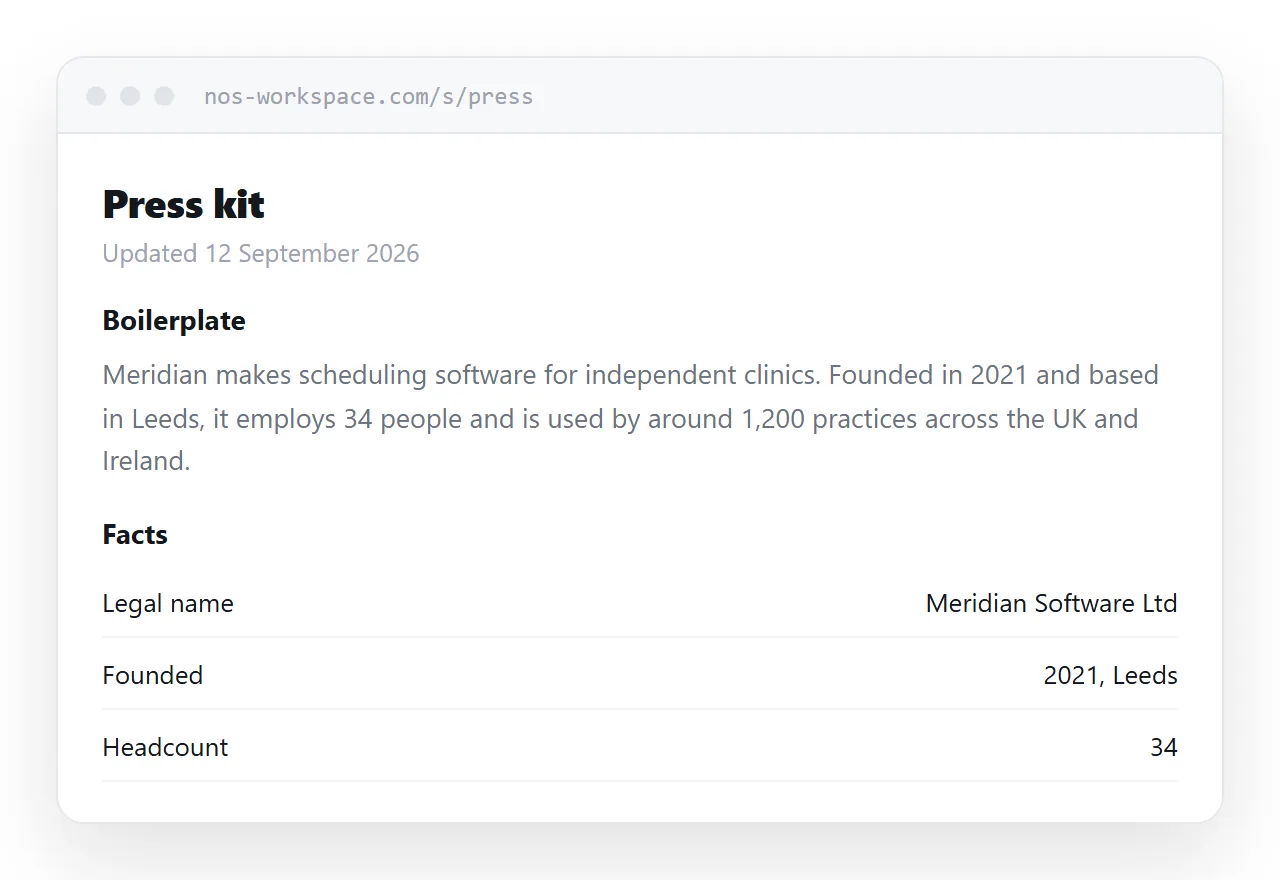
  <p>Meridian makes scheduling software for independent clinics. Founded in
     2021 and based in Leeds, it employs 34 people and is used by around
     1,200 practices across the UK and Ireland.</p>
</section>
The test is whether an editor could paste it straight in. If it contains "leading" or "innovative", it fails, because those get cut and whatever replaces them was not written by you.
The facts, as a list
Journalists check a specific set of things, usually in the last ten minutes before filing.
| What they check | Why it matters |
|---|---|
| Correct legal name and capitalisation | It appears in the headline |
| Founded, and where | Standard in any company paragraph |
| Headcount | Signals scale without a claim |
| Funding, if relevant | Fact-checked against public filings |
| Spelling of names and titles | The most common correction request |
| Pronunciation, for unusual names | Broadcast needs it |
Put these in a plain list rather than in prose. Somebody scanning for one item should find it without reading a paragraph.
Why a zip loses
A zip file is a container that has to be downloaded and opened before anyone can see what is in it. On deadline, that is two steps too many.
The practical result is that the journalist uses whatever they can grab from your website, which is usually a logo lifted from the page header at the wrong size against the wrong background.
A page shows the images inline at screen size and offers each as its own download. The one they need is one click away and they can see it before committing to the click.
Two sizes of every image
Serve a screen-sized version on the page and link the original.
<figure class="asset">
  <img src="/img/press/logo-dark-640.webp" alt="Meridian logo, dark" width="640" height="200" loading="lazy">
  <figcaption>
    Primary logo, dark
    <a href="/img/press/logo-dark.png" download>PNG, 2400 px</a>
    <a href="/img/press/logo.svg" download>SVG</a>
  </figcaption>
</figure>
Include an SVG where you have one. It is small, scales to any size, and is what a designer laying out a print page actually wants. Background in SVG in HTML.
Sizing guidance for the on-page versions is in making images responsive.
The permission line
This is the highest-value sentence on the page.
An editor who is unsure whether they may use your photograph will leave it out rather than risk it. One plain line prevents that.
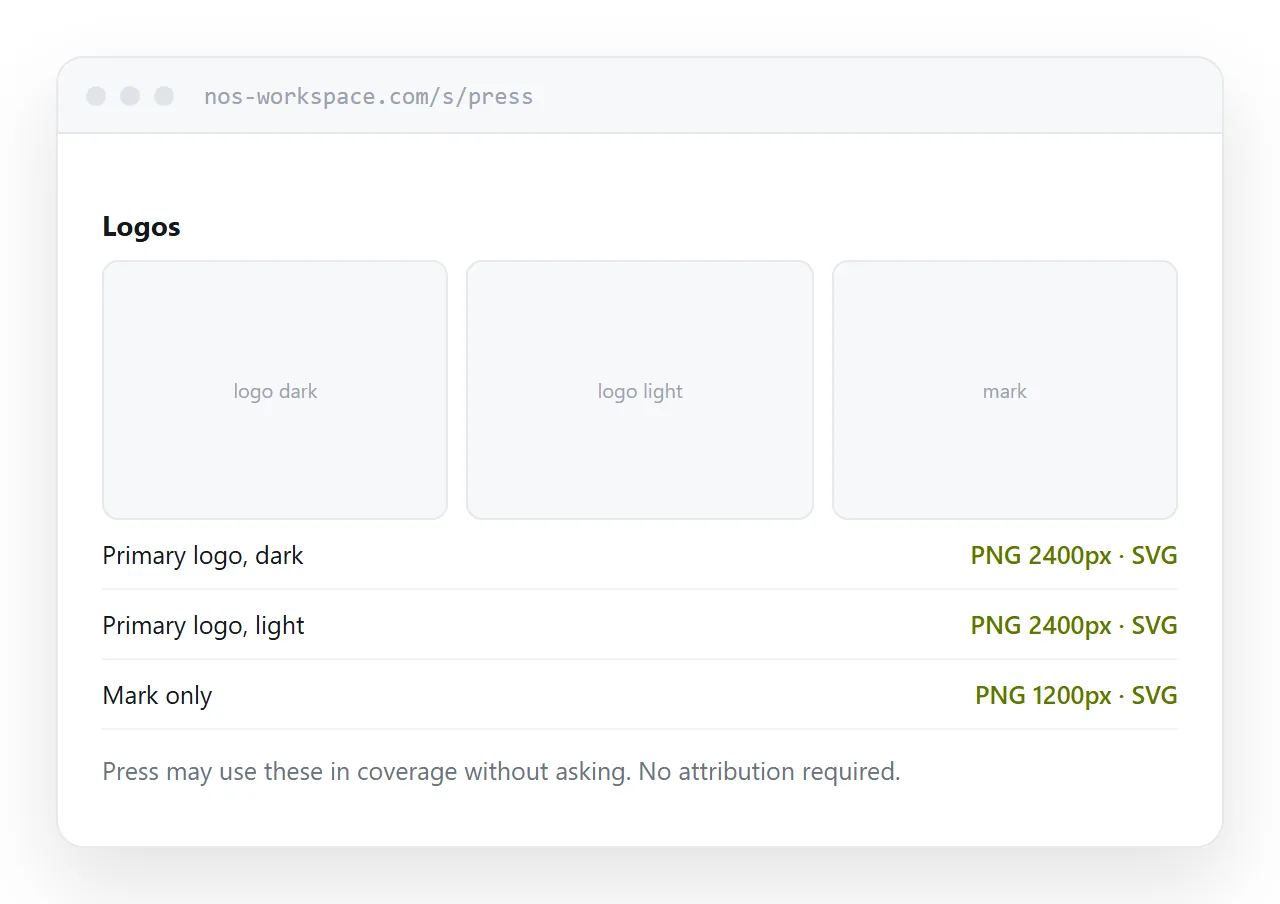
Say who may use the assets, for what, and whether attribution is required. Keep it to a sentence or two in ordinary language rather than a licence block, and put it directly beside the downloads rather than in a footer.
Make it findable
A press kit nobody can find does not exist. Link it from your site footer, from your about page, and from the signature of whoever handles enquiries.
Use a stable address and keep it stable. Journalists bookmark press kits and come back years later, which is the whole reason a link beats a file. Moving it throws that away, and a redirect only helps if you remember to set one up.
Put it at an address
Write the kit as a page, paste it into a document, create a share link, and put that address where a journalist will find it without asking.
Then keep the facts current. The value compounds: every piece of coverage that used your paragraph makes the next journalist more likely to use it too.