A quote is a number, a scope, and a date it stops being valid. Everything about how you send it should serve the week after, which is when the work actually happens.
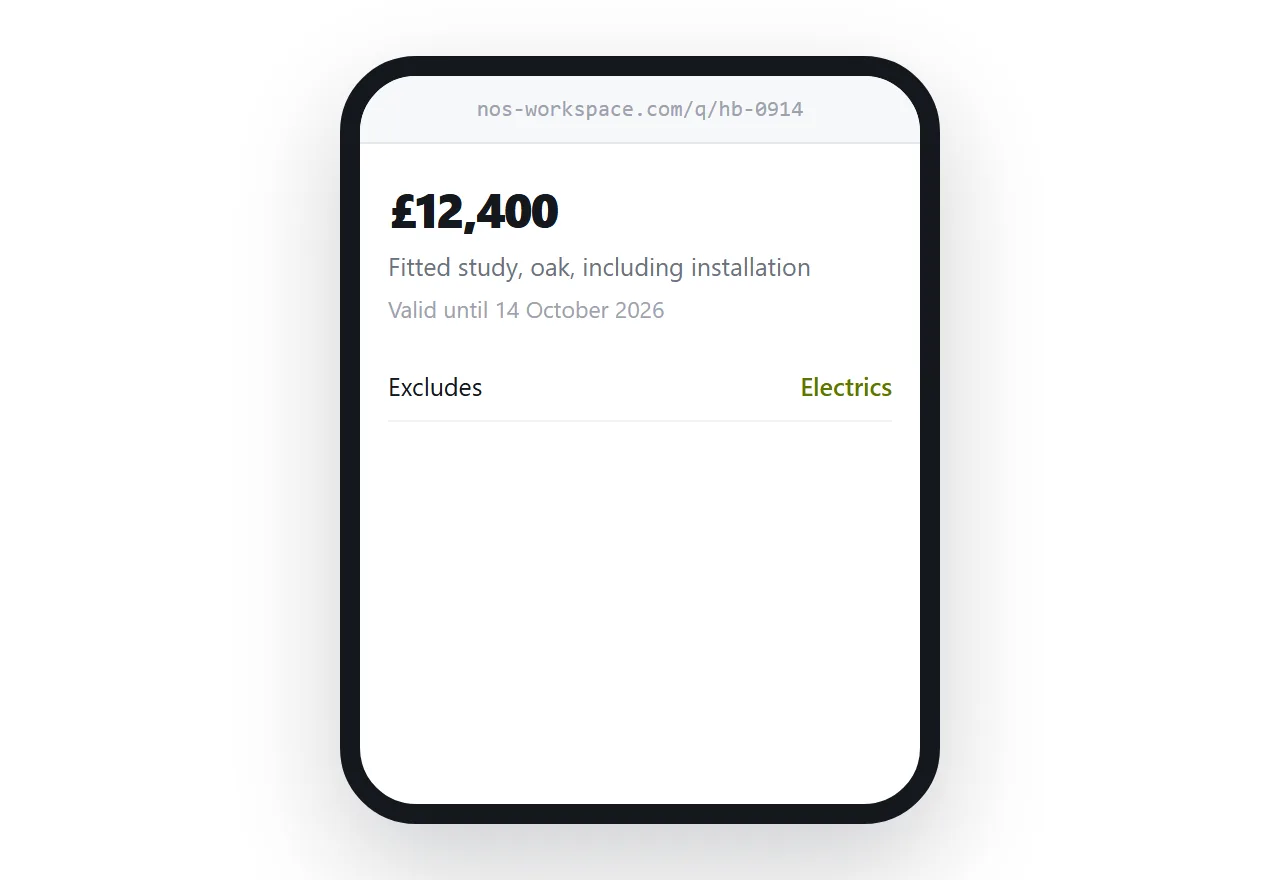
This guide covers what goes first, revisions, and following up.
Lead with the number
Clients scroll to the total. They do it whatever order you put things in, and they do it before reading the scope.
Putting it at the top is not blunt; it is matching how the document is read. It also reads as confident, whereas burying it after three paragraphs of preamble reads like someone hoping the number will be softened by context.
Total, what it covers, what it excludes, validity date. In that order, then the detail.
The validity date
Every quote should have one.
It is entirely normal commercially, it protects you when costs move, and it gives you a reason to make contact that is not chasing. Following up two days before a quote expires is a service rather than a nudge.
Put it near the total, where it will be read.
Revisions are where files fail
Quotes get revised. Scope changes, the client asks to remove something, a price is adjusted.
As attachments, that produces a thread with three files, and a client who at some point approves the wrong one. This is not hypothetical; it is the common failure of quoting by email, and it occasionally becomes an argument about what was agreed.
At an address, you replace what sits behind it. The client opens the link they already have and sees the current version. There is only ever one, which removes the entire category of dispute.
| Quote as an attachment | Quote at an address | |
|---|---|---|
| Revision | A second file | An edit |
| Which version is current | Ambiguous | Only one exists |
| Opens on a phone | Downloads | Opens |
| You know it was read | No | Yes |
| Expired quote | Still circulating | Marked expired |
Following up on information
Silence after sending a quote has two explanations that call for opposite responses.
Unopened. It is under forty other emails. A short reminder, possibly in another channel, is the right move and it is welcome rather than pushy.
Opened, several times, no reply. The quote did its job and something else is in the way: budget, a decision-maker, a competing option. Sending another copy is useless. Asking what would help is not.
An attachment leaves you guessing between those. An address tells you, and it is the single most useful thing an address gives a small business.
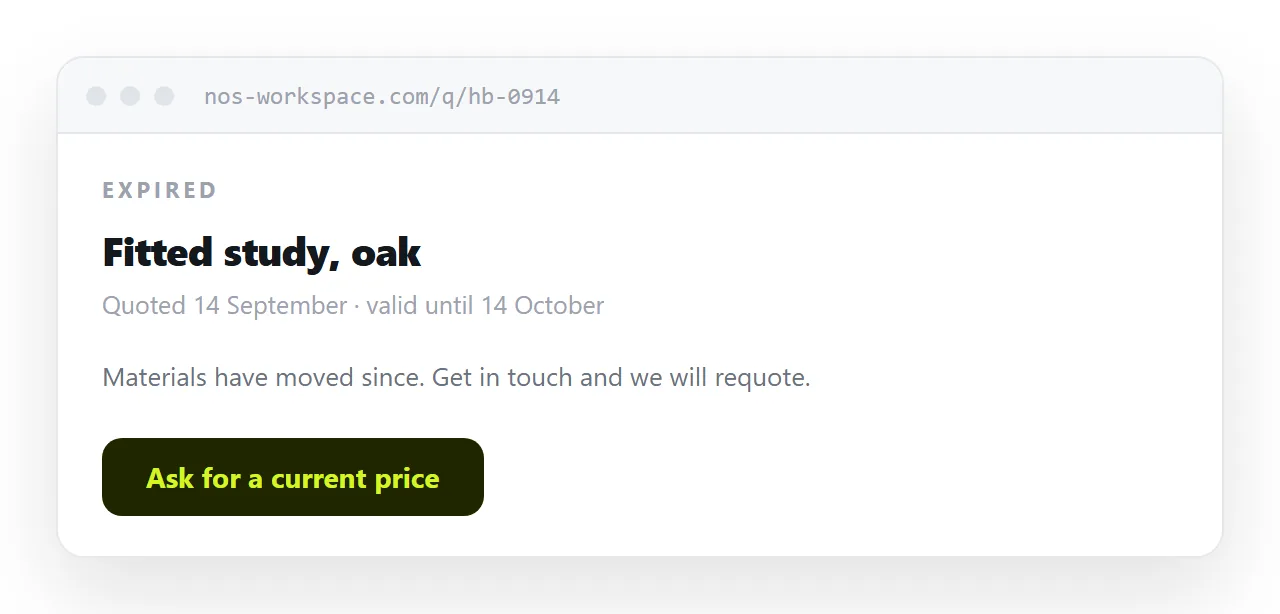
When it expires
Do not remove the page.
Mark it expired, keep the scope visible, and invite them to get in touch for a current price. A client returning to an old quote three months later is a warm lead landing on something useful rather than on an error.
Keep a PDF
Procurement systems want files, and some clients file everything.
Keep a current PDF and link it from the page. Do not attach it, because attaching it reintroduces the version problem you just solved.
For the surrounding ground, see How to send a quote as a link and How to send a proposal as a link.
Put it at an address
Lead with the total, give it a validity date, send an address rather than an attachment, revise in place, and check whether it was opened before following up.
Then the week after sending is informed rather than a guess.