A client looking at copy cannot tell whether it is good, because they do not know what it had to do. Supplying that is the entire job of a copywriter's portfolio.
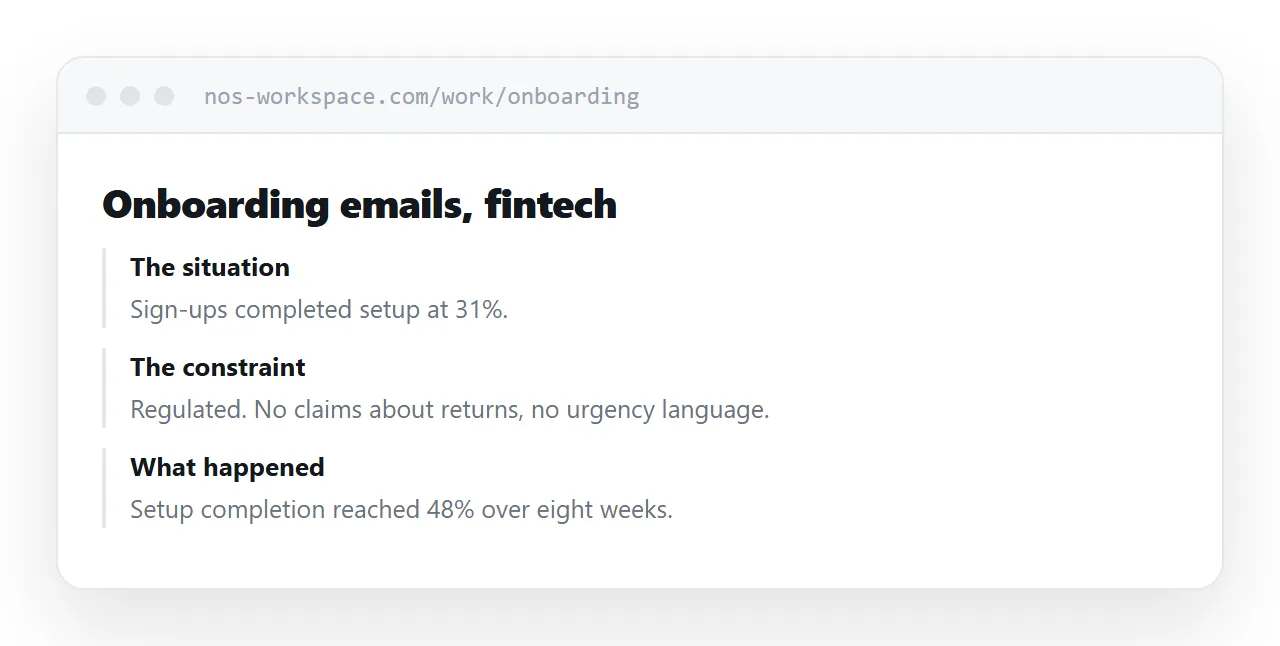
This guide covers what goes around each piece, restricted work, and the structure that gets read.
Copy without the brief looks like an opinion
A headline on its own invites the reader to think of a different headline. That is the natural response and it works against you.
A headline preceded by the constraint invites a different response. The client had forty characters, could not mention price, had to work for two audiences, and the previous version was being misread.
Now the same headline reads as a solution to a stated problem, which is what it was.
Four short sections per piece.
The situation. Who the client was and what they needed.
The constraint. Length, tone, regulation, brand rules, whatever made it hard.
The work. The copy itself, presented properly rather than as a screenshot of a document.
What happened. What changed, or what the client said.
The first two pieces decide it
A client opens a portfolio, reads the first piece carefully, skims the second, and scrolls the rest.
That is not a criticism of clients. It is how anyone reads a portfolio.
So the two strongest pieces go first, chosen for the work you want next rather than for the work you are proudest of. Those are frequently different, and choosing the second loses conversations.
| Portfolio as a document | Pieces at addresses | |
|---|---|---|
| Send one relevant piece | Page number | One address |
| Opens on a phone | Downloads | Opens |
| Update a piece | New file | Edit the page |
| Found in search | Rarely | Per piece |
| Client forwards it internally | Old version | Current |
Restricted work
Most copywriting is done under agreements, and most of those restrict publishing the work rather than discussing it.
Describe the problem, the constraint and the approach. Name the sector rather than the client. Paraphrase rather than quoting.
A well-described case study without the exact words is close to as persuasive as the real thing, and it demonstrates something extra: that you understand what the work was for.
When in doubt, ask the client. Many say yes.
One address per piece
This is what makes the portfolio usable rather than decorative.
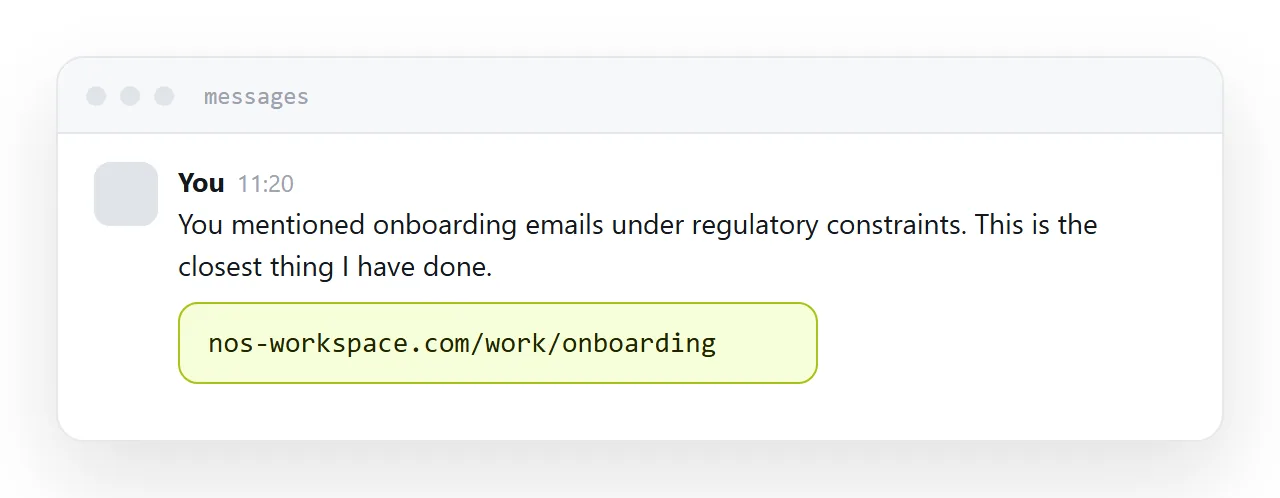
A prospect sends you a brief about onboarding emails. You send the one piece about onboarding emails, at its own address, with a line saying why it is relevant.
That is a far stronger reply than a link to everything you have ever written, and it is only possible if the pieces have their own addresses.
Outcomes, honestly
If you have real numbers and permission to use them, use them.
If you do not, say what changed in words. The client stopped getting a particular support question. The page was rewritten once instead of four times. The team started using the phrasing internally.
Invented percentages are recognisable and they undermine everything around them.
For the surrounding ground, see An HTML portfolio template that opens in seconds and How to build a concept artist portfolio.
Put it at an address
Two strongest pieces first, the brief before the copy, one address per piece, restricted work described rather than shown, and outcomes stated honestly.
Then the client can see what the words were for.