A client enquiry almost always names something specific. A shop refit, a technical newsletter, an onboarding flow. The reply that wins is the one that answers that.
This guide covers selection, the line that matters, and restricted work.
Sending everything is asking them to work
A link to your full portfolio puts the matching on the client.
They have to open it, scan it, work out which pieces resemble their situation, and decide whether you are a fit. Most will give that about a minute, and a proportion will conclude nothing there is relevant because they did not look long enough to find the piece that was.
Selecting for them is the whole job of the reply.
Two or three pieces, one line each
The line is what does the work.
Not a description of the project. A sentence connecting it to their situation.
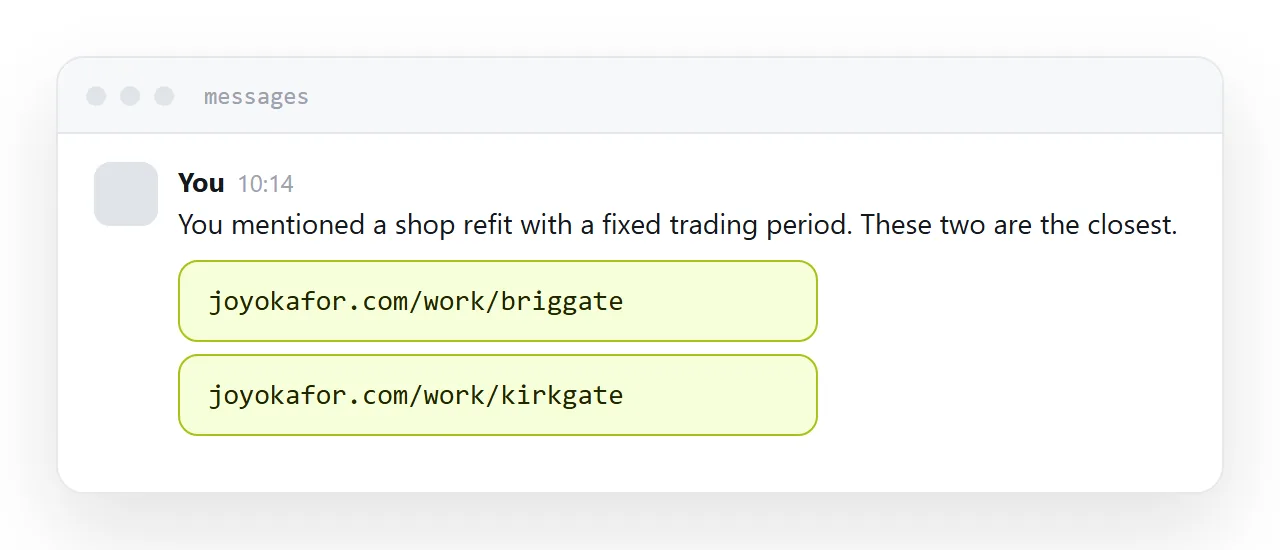
This was a refit with the same constraint you mentioned, a fixed trading period.
That sentence tells the client you read their enquiry, understood the problem, and chose deliberately. A link to everything tells them you have a portfolio.
| Whole portfolio | Two selected pieces | |
|---|---|---|
| Client does the matching | Yes | No |
| Reads as attention | No | Yes |
| Time before they see relevance | A minute | Immediately |
| Forwardable internally | Awkward | Cleanly |
Per-piece addresses make it possible
This only works if each project has its own address.
Without that, the best you can do is send the portfolio and say look at the third one, which is worse than either option.
Structure the portfolio so every piece is independently reachable. It costs nothing at build time and it changes what you can do with every enquiry afterwards.
It also means the client can forward one piece to a colleague without forwarding your whole body of work.
Restricted work
The closest thing you have done is frequently the thing you cannot show.
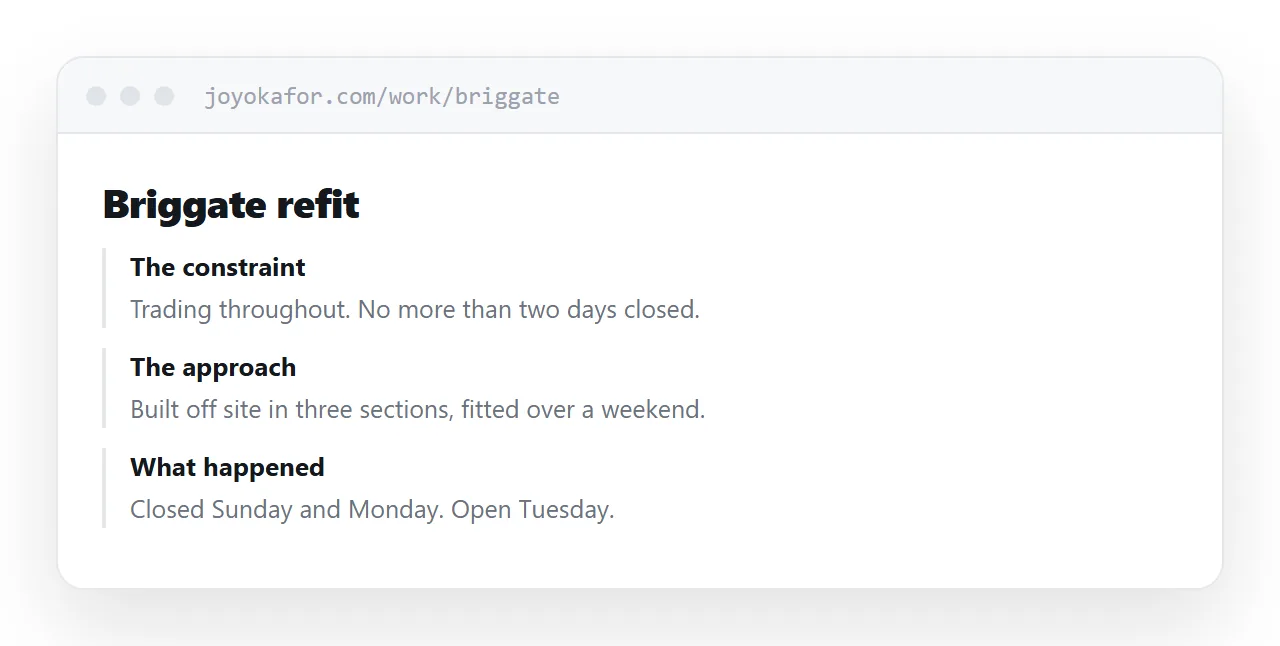
Describe it instead. The problem, the constraint, the approach, the outcome, without the client name or the work itself.
That is close to as persuasive, and it demonstrates something extra: that you do not show other clients' work to strangers. Clients notice, and the ones who care are the ones worth having.
When in doubt, ask the old client. Many say yes.
Do not send a PDF unless asked
A portfolio PDF is large, downloads on a phone, and is frozen at the moment you sent it.
If the client's process requires a file, send one. Otherwise addresses are better in every respect: they open immediately, they stay current, and they let you send exactly the relevant pieces.
If this is near what you are doing, An HTML portfolio template that opens in seconds and How to build a copywriter portfolio cover the cases on either side.
Put it at an address
Read what they asked about, send two or three relevant pieces with a line each, make sure every piece has its own address, and describe restricted work rather than showing it.
Then the reply answers the question the client actually asked.