A workout program sold as a link is opened in a gym, on a phone, by someone who wants to know what they are doing in the next ninety seconds.
Everything about the format should serve that moment rather than the moment of purchase.
This guide covers structure, why video should be linked, and what the open counts tell you.
The reading moment is the gym
Not the sofa. Not a desk. A gym, one hand, mildly out of breath, with thirty seconds before the next set.
That rules out anything requiring zoom, anything laid out as a wide table, and anything that needs scrolling to correlate a row with a column header.
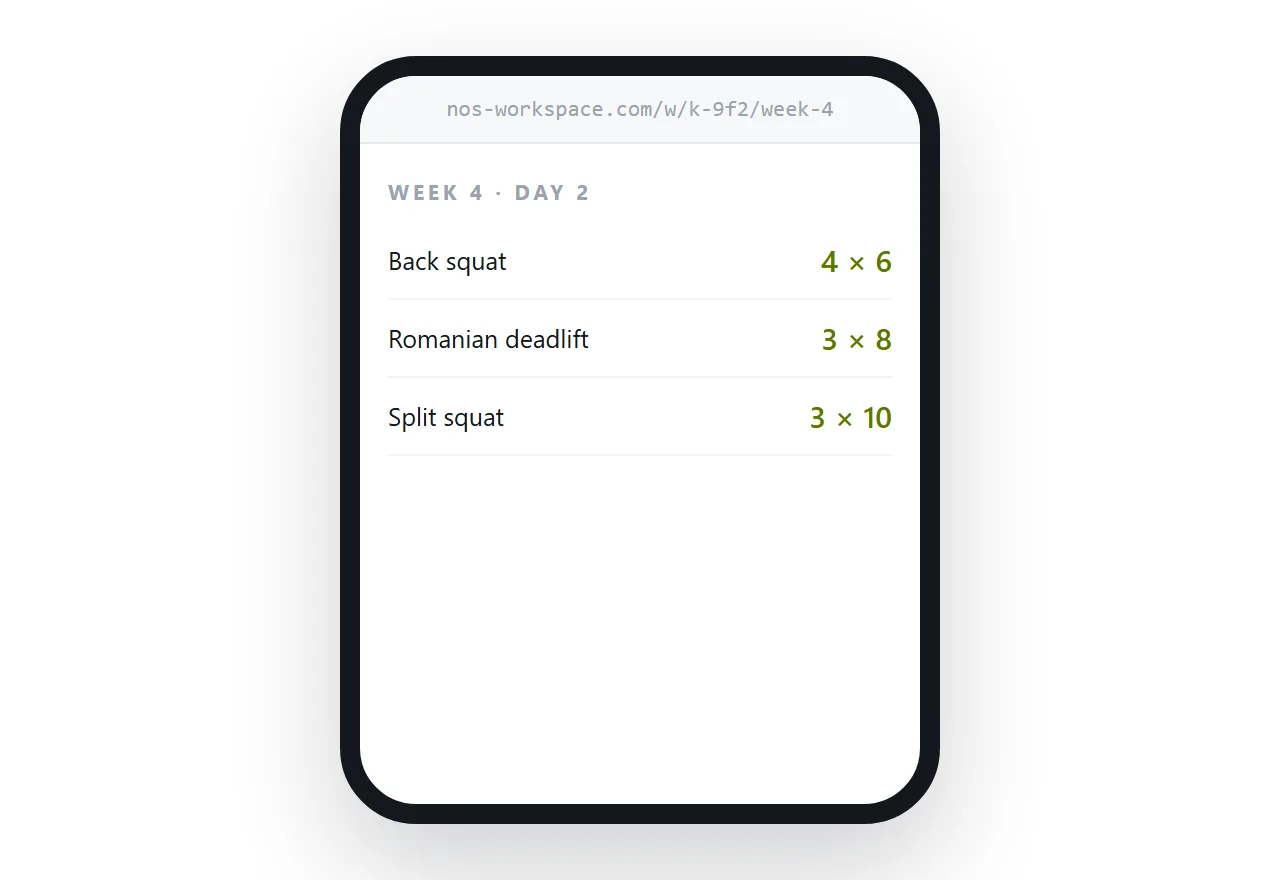
Sets and reps go in large text. Today's session is what appears first. The rest of the week is below it and the rest of the program is a link away.
One page per week
Give each week its own address.
The client opens the current week and sees the current week. They are not scrolling past four weeks they have already done to reach Thursday.
It also lets you change week six after the client has finished week two, which is the ordinary business of coaching and impossible once a document has been downloaded.
| Program as a PDF | Program at an address | |
|---|---|---|
| Read in a gym | Zoom and pan | Scroll |
| Adjust week six mid-program | New file | Edit the page |
| Client lost it | Resend | Same link |
| You can see it is being used | No | Per week |
| Withdraw access | Impossible | Take it down |
Link the videos
The instinct is to embed demonstration clips next to each exercise. Resist it.
Video makes the page heavy, and gym wifi is famously bad. A page that takes eleven seconds to load is a page the client stops opening.
Link each demonstration instead. The client taps it the first time they meet an unfamiliar movement and never again, which is exactly the usage pattern.
The open counts predict cancellations
This is the part that pays for itself.
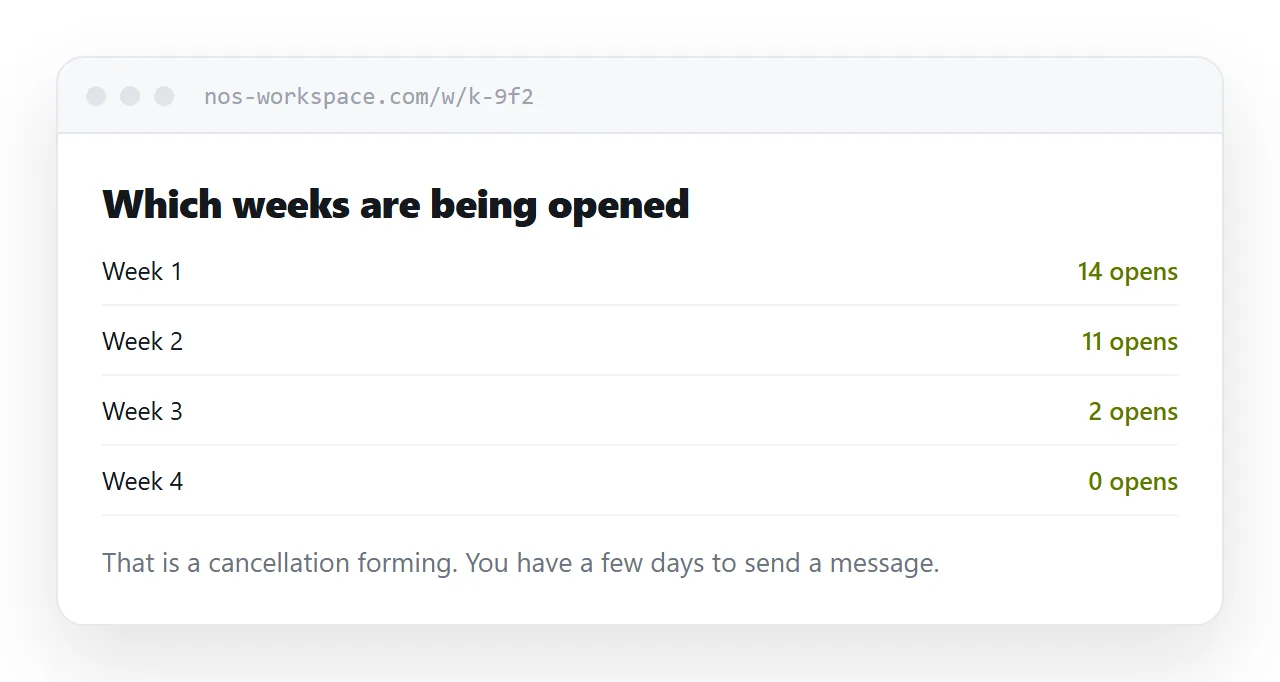
A client opening week one every day and week three twice is a client whose adherence has collapsed. They have not told you, and they will not tell you until they cancel.
Seeing it gives you a few days to send a message. Most of the time that message is the whole intervention required.
On copying
A paid program that can be read can be copied. That is true of a document, a page, an app and a printed booklet.
A private address at least gives you the ability to withdraw one that has clearly been passed around. Beyond that, the durable answer is that the plan is not the product. The check-ins, the adjustments, and the fact that week six responds to how week two actually went are the things that cannot be copied.
Price accordingly, and stop treating the file as the asset.
For the surrounding ground, see How to host a fitness plan and How to share a PDF as a link.
Put it at an address
One page per week, large text for the numbers, linked videos, a private address you can withdraw, and an eye on which weeks stop being opened.
Then the plan is readable at the moment it is actually read.