Temporary websites are usually temporary in the wrong half. The content has an end date; the address is in circulation for years.
This guide covers the split, what to do at the end, and holding pages.
The content ends, the address does not
An event page. A campaign page. A page for a product launch.
All of those stop being current on a known date. That is what makes them temporary and it is the only part that is.
The address, meanwhile, went into an announcement, a post, a printed programme, an email to two hundred people, and possibly somebody else's page. None of that expires.
So plan the content as temporary and the address as permanent, which is the opposite of how these are usually built.
Write the ending before you launch
Decide now what the page says after the date passes. It takes two minutes at the start and it never gets done afterwards.
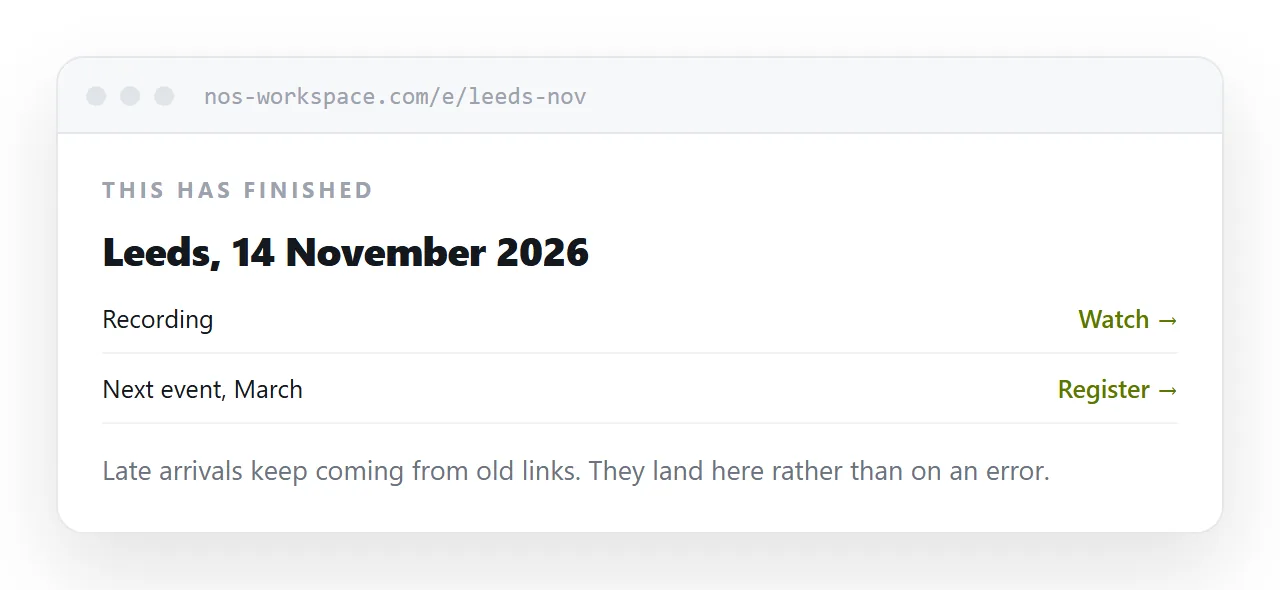
For an event: it happened, here are the photographs and the recording, here is the next one.
For a campaign: it has ended, here is what it achieved, here is where to go now.
For a launch: it launched, here is the product.
Each of those turns an expired page into something useful for the person who arrived late, which is a real and continuing stream of people.
| Remove the page | Change the page | |
|---|---|---|
| Old links | Error | Useful |
| Search position | Lost | Kept |
| Late arrivals | Learn nothing | Learn what happened |
| Effort | None | Ten minutes |
Holding pages
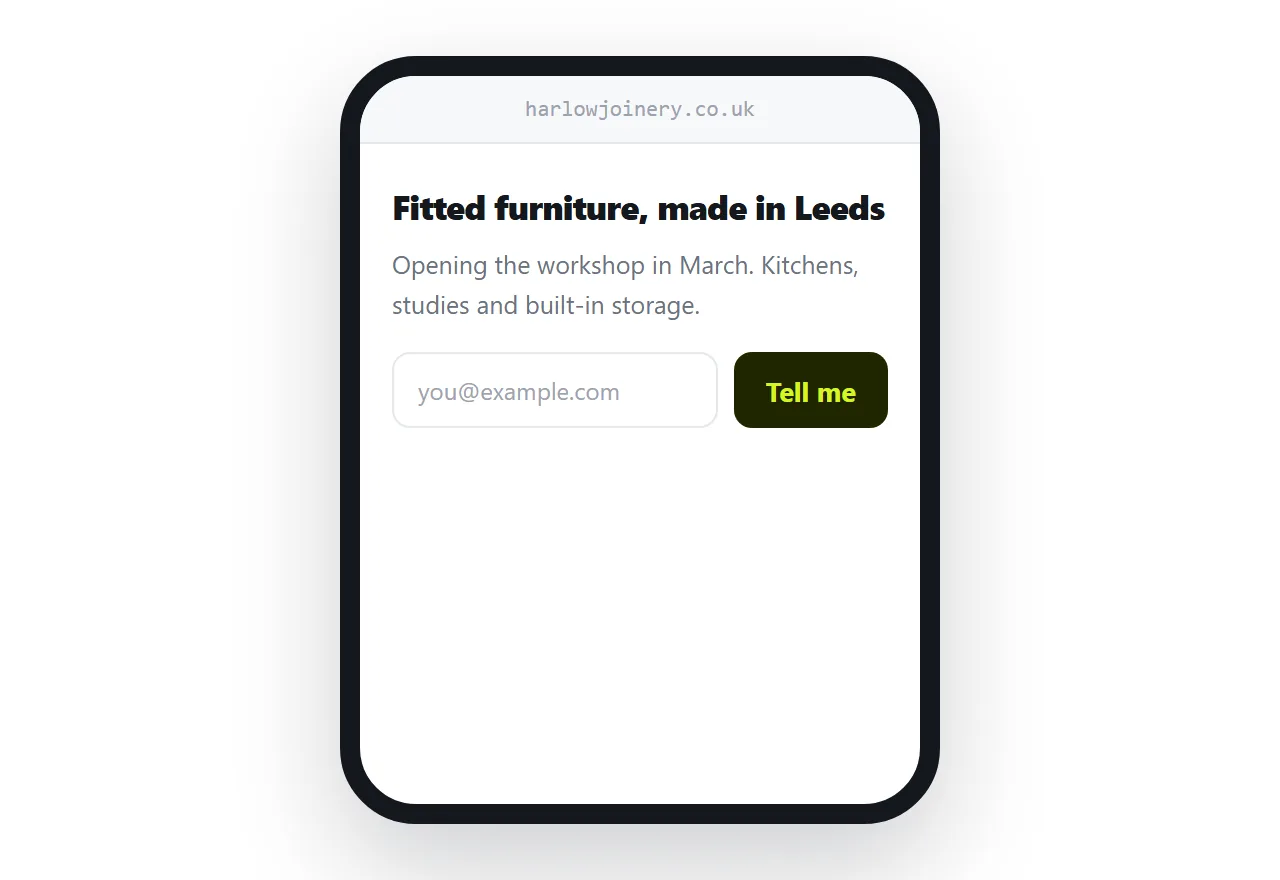
A holding page is worth having when it says something.
A logo and the words launching soon is not content. Nobody can act on it, nobody returns, and search engines have nothing to index.
A working holding page says what the thing is, who it is for, roughly when, and offers one field to hear when it opens. That page collects an audience during the period when you have nothing to sell, which is exactly when an audience is hardest to build.
Same rule about the address: use the one you intend to keep. A holding page on a throwaway address means the announcement, the early interest and any coverage all point at somewhere you are going to abandon.
Seasonal pages
Anything that comes back annually should use one permanent address.
A summer sale page with the year in the address means a new address every year. Each one starts from nothing in search, and last year's links point at last year's prices indefinitely.
One address, content replaced each season, and an off-season state saying when it returns. The links accumulate rather than resetting, and the search position compounds.
Closely related: How to make an event landing page, and How temporary file sharing works for the adjacent problem.
Put it at an address
Use an address you intend to keep, write the ending state before launching, change the page rather than removing it, use one address for anything seasonal, and make holding pages say something.
Then the link on last year's programme still leads somewhere useful.