A temporary link stops working on a date. That is a useful thing and it is routinely mistaken for a different, stronger thing.
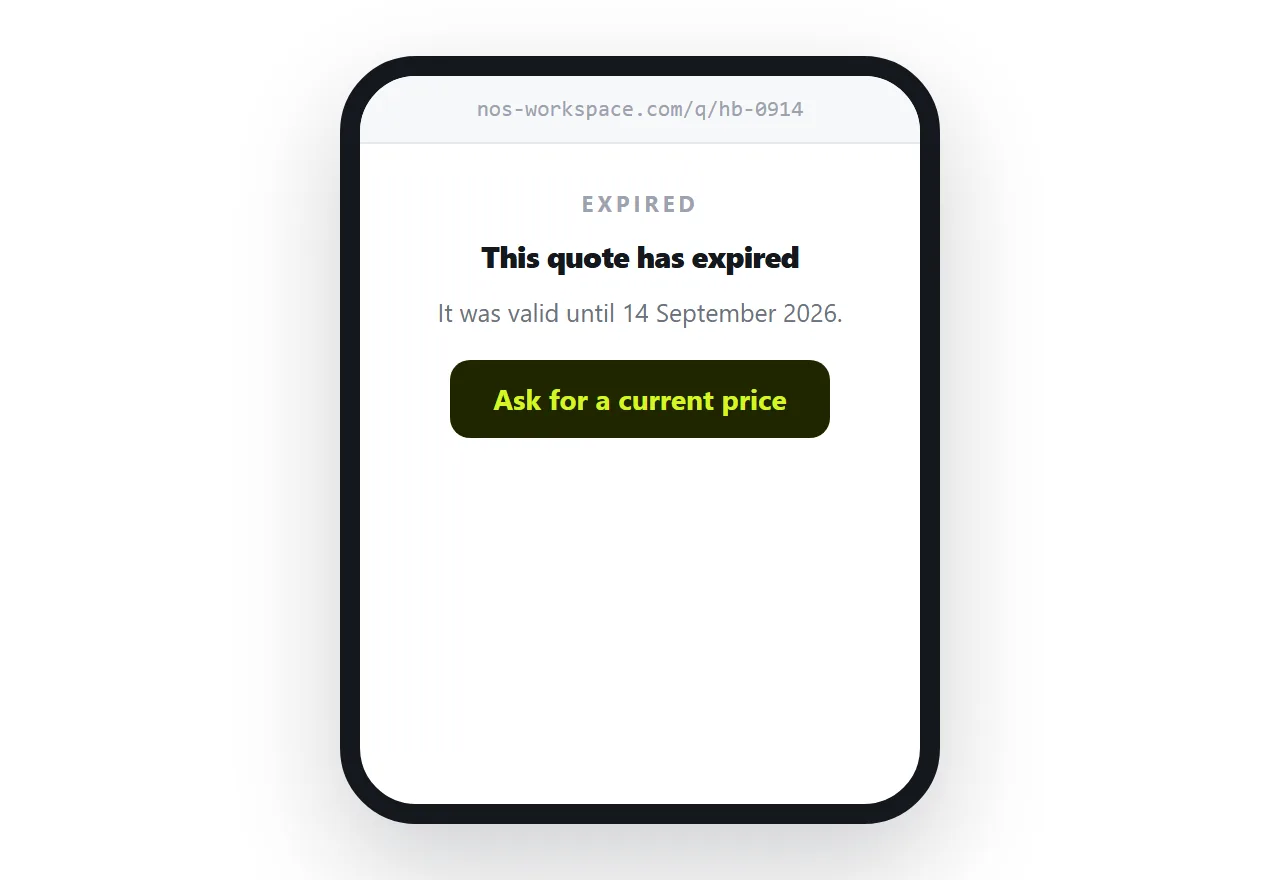
This guide covers what expiry buys, where it causes damage, and what to do instead of disappearing.
Expiry ends access, nothing else
When the date passes, anyone opening the address gets nothing. That is the entire effect.
It does not reach a copy the recipient downloaded. It does not affect a screenshot. It does not un-send an email containing the link and whatever they did with it.
So the honest description is housekeeping: material that should not still be circulating stops circulating. That is worth having and it is not a protection against a person who wanted to keep something.
Once that is clear, the decision becomes easier. Expiry is right when the material genuinely stops being valid, and irrelevant when you are worried about the recipient.
| What expiry does | What it does not do | |
|---|---|---|
| Stops new access | Yes | |
| Reaches saved copies | No | |
| Stops screenshots | No | |
| Ends a stale quote circulating | Yes | |
| Protects against a determined reader | No |
Set it to a real deadline
Good expiry dates come from something real.
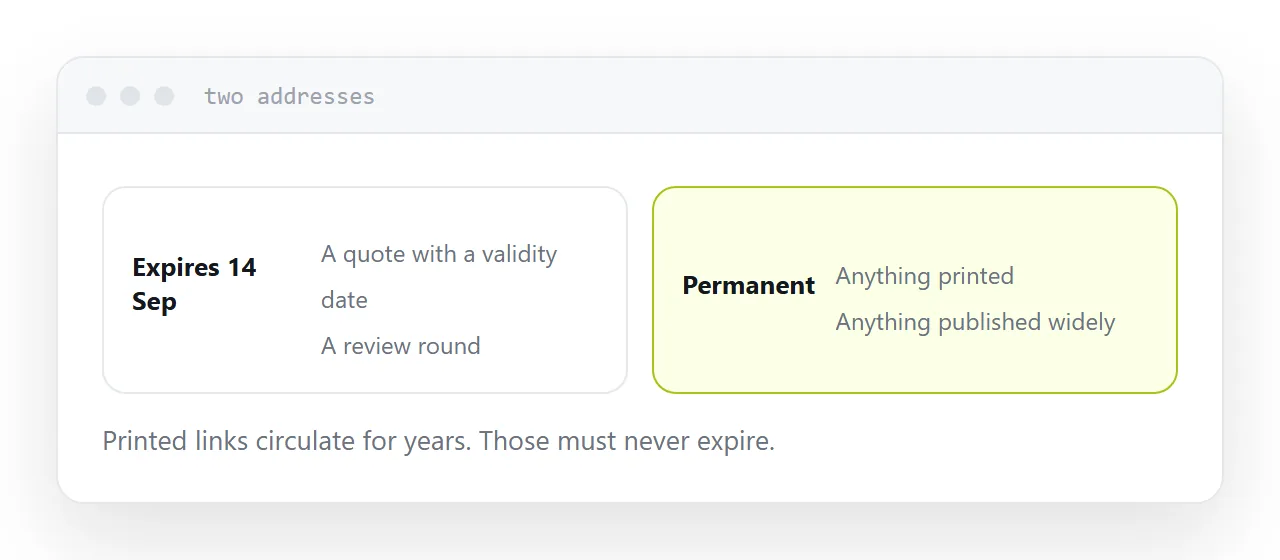
A quote valid for thirty days. A review round closing on Friday. A recruitment process ending. A draft superseded by the final version.
In each case the date is in the world already, and the link matching it is sensible.
Bad expiry dates come from a vague sense that things should not sit around. Those produce dead links at unpredictable moments, and the person who hits one has no idea whether they are early, late or looking at the wrong address.
Where expiry causes damage
This is the part that bites, usually months later.
A link goes out. Somebody forwards it. Somebody else puts it in a document. Somebody prints it on a card. Somebody links to it from their own page.
None of that is visible to you. When the link expires, every one of those becomes a dead end, silently, and the people hitting it mostly do not tell you.
So: never expire anything that was printed, published widely, or given out at an event. Those addresses need to work for years.
Expire the content, keep the address
The better pattern is to keep the address alive and change what it says.
When the material expires, the address shows a short page: this quote has expired, this document has been replaced, here is where to go now, here is who to ask.
The person arriving from an old link gets something useful instead of an error. The address keeps working. And you keep the ability to redirect them somewhere current.
That costs almost nothing and removes the entire category of problem above.
Free temporary hosts
Services offering short-lived uploads with no account are convenient and involve handing the contents to a company you know nothing about.
Short retention is not a privacy property. The file was theirs while it existed and you have no way to verify what happened to it.
For personal odds and ends, that is a reasonable trade. For work material, use something your organisation controls.
Two neighbouring cases are worth a look: Secure file sharing for business and How to share a file without making anyone log in. How to share a web page you made is also close.
Put it at an address
Decide whether you need a date or a decision later, base the date on a real deadline, leave a page rather than an error when it passes, never expire anything printed, and keep work material somewhere you control.
Then an old link leads somewhere useful instead of nowhere.