Analytics products report a great deal and almost none of it changes a decision. Four figures do.
One: which pages get visits
Not how many visits the site had. Which pages.
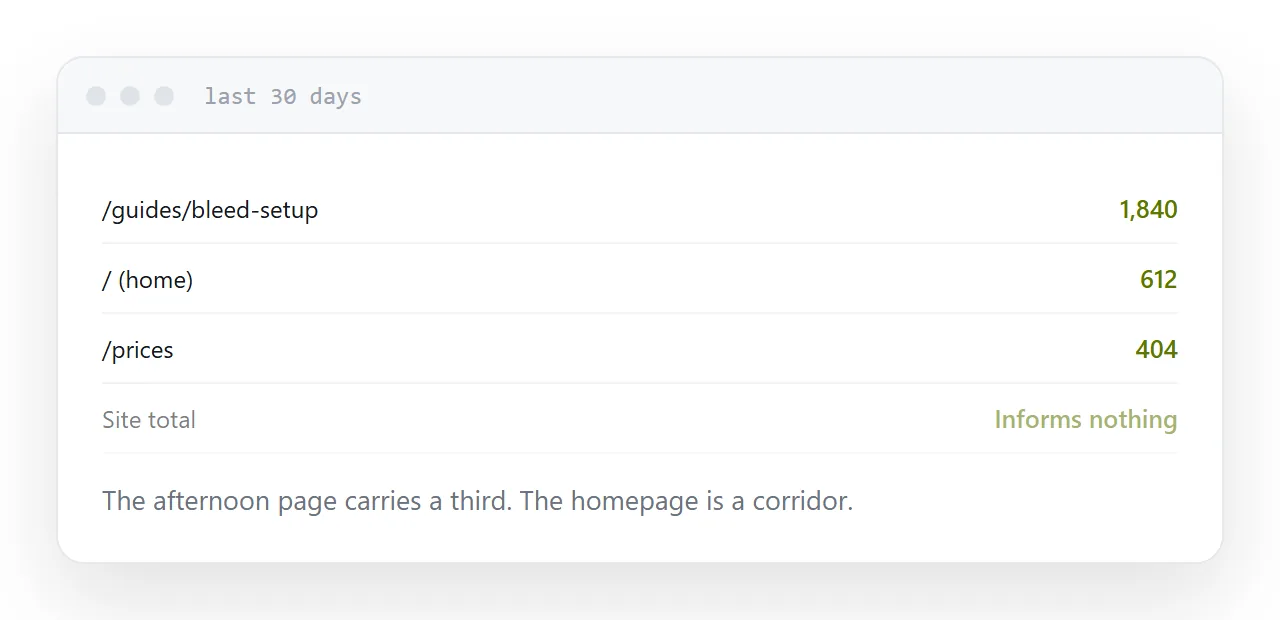
This is the number that tells you what people want, and it is regularly a surprise. A page written in an afternoon carries a third of the traffic; the homepage that took three weeks is a corridor people pass through.
Act on it: write more of what is working, improve the pages people actually reach, and stop maintaining the ones nobody opens.
| Figure | Decision it informs |
|---|---|
| Visits per page | What to write more of |
| Source of visits | Where to spend effort |
| Next page visited | Whether the page worked |
| Search terms used | What to write next |
| Total site visits | None |
Two: where they came from
Search, a link on another site, a message, or typed directly.
The split tells you which of your efforts produced anything. A month of posting that produced eleven visits is a month answered honestly, and a single link from somewhere relevant that produced four hundred is a direction.
Without this, effort is distributed by habit.
Three: what they did next
A visit that ends on the page it started on either answered the question completely or lost the person, and the time on the page tells you which.
Nine seconds and gone means the page did not match what they expected. Two minutes and gone means it answered them, which for an informational page is success.
If people are supposed to continue, to a contact page, a price list, a booking, then this number is the one that matters most.
Four: the search terms
Available from search engine tools rather than from analytics, free, and the most useful of the four.
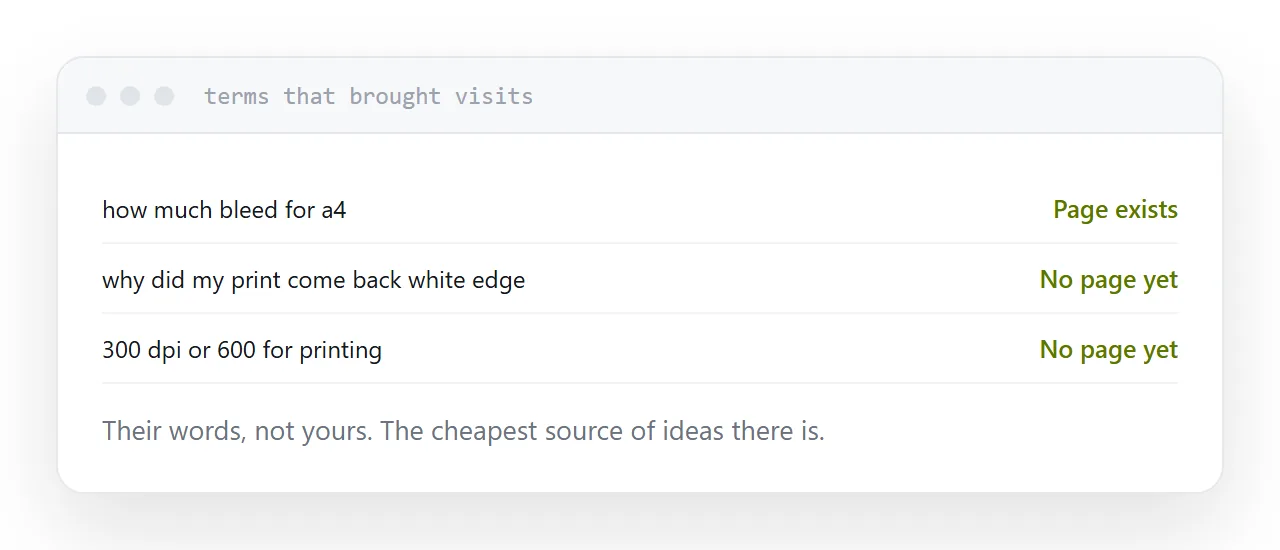
It is the actual language people used. Not what you would call the thing, what they call it.
Every term bringing visits to a page that only half answers it is a page waiting to be written. This is the cheapest source of ideas available and most small sites never look at it.
Consent and weight
Analytics that sets cookies and collects personal data brings a consent banner, an obligation, and a share of visitors who decline and are therefore not counted.
Several tools avoid both by not collecting personal data at all. They report less and what they report is the four things above. For a small site that is the right trade, and the page loads faster without the banner.
Monthly
Daily figures on a small site are noise. A quiet Tuesday means nothing and reacting to it produces changes that do nothing.
Look once a month, compare with the month before, and change one thing.
For the surrounding ground, see How tracking links work and Measuring downloads of a document.
Put it at an address
Look at figures per page rather than per site, check where visitors came from, read the search terms, review monthly rather than daily, and choose a tool that does not require a banner.