Scheduling tools do their job. Bookings are lost in the presentation around them.
Link rather than embed
An embedded calendar is a substantial amount of loading, added to the page for every visitor, most of whom are not booking today.
It is also frequently awkward on a phone: a month grid inside a fixed-height box, with its own scrolling fighting the page.
A link opens the tool full screen, on a device it was designed for, and costs the page nothing.
| Embedded | Linked | |
|---|---|---|
| Page weight | Heavy | None |
| Works on a phone | Variably | Yes |
| Visible without clicking | Yes | No |
| Affects non-bookers | Yes | No |
What goes beside the link
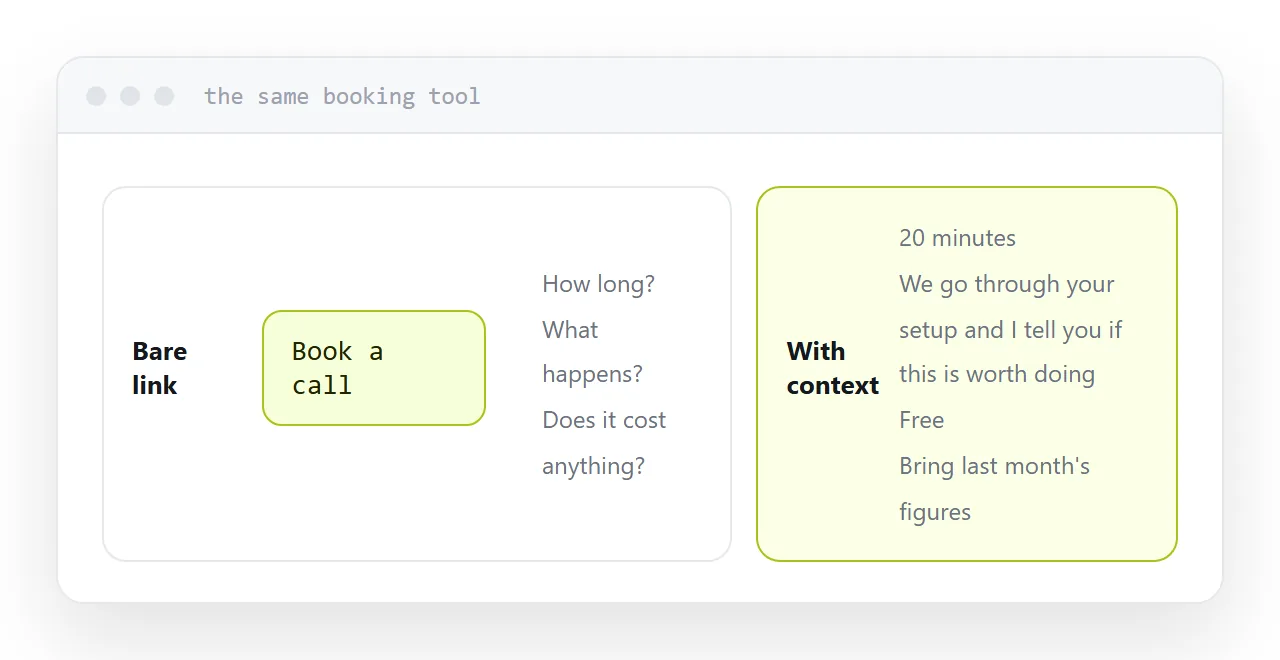
The reason people hesitate is not the calendar. It is not knowing what they are agreeing to.
How long. Twenty minutes and an hour are different commitments.
What happens in it. One sentence. "We go through your current setup and I tell you whether this is worth doing." That sentence does more than any amount of persuasion.
What to bring. If you need last month's figures or access to something, say so now rather than in the confirmation.
What it costs. If it is free, say free. People assume a consultation has a price attached.
One meeting type
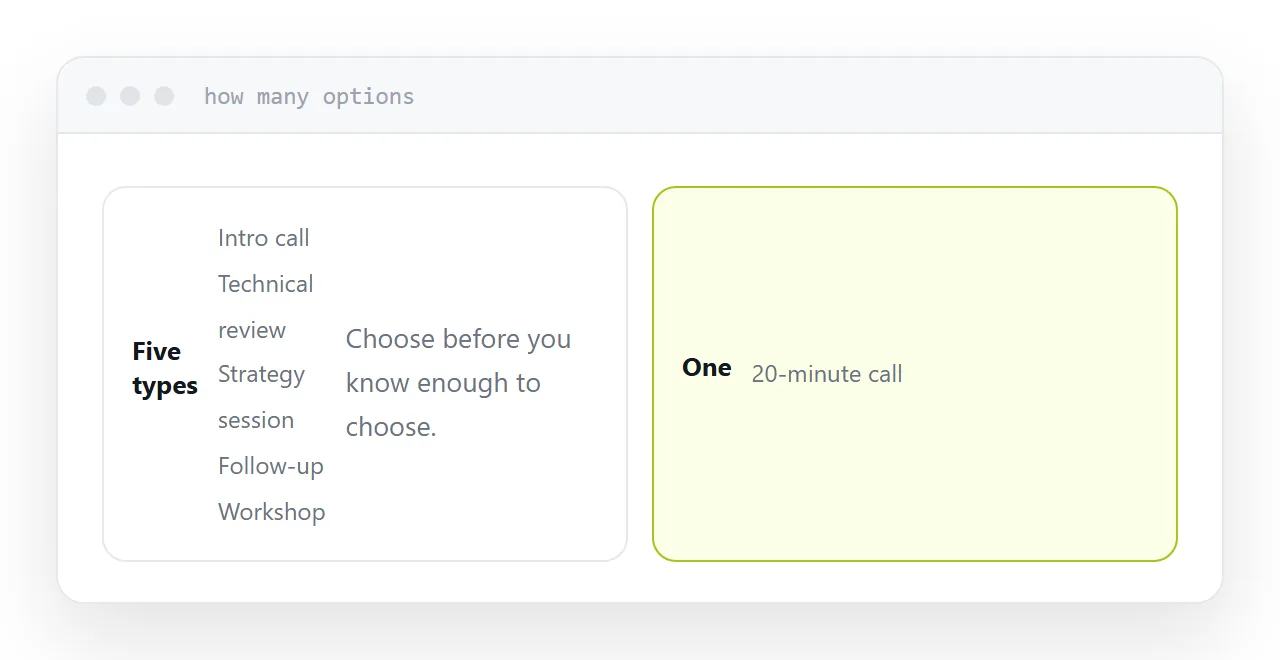
Lists of options are common and they cost bookings.
Somebody arriving does not know whether they want the thirty-minute introduction, the technical review or the strategy session. Forced to choose, a proportion decide to think about it, which means not booking.
Offer one. If a second is genuinely different, offer two with a line explaining which is which.
Reducing no-shows
A reminder the day before. Every tool does this and it is the single largest effect.
One question at booking. What would you most like to get out of this. It takes ten seconds, it makes the meeting better, and somebody who has written a sentence about it is markedly more likely to attend.
A clear purpose. People skip meetings when they are not sure why they agreed. The sentence above prevents it.
Keep a written route
Some people will not book a call, for reasons that are entirely theirs.
Offer a form or an address alongside, with booking as the first option. You lose nothing, and you keep the enquiries from people who prefer to write.
If this is near what you are doing, Adding a form to a static page and How to make an email capture page cover the cases on either side.
Put it at an address
Link rather than embed, state the duration and purpose beside the link, offer one meeting type, ask one question at booking, and keep a written route open as well.