Identity is a system you produce. Brand is an impression other people hold. Conflating them leads to spending on the first while expecting it to fix the second.
What a small business needs
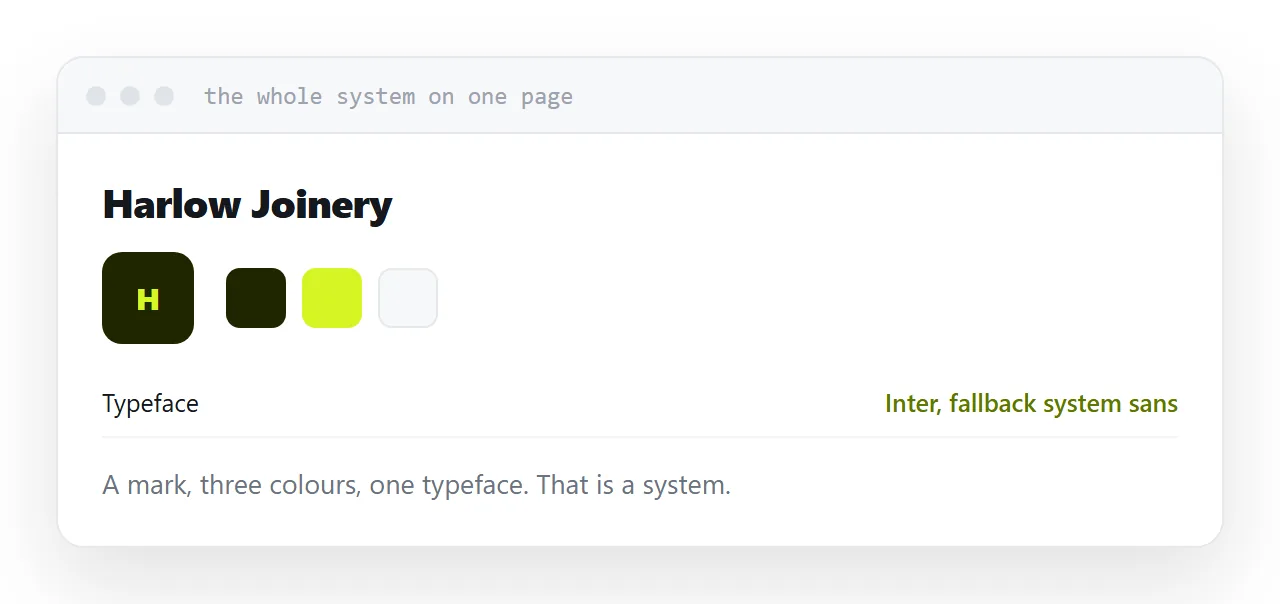
A mark. It has to work at sixteen pixels in a browser tab, in one colour on a van, and embroidered on a shirt. A mark that only works large is not finished.
Two or three colours. One primary, one ink, optionally one accent. A palette of nine is not a system; it is a set of options that produce inconsistency.
A typeface with a fallback. Something will render somewhere it is not installed, and the fallback should be chosen rather than left to a browser.
Three rules. What is genuinely not allowed. Usually: do not stretch it, do not recolour it, do not put it on a busy photograph.
That is a complete identity for most small businesses and it fits on one page.
| Identity | Brand | |
|---|---|---|
| You control it | Yes | Indirectly |
| Made of | Mark, colour, type, tone | Experiences |
| Changed by | Design | Behaviour |
| Fixed by spending | Partly | No |
The mark is where the money goes
It is the only part of the identity most people ever see, and a homemade one signals a homemade business before anything is read.
Everything else, colours, type, layout, can be assembled with reasonable judgement. The mark repays paying somebody.
Ask for it at sixteen pixels as part of the brief. Designers who work on identity expect this; the ones who do not produce marks that fail in tabs.
Why identity drifts
Almost always for one reason: nobody can find the right files.
A supplier needs a logo. They ask, somebody is away, so they take one from the website. It is the wrong size, the wrong format, has a white box behind it, and it goes to print.
That is not a discipline problem. It is a distribution problem, and it is solved by publishing.
Publish it, do not send it
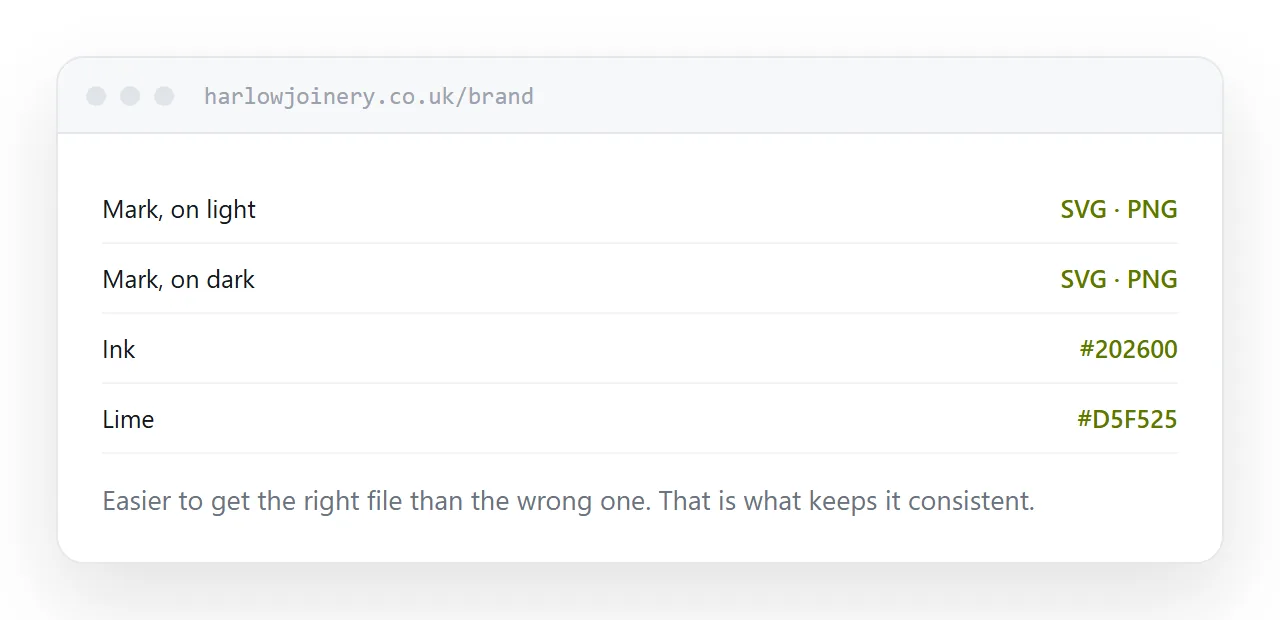
One permanent address with every logo variant as an individual download, colour values as copyable text, and the fonts named with their fallback.
Then anyone who has ever been given the link has the current files, including the agency you stopped working with and the printer who kept your details.
A guidelines document emailed two years ago is still being used and cannot be reached. That is the mechanism by which identity decays.
Tone of voice, if it is specific
Adjectives do not guide anyone. Friendly, confident and approachable describe every organisation's stated voice.
What works is pairs: a sentence as it should be written, and the same sentence as it should not. Three pairs teach more than a page of description.
If this is near what you are doing, How to share brand guidelines as a link and What good brand guidelines have in common cover the cases on either side.
Put it at an address
Design the mark for sixteen pixels, keep to two or three colours, choose a typeface with a fallback, write three real rules, and publish the files at a permanent address.
Then the identity stays consistent because the right files are easier to get than the wrong ones.