A media kit is a set of numbers that change every month, aimed at somebody deciding whether to spend money. The container matters as much as the content.
This guide covers what goes first, prices, and why a file fails.
Four things, in order
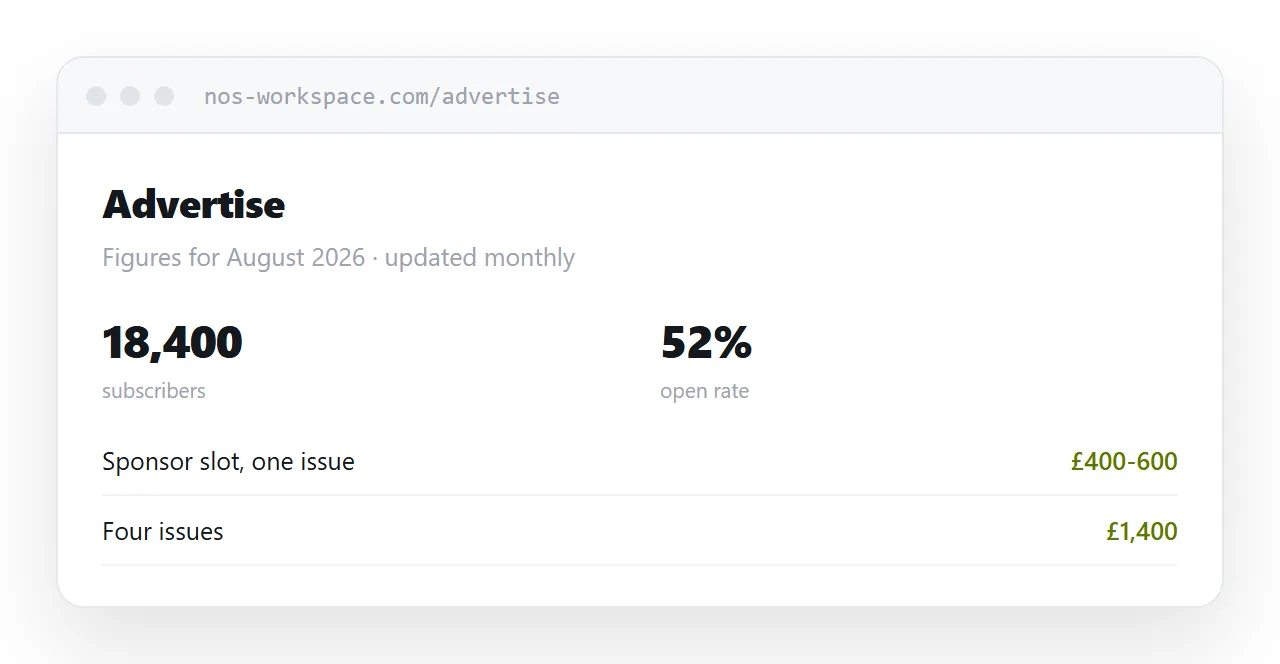
Audience size. The actual number, by channel, with the date it was measured.
Who they are. Roles, industries, locations, whatever is relevant to an advertiser deciding if these are their people. Frequently more persuasive than the size.
Formats available. What can be bought, with specifications and lead times.
What it costs. At least a range.
Most media kits lead with a description of the publication's mission. Advertisers are not buying a mission; they are buying access to an audience, and the four things above are what they need to evaluate it.
Publish prices
The argument against is that prices should be negotiated per advertiser. The consequence is consistent.
Without any indication, you receive enquiries from people whose budget is a tenth of your rate, and you receive nothing from people who assumed you were out of their range. Both waste time, and the second is invisible.
A range filters both. Negotiate within it.
| No prices | Range published | |
|---|---|---|
| Enquiries with no budget | Many | Few |
| Advertisers who assumed too expensive | Lost silently | Reached |
| Time on qualifying calls | High | Low |
| Read as evasive | Often | No |
Why a file fails
Every number in a media kit changes.
Audience figures grow or fall. Engagement moves. Available slots fill. Rates change annually.
A PDF sent in January is quoted in June with January's numbers, by an advertiser you may not remember sending it to. If the figures fell, you are held to the old ones. If they grew, you are undervaluing yourself.
One address, updated in place, with the date visible. Every advertiser holding the link sees current figures.
Show the analytics
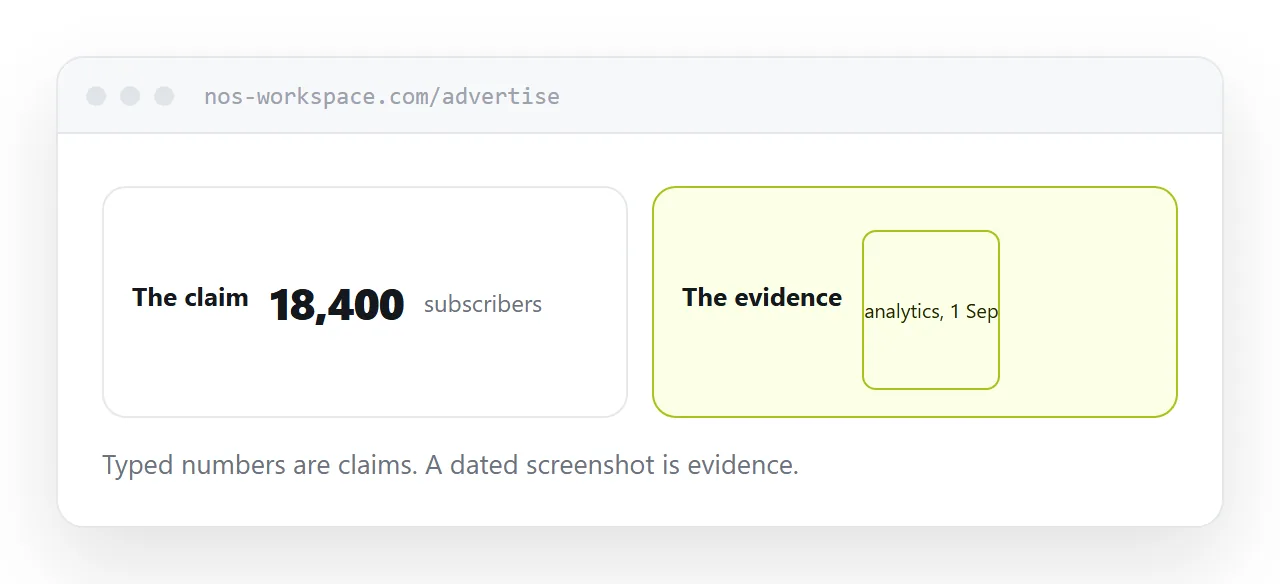
Typed numbers are claims. Screenshots of the analytics are evidence.
Include a screenshot of the audience dashboard, dated, alongside the figures. It takes a minute and it changes how the numbers are received.
Same for previous campaigns: one or two examples with what was run and what happened, with the advertiser's permission.
Date it
An undated media kit is assumed to be current whenever it is found.
Put the date at the top and say how often it is updated. An advertiser who knows the figures are from last month trusts them more than one who cannot tell, and you are not held to numbers from a year ago.
Keep a PDF for procurement
Some advertisers, particularly larger ones, need a file for their process.
Generate one from the page, date it clearly, and link it. The page stays the version you send; the file exists for the systems that require one.
If this is near what you are doing, How to share a media kit as a link and How to share a press kit as a link cover the cases on either side.
Put it at an address
Lead with audience size and composition, publish a price range, use one address updated in place, show analytics as proof, and put the date on it.
Then an advertiser can evaluate you in a minute with current numbers.