Collecting addresses needs two things: somewhere for them to go, and a promise about what they are for. Neither requires buying anything.
This guide covers the minimal setup, what consent has to look like, and when to buy a platform.
The minimal setup
A form on a page, posting to a form service, which puts each submission in a spreadsheet.
<form action="https://example-form-service/f/abc123" method="POST">
  <label for="email">Email</label>
  <input id="email" name="email" type="email" required>
  <button>Subscribe</button>
</form>
That is a working signup. No account with a marketing platform, no monthly fee, no configuration.
For the first hundred people that is entirely sufficient, and it tells you whether anybody wants what you are offering before you pay for the machinery to send it.
The promise does the work
The person's question is how much of my attention this will take.
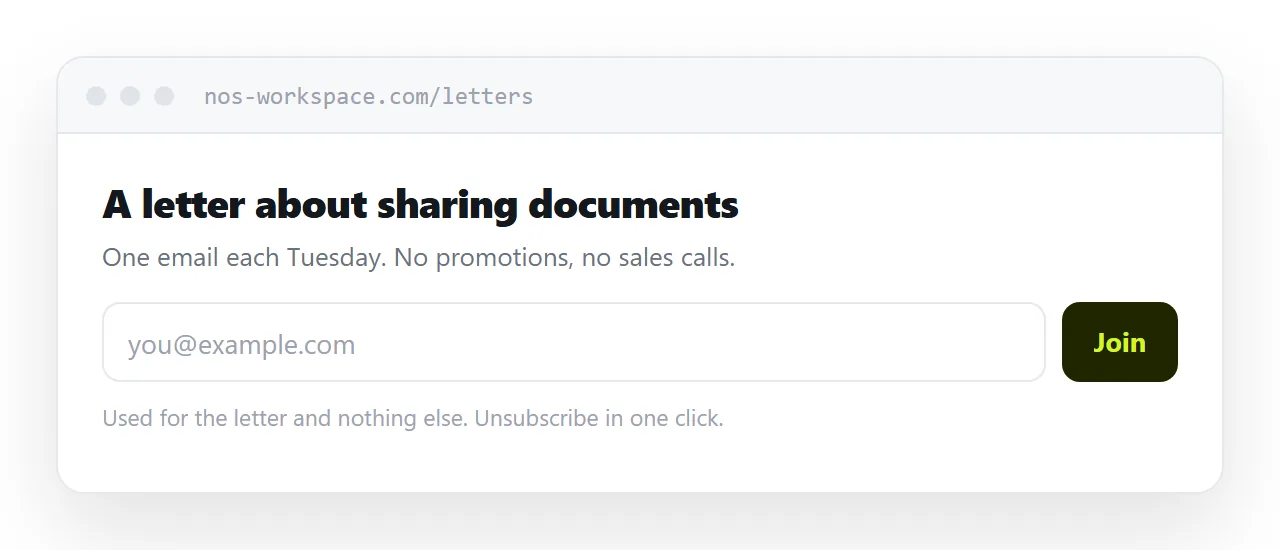
Answer it in one line next to the field. What arrives, how often, and what it is not.
One email each Tuesday about how teams share documents. No promotions.
That single line consistently raises signups more than redesigning the form, because it replaces uncertainty with a specific commitment that sounds keepable.
| Vague | Specific | |
|---|---|---|
| "Join our community" | Signups lower | |
| "Subscribe for updates" | Signups lower | |
| "One email each Tuesday about X, no promotions" | Signups higher |
What consent has to look like
Three properties, and most forms fail at least one.
Unbundled. Agreeing to marketing is separate from agreeing to terms, placing an order, or downloading something. One action, one agreement.
Informed. They knew what they were agreeing to receive, which is what the promise line is for.
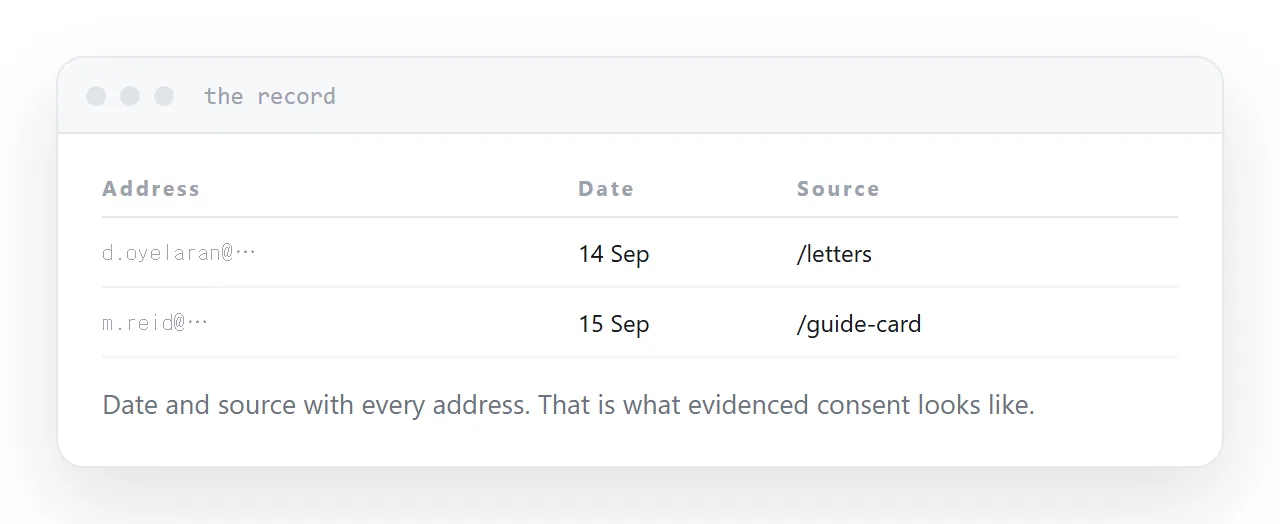
Evidenced. You can show when, from where, and what the form said at the time. Record the date and the source with every address, and keep a copy of the wording when you change it.
A pre-ticked box is not consent in most jurisdictions and reads badly everywhere.
The contact form mistake
Somebody fills in a contact form to ask a question. Their address is now in your spreadsheet.
Adding them to a marketing list is the most common compliance mistake in small businesses, and it is also the one that produces complaints, because the recipient knows they never asked for it.
A question is not consent. If you want to invite them, ask on the form with a separate unticked box.
When to buy a platform
When you are sending regularly, three real problems appear.
Deliverability. Sending a hundred identical emails from a normal mail account gets them filtered. Platforms handle the reputation side of this properly.
Unsubscribes. Legally required, and handling them by hand fails as soon as you are busy. One missed unsubscribe is a complaint.
Bounces. Addresses go bad. Continuing to send to them damages deliverability for everyone else on the list.
Those are worth paying for. None of them are reasons to pay before you have a list or anything to send.
For the surrounding ground, see How to make an email capture page and How to publish a digital newsletter.
Put it at an address
Start with a form posting to a form service, state what arrives and how often, record the date and source with each address, never add contact enquiries, and move to a platform when you start sending regularly.
Then the list is built on consent you can evidence.