Course material serves two completely different moments: working through it the first time, and coming back to one part of it later.
Most courses build only for the first, and the second is where the value is.
Two artefacts
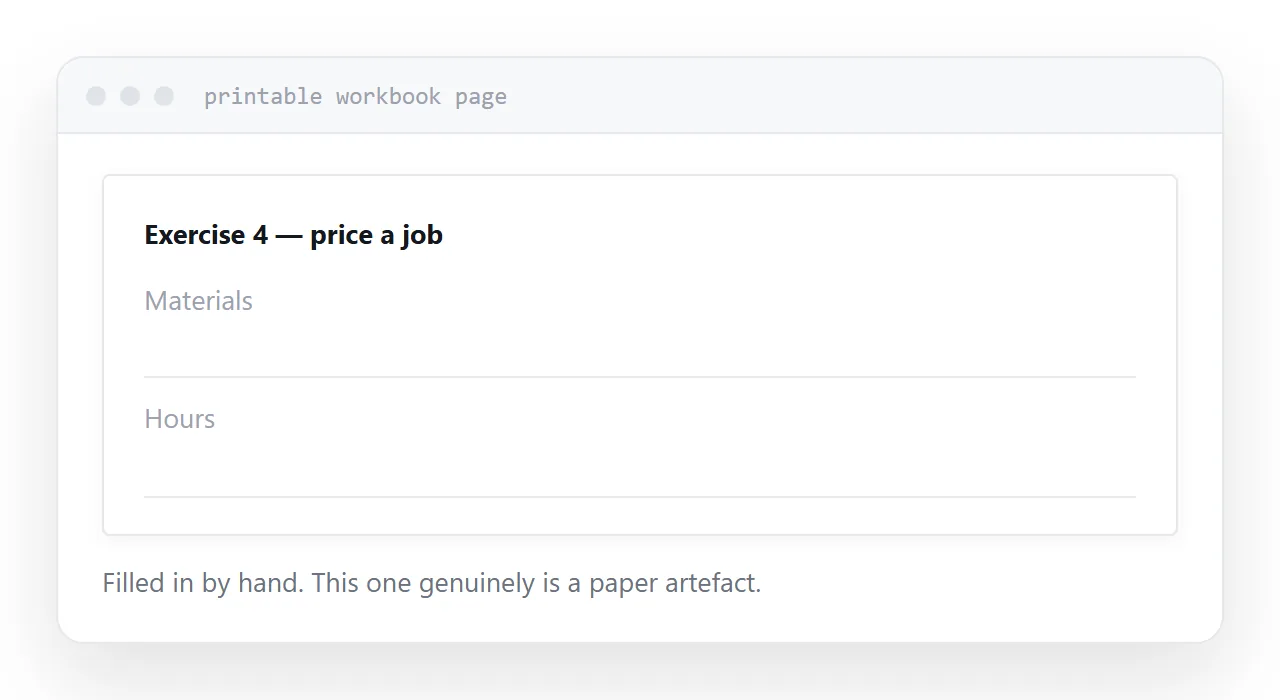
The workbook. Worked through during the course. Exercises, spaces to fill in, things to bring to a session. Genuinely a paper artefact for many learners, and a printable document is the right format.
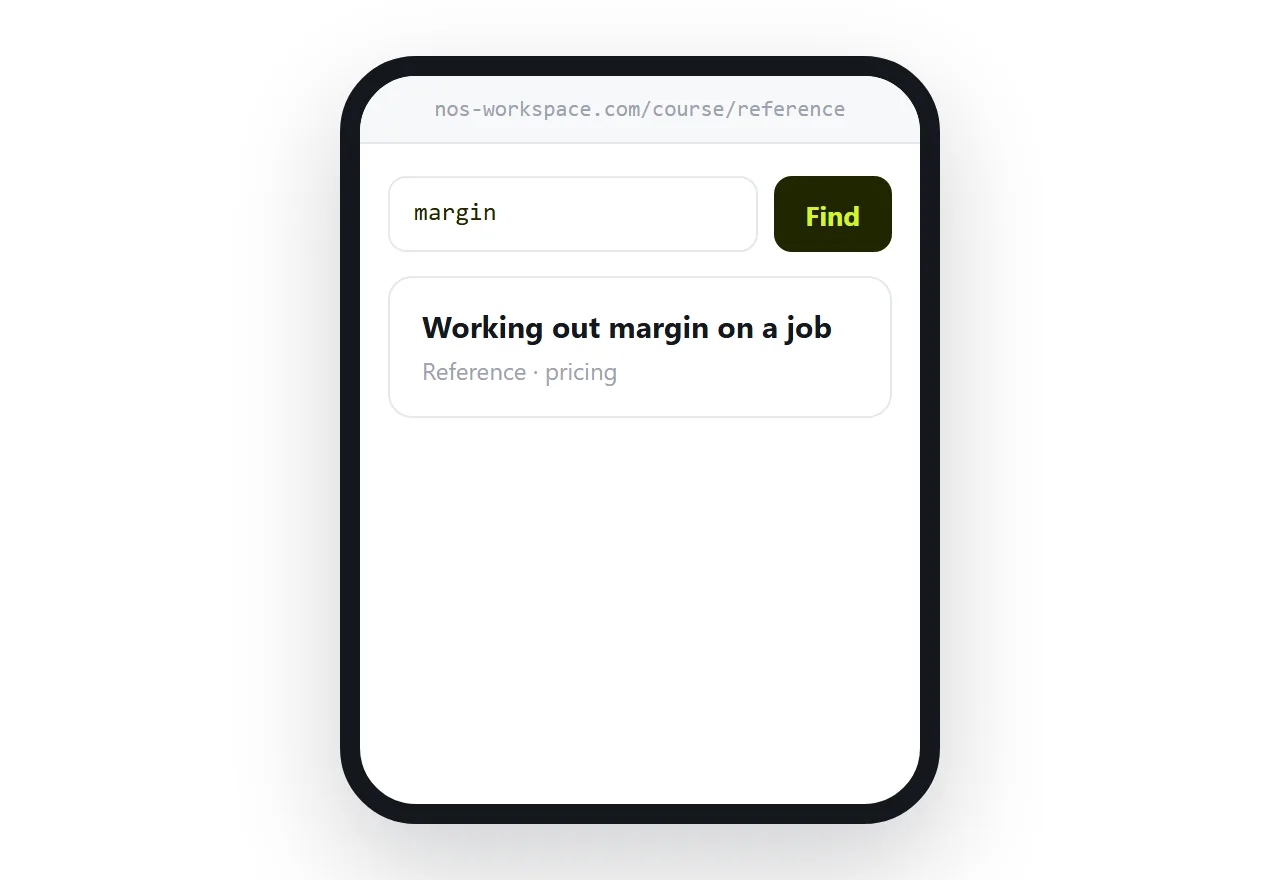
The reference. Returned to afterwards. Tables, checklists, procedures, definitions, troubleshooting. Looked up rather than read.
Building one thing that tries to be both produces a document that prints badly and cannot be searched.
| Workbook | Reference | |
|---|---|---|
| Used | During | Afterwards |
| Read or searched | Read | Searched |
| Printed | Often | Rarely |
| Right format | Document | Page |
| Updated | Per cohort | Continuously |
The reference is where the return is
Somebody finishes a course, does the job for three months, and hits the thing the course covered in week four.
They do not rewatch week four. They want the answer, in twenty seconds.
That requires searchable text at an address, organised by the problem rather than by the week it was taught. A document they downloaded eight months ago and cannot find does not serve this at all.
Write the reference material for that person.
Lessons short enough to finish
Learners work through material between other things. Twenty minutes at lunch, half an hour in the evening.
A lesson that takes fifty minutes gets started and abandoned, and abandoned material is rarely resumed. Two twenty-minute lessons with a natural stopping point between them get finished.
Say the length at the top. It lets somebody decide whether they have room now, which converts a later into a now more often than it loses anyone.
Keep it after the cohort
Material taken down when a cohort ends destroys the thing that made the course worth taking.
Former learners return. They recommend it to colleagues, who follow a link. Search brings people to the reference material who then find the course.
Keep everything at the same addresses permanently. If something is genuinely out of date, mark it and say what replaced it rather than removing it.
Update the reference, version the workbook
The reference should be corrected continuously, because it is the current answer to a question.
The workbook belongs to a cohort and can be versioned per run, with the date on it. That distinction keeps the reference trustworthy without rewriting history for people who worked through a specific version.
If this is near what you are doing, How to send course materials to students and How to host online training cover the cases on either side.
Put it at an address
Separate the workbook from the reference, print one and publish the other, keep lessons short enough to finish, and never take material down after a cohort.
Then the course keeps working for somebody who took it last year.