A course is material, video and a way to ask questions. Everything else a platform provides is administration, and administration is a problem you get to have after the course works.
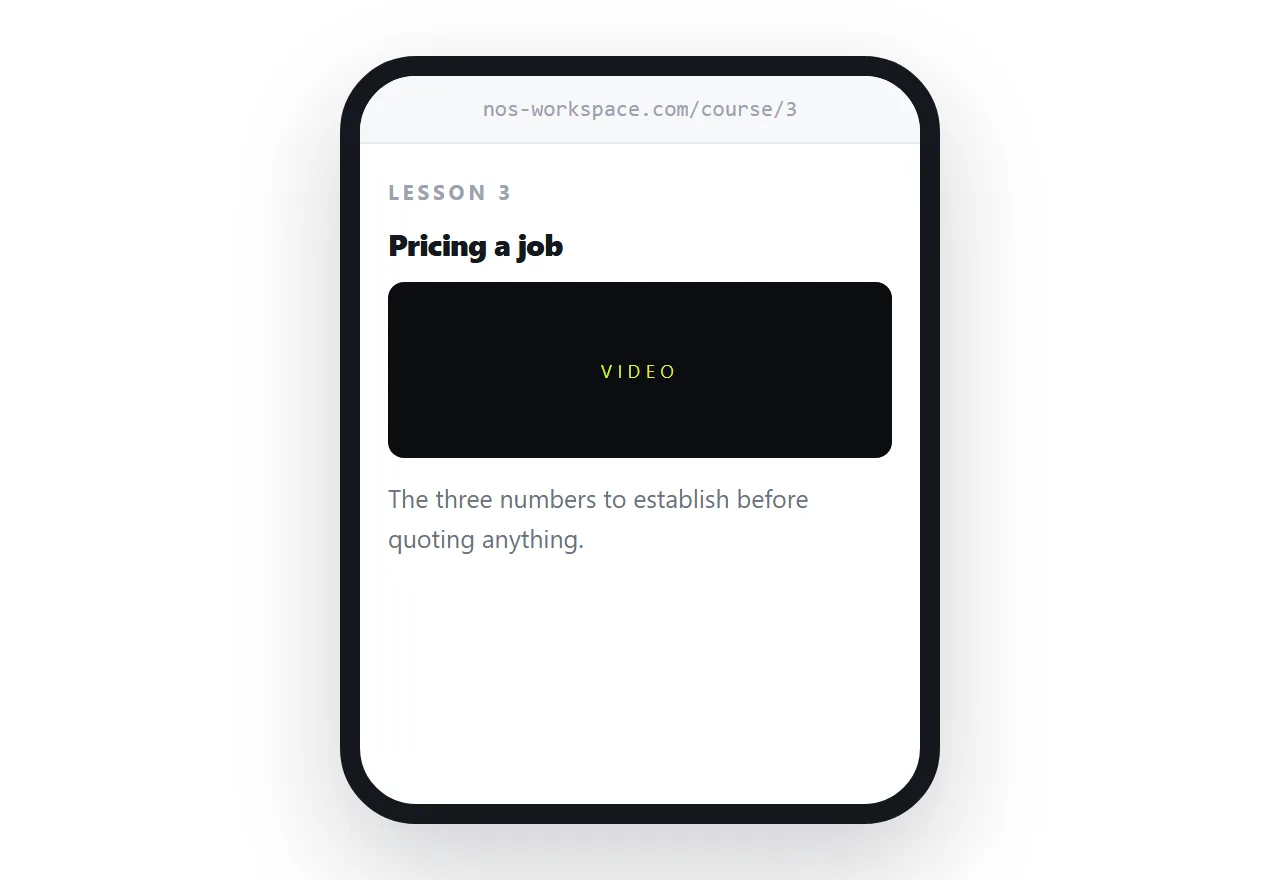
This guide covers running the first cohort without a platform, structure, and when to change.
Run the first cohort on pages
The common failure is spending a month choosing and configuring a platform for a course nobody has taken yet.
The first cohort's job is to tell you whether the material works. For that you need the material to exist and be reachable. Nothing else.
Pages at addresses. Video at a video service. A message channel or an email address for questions. Payment through a payment link, handled by hand.
That is genuinely enough for the first twenty people, and it produces the information that would otherwise have shaped the platform choice.
One page per lesson
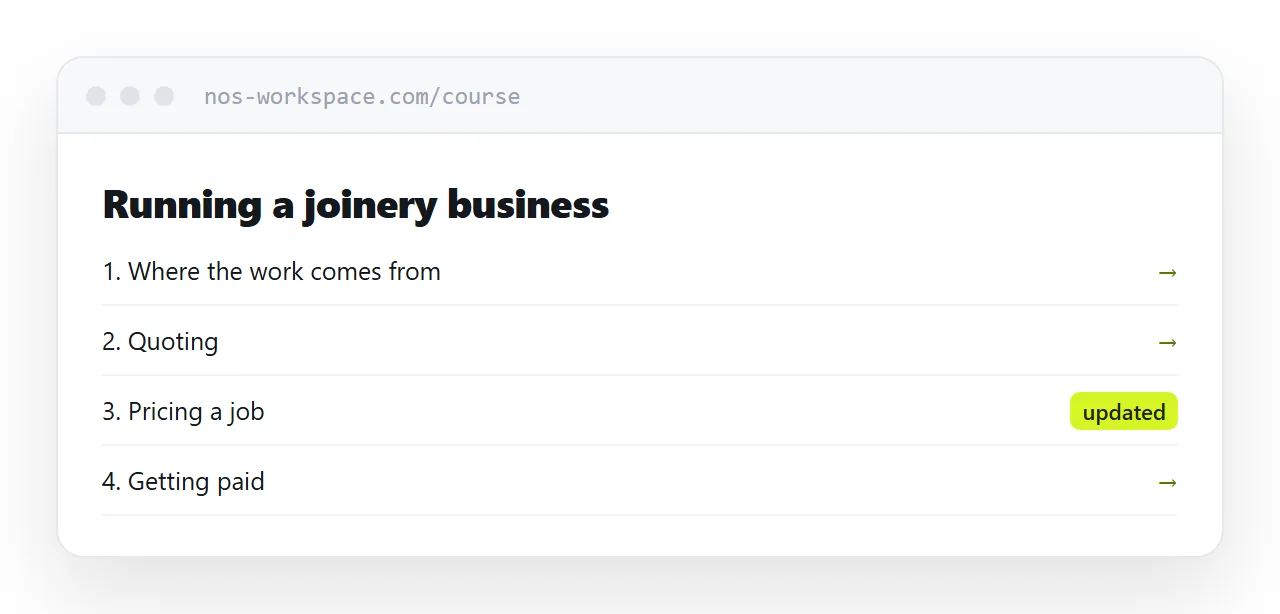
Give each lesson its own address, with an index above them.
Learners do not work through a course in a straight line. They come back to lesson four because something in lesson seven referred to it, or because they are stuck on the thing lesson four covered.
A page per lesson makes that a two-tap operation. One long page makes it a scroll through everything else.
The index carries the structure and is the only address anyone needs to remember.
| One long page | Page per lesson | |
|---|---|---|
| Return to lesson four | Scroll | Two taps |
| Send one lesson to someone | Not really | An address |
| Update one lesson | Whole page | One page |
| Track what is used | No | Per lesson |
Video belongs at a video service
Self-hosting video is the fastest way to make a course feel broken.
Video services handle the encoding for different connections, the resumable playback, the mobile players, and the bandwidth. All of that is genuine engineering and none of it is your course.
Embed or link from the lesson page. Keep the written summary on the page too, because learners revisiting a lesson usually want the summary rather than another twenty minutes of video.
Questions become the course
Collect questions in one place and answer them on the relevant lesson page.
After one cohort, the pages carry every question the material provokes. After two, the support load drops to almost nothing, because everything anyone has asked is already answered where they are looking.
This is the single highest-value thing you do between cohorts, and it is invisible if questions are scattered across private messages.
When a platform earns its place
Four things genuinely need one.
Enrolment at scale. Handing out addresses by hand stops working somewhere around a hundred people.
Certificates. If learners need proof, something has to issue and verify it.
Grading. Anything assessed needs a record per learner.
Compliance. Regulated training requires an auditable record of who completed what and when.
None of those are about delivering material. They are administration, and when you have them, buy the tool. Until then, the platform is a cost with no corresponding benefit.
For the surrounding ground, see How to send course materials to students and How to host a web page for a Moodle course.
Put it at an address
Run the first cohort on pages, one page per lesson under an index, video at a video service, questions answered on the pages, and a platform only when administration demands it.
Then you find out whether the course works before you build the machinery around it.