A production runs on documents that change after they are sent. Call sheets, schedules, scripts, cuts. Every one of them is superseded at least once, usually overnight.
An address survives that. An attachment does not.
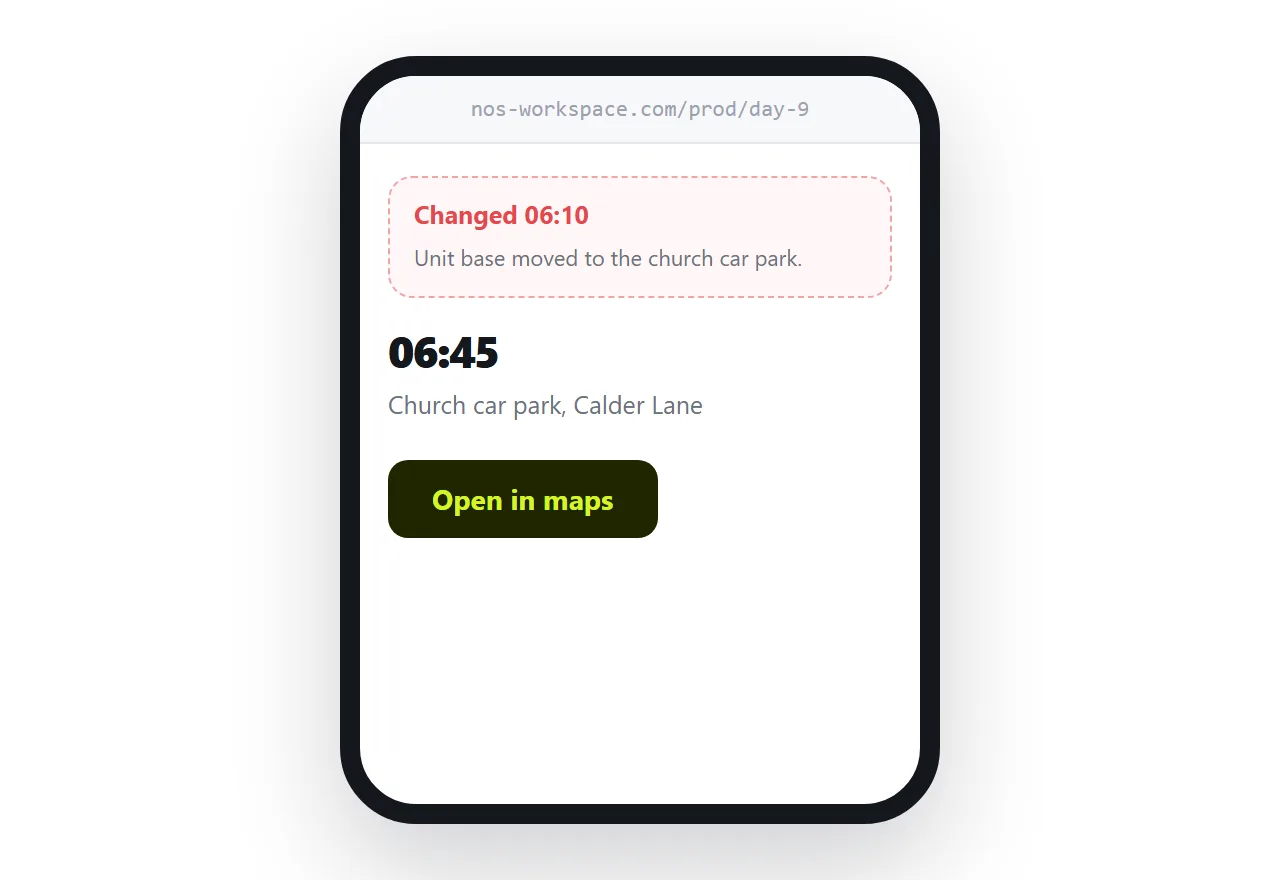
This guide covers call sheets, review cuts, and what an address can and cannot protect.
Call sheets change after they are sent
The pattern is always the same. The sheet goes out at eleven. At six the location changes, or a call time moves, or the weather does.
With attachments, the fix is another email. Some crew see it, some do not, and at six in the morning a number of people are driving to the wrong place having done nothing wrong.
With one address per production day, the sheet is corrected in place. Everyone who opens it, whenever they open it, sees the current version. There is only ever one.
Mark changes with a timestamp at the top. Somebody who looked last night needs to know in one glance whether anything moved.
| Call sheet as an attachment | Call sheet at an address | |
|---|---|---|
| Location changes at 6am | Another email | Edit the page |
| Crew know it changed | If they saw the email | Dated note at the top |
| Which version is current | Ambiguous | Only one exists |
| Read on a phone in the dark | Downloads, then zoom | Opens, large text |
Write it for six in the morning
The reader is holding a phone, outdoors, in poor light, often already driving somewhere.
Call time and location at the very top, in large text, with a map link. Everything else below: the schedule, the cast, the contacts, the weather, the notes.
Nobody reads a call sheet. They check it, twice, for two facts.
Cuts for review
A cut sent for review has one recurring failure, and it is not technical. The reviewer is not sure which version they are watching.
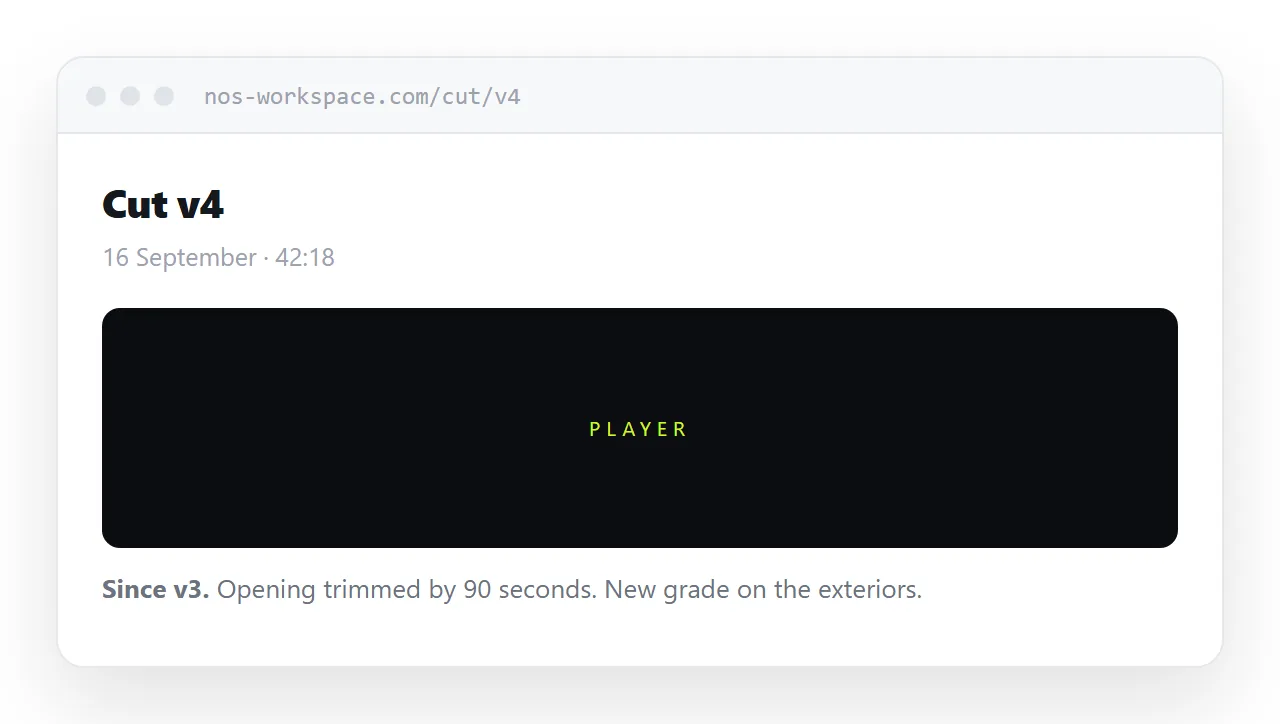
Put every cut at an address with the version and date visible on the page. When a new cut exists, the page says so and links to it. A reviewer arriving from a two-week-old message lands on something that tells them there is a newer one.
Keep a short note of what changed since the last version. Reviewers give better notes when they know where to look.
What an address protects, honestly
For unreleased material the baseline is an unguessable address plus a password, and the ability to withdraw it when the review round ends.
That stops the material being found, reached by anyone not given it, and left accessible indefinitely after the process.
It does not stop a reviewer recording their screen. Nothing does. That is what the agreement they signed is for, and a page that quietly notes who was given access is more useful evidence than any technical measure.
Withdrawing access when a round closes is the habit that matters most, and it is the thing attachments make impossible.
Scripts and schedules
Same rule, same reason.
A script revision emailed as a file produces a crew working from three drafts. At an address there is one, with the revision date on it, and coloured pages become a note on the page rather than a printing exercise.
For anything a department needs on set with no signal, tell them to open it before leaving base.
For the surrounding ground, see How to share an itinerary as a link and How to share a PDF as a link.
Put it at an address
One address per production day, call time and location at the top, changes timestamped, cuts labelled with version and date, and access withdrawn when a round ends.
Then nobody drives to yesterday's location.