An image hosted elsewhere is a dependency. It works until the host changes something, and the failure is invisible to you because your browser has the image cached.
This guide covers the three failure modes, the checks that predict them, and when to keep images with the page.
Three ways it fails
Silent deletion. Free hosts routinely remove images that have not been viewed recently. A page that is quiet for six months comes back with gaps in it.
Address changes. The host reorganises, moves domain, or changes its address format. Old addresses stop resolving, often without redirects.
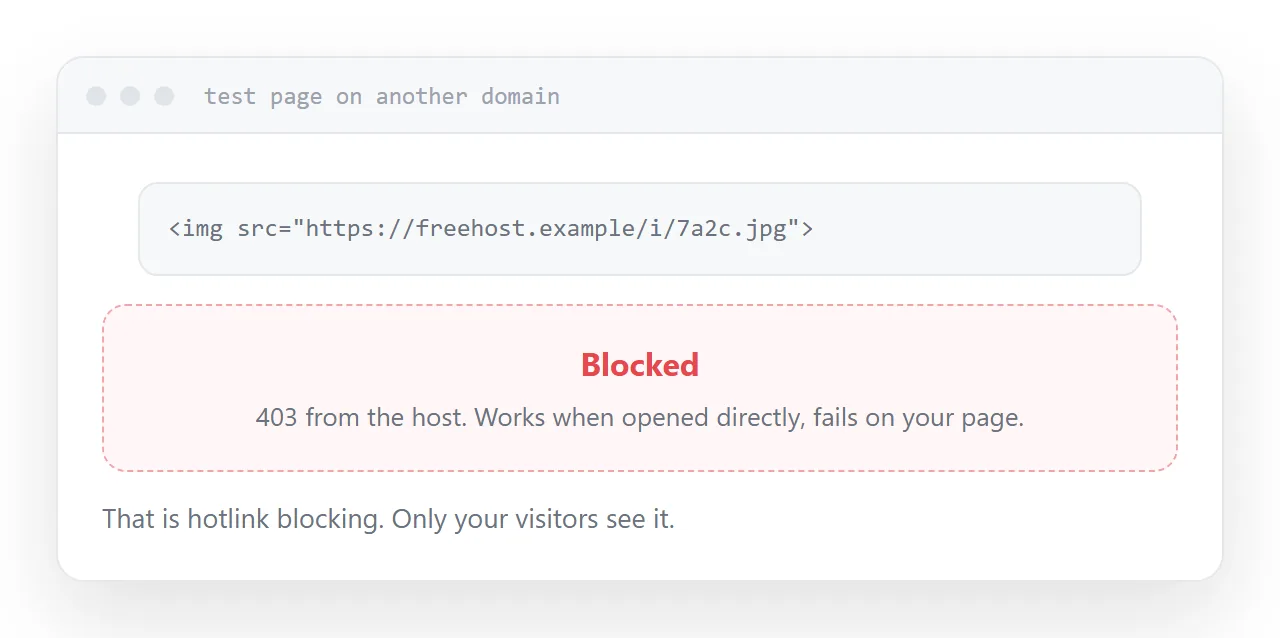
Hotlink blocking. The host decides to stop serving images to other sites. This is the most confusing one: you open the address and it works fine, because you are opening it directly. Visitors to your page see nothing.
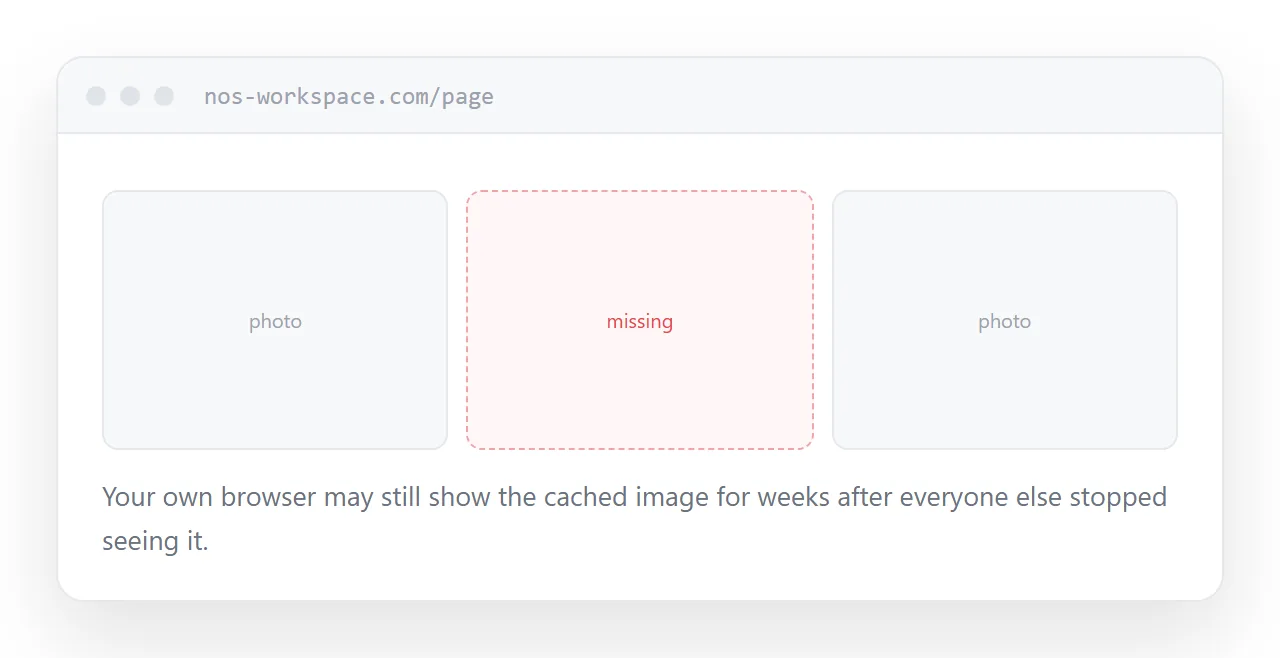
All three are quiet. There is no email, no warning, and your own browser may keep showing the cached image for weeks after everyone else stopped seeing it.
The three checks
Two minutes before relying on a host.
Load it from somewhere else. Put the image address in a plain test page on a different site and open it. If it fails, hotlinking is blocked and the host is unusable for this.
Read the address. A long random token, or a parameter that looks like an expiry time, means the address is temporary by design. It will stop working, and the only question is when.
Read the terms about inactivity. If deletion after a period of no views is mentioned, believe it.
| Free host | Images with the page | |
|---|---|---|
| Expires | Often | No |
| Hotlink blocked | Sometimes | No |
| Address changes | Sometimes | No |
| Costs | Nothing | Storage |
| One thing to maintain | No | Yes |
Keep small images in the page
A logo, an icon, a small diagram can be encoded directly into the file.
Nothing external. Nothing to expire, nothing to block, nothing to reorganise. The page is complete on its own and behaves identically wherever it is opened, including offline.
The cost is 33% extra size for the encoded data, which is nothing for a small image and unacceptable for a photograph.
Keep photographs with the page
For anything larger, put the images in the same place the page is served from.
One thing to maintain rather than two. No third party to depend on. And the images move with the page if it ever moves.
Serve them at the size they are displayed, and load the ones below the fold only as the reader reaches them. That matters more for page speed than the choice of host does.
When free hosting is fine
Short-lived things. A forum post, a bug report, a screenshot in a conversation, anything where a broken image in a year costs nothing.
That is a real category and a free host is a reasonable answer for it.
The mistake is using the same approach for a page you expect to still be working, unattended, in two years. Those are different requirements and they deserve different answers.
If this is near what you are doing, Image hosting for links and Self-contained HTML file: one file that works anywhere cover the cases on either side. Hosting a web page from a drive is also close.
Put it at an address
Test from another site, look for anything temporary in the address, read the inactivity policy, encode small images into the page, and keep photographs where the page is.
Then the page still looks right when nobody has checked it for a year.