A job description is forwarded more than almost anything else a company publishes. Somebody sends it to a friend who might be interested, and that friend reads it on a phone with no context.
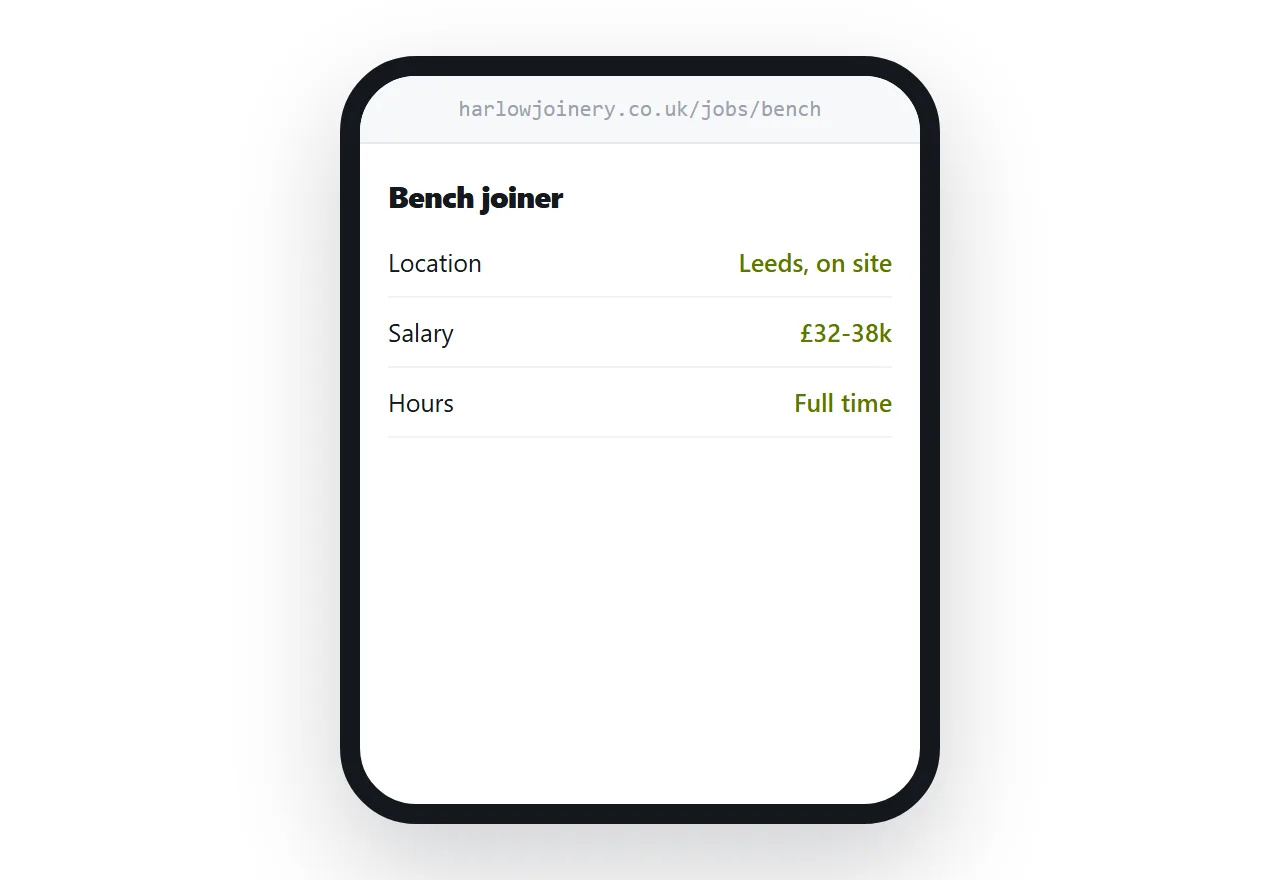
This guide covers the four things that come first, length, and what happens at the end.
The four things candidates filter on
Before any interest in your company, a candidate is checking whether the role is possible for them.
What the role is. In words used elsewhere in the industry, not an internal title.
Where it is. City, and whether that matters.
The salary range. Actual numbers.
The working arrangement. Remote, hybrid with how many days, or in person.
All four above the fold. Everything about your culture, your product and your values is read after those four have passed, by candidates who are still there.
Publish the salary
The arguments against are familiar and the consequences are consistent.
Without a range, you receive applications from people the role cannot afford, and you do not receive applications from people who assumed it was below their level. Both waste time, and the second is invisible.
Some jurisdictions now require it. In the rest it is becoming expected, and its absence is read as a negotiating position rather than as an oversight.
A range is enough. It does not have to be a number.
| No salary stated | Range published | |
|---|---|---|
| Applications from the wrong band | Many | Few |
| Good candidates who did not apply | Unknown | Fewer |
| Time spent on calls about money | High | Low |
| Read as evasive | Often | No |
Cut the requirements list
Fifteen bullet points of requirements is a list most good candidates do not match completely.
Research is consistent that people from underrepresented groups are more likely to disqualify themselves when they match most but not all. The list is filtering for confidence rather than for ability.
Write the three or four things that genuinely cannot be learned on the job. Say the rest is desirable or leave it out.
Describe the first six months
Far more persuasive than a list of responsibilities.
What will this person actually work on. What does good look like after three months. What is currently broken that they would be fixing.
A candidate can picture themselves in that. They cannot picture themselves in a list of duties, and every company's list of duties reads the same.
Own the address
Job boards bring reach and that is worth having. They also expire, reformat your text into their template, and own the address.
Publish on your own address and post that everywhere. Boards can carry a copy.
Then when somebody forwards the role in six months, or a candidate returns to it after a conversation, the link still works.
Mark it closed
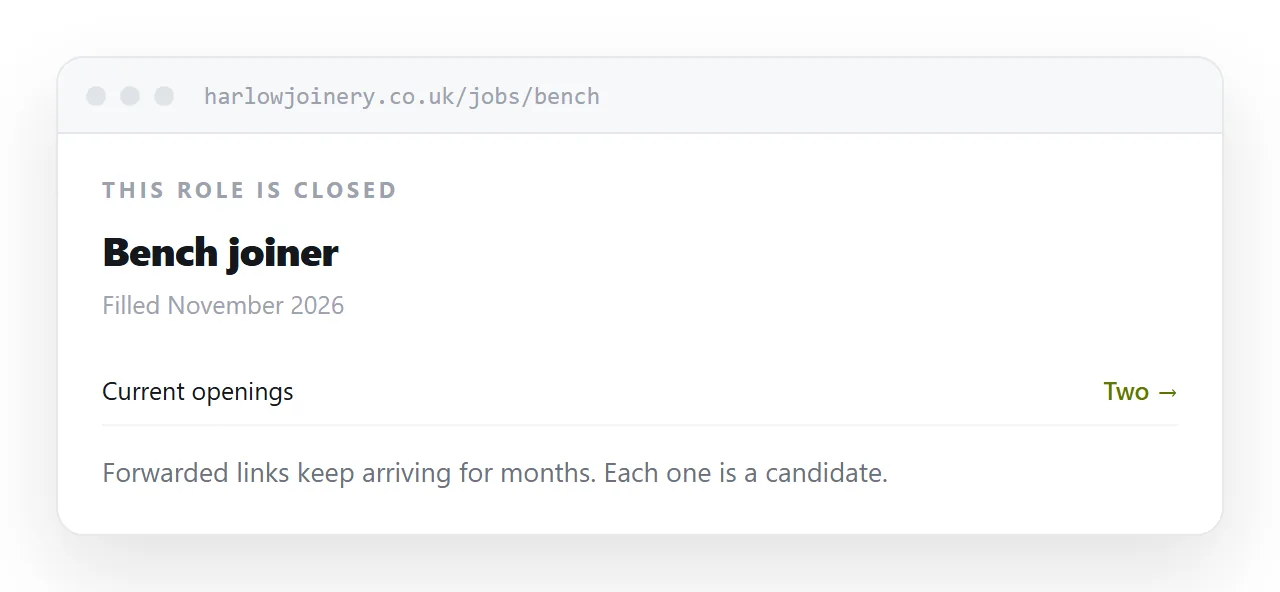
When the role is filled, do not delete the page.
Mark it closed at the top and link to current openings. Every message, post and forwarded link that carried it now leads somewhere useful instead of to an error.
Those links keep arriving for a long time, and each one is a candidate.
For the surrounding ground, see How to share a job advert as a link and HTML job descriptions as pages: what candidates actually read.
Put it at an address
Own the address and use boards for reach, lead with role, location, salary and arrangement, cut the requirements list, describe the first six months, and mark it closed rather than removing it.
Then the person reading it at eleven at night knows within ten seconds whether to keep reading.