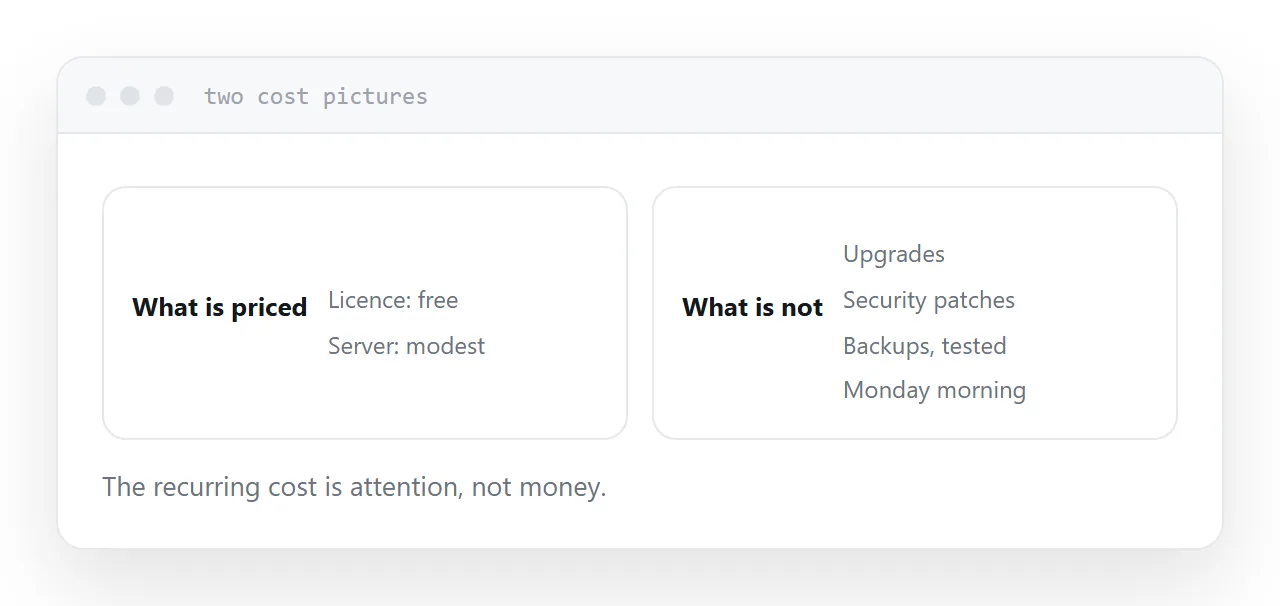
The open-source software is free and the server is cheap. The recurring cost is attention, and that is what the comparison is actually about.
This guide covers what hosting buys, when self-hosting is right, and how it goes wrong.
What a hosted plan buys
Upgrades. Applied, tested, without anybody scheduling a weekend.
Security patches. Promptly, which matters for a system holding learner records.
Backups. Taken, and more importantly, restorable. Most self-hosted backups have never been restored.
Uptime and support. Somebody to contact when it breaks during a training window.
Those are the recurring work items. A hosted plan is buying somebody else doing them.
| Self-hosted | Hosted | |
|---|---|---|
| Software licence | Free | Included |
| Server | Modest | Included |
| Upgrades | Yours | Theirs |
| Backups | Yours | Theirs |
| Breaks on a Monday | Yours | Theirs |
| Data location | Your choice | Their regions |
When self-hosting is right
Two genuine cases.
Data residency or integration requirements. Learner records that must stay in a particular jurisdiction, or deep integration with internal systems. Those can rule hosting out entirely.
A named maintainer. Somebody whose job includes this, with time allocated, who will still be there in two years.
If both apply, self-hosting is sensible and works well.
How it goes wrong
Not at setup. Setup is a good week and everybody is pleased.
It goes wrong at month fourteen. The person who built it has changed roles. The version is three releases behind. The upgrade path involves a database migration nobody has tested. A training programme is running, so nobody wants to touch it.
That state persists for years and ends with an unsupported version holding personal data.
The question to ask before choosing is not whether you can set it up. It is who applies the upgrade in eighteen months.
Host the material outside either way
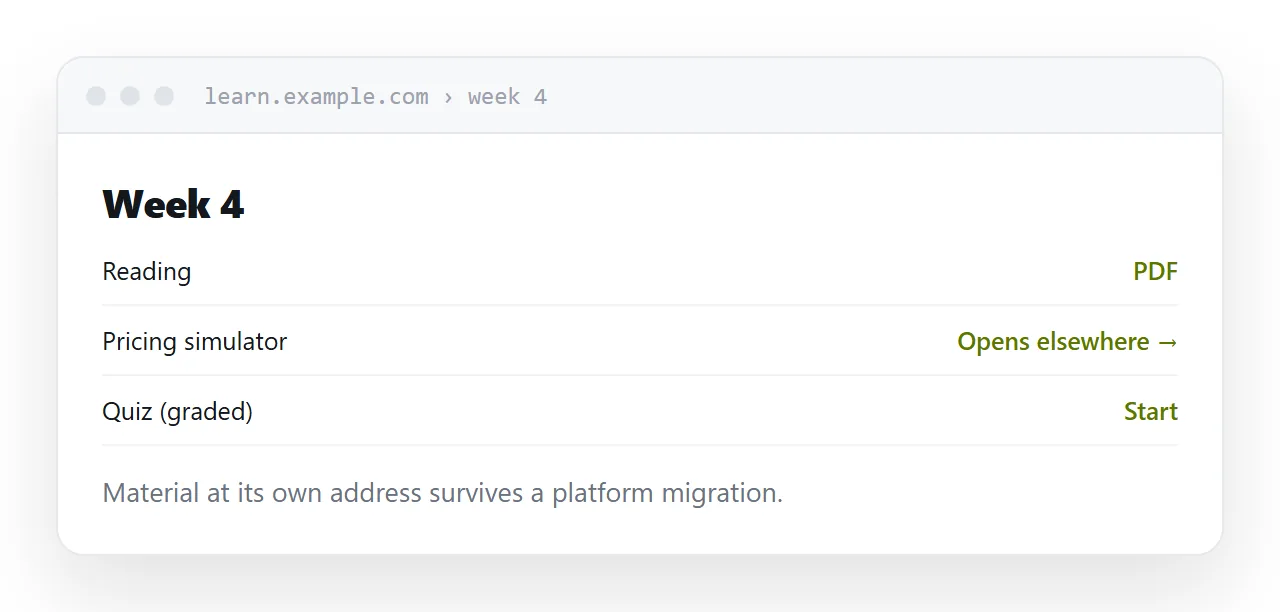
Whichever route you choose, interactive material should live at its own address rather than uploaded into the platform.
Platforms strip scripts from uploads for sound security reasons, so anything interactive becomes inert. Linking out keeps it working, and it keeps the material editable without touching the platform.
That also means the material survives a platform migration, which is worth more than it sounds.
Or skip it
If nobody needs enrolment records, certificates or grades, neither option is necessary.
Pages at addresses, a message channel for questions, and a list of who paid. That delivers the learning and removes this entire decision.
Add a platform when the administration becomes the bottleneck rather than because a course is supposed to have one.
Two neighbouring cases are worth a look: What a learning management system actually does and How to host a web page for a Moodle course.
Put it at an address
Name the person who maintains it, check whether you need a platform at all, let data residency settle it if it applies, budget for upgrades rather than servers, and host the material outside regardless.
Then the free option is priced honestly.