A novel link is a manuscript published chapter by chapter at an address, so beta readers can open the chapter they are on and return to it without searching a document.
It is a reading tool for the drafting period. It is not what you send an agent.
This guide covers chapter-level addresses, keeping the manuscript out of publication, setting prose for long sessions, and where the formatted file still matters.
Chapters are the unit
A novel shared as one file is shared as one object, and a reader who stops at chapter four has to find chapter four again.
One page per chapter fixes that, and it does something else: it lets you share selectively. A reader who offered to look at the middle third can be sent the middle third rather than being handed the whole thing and asked to skip.
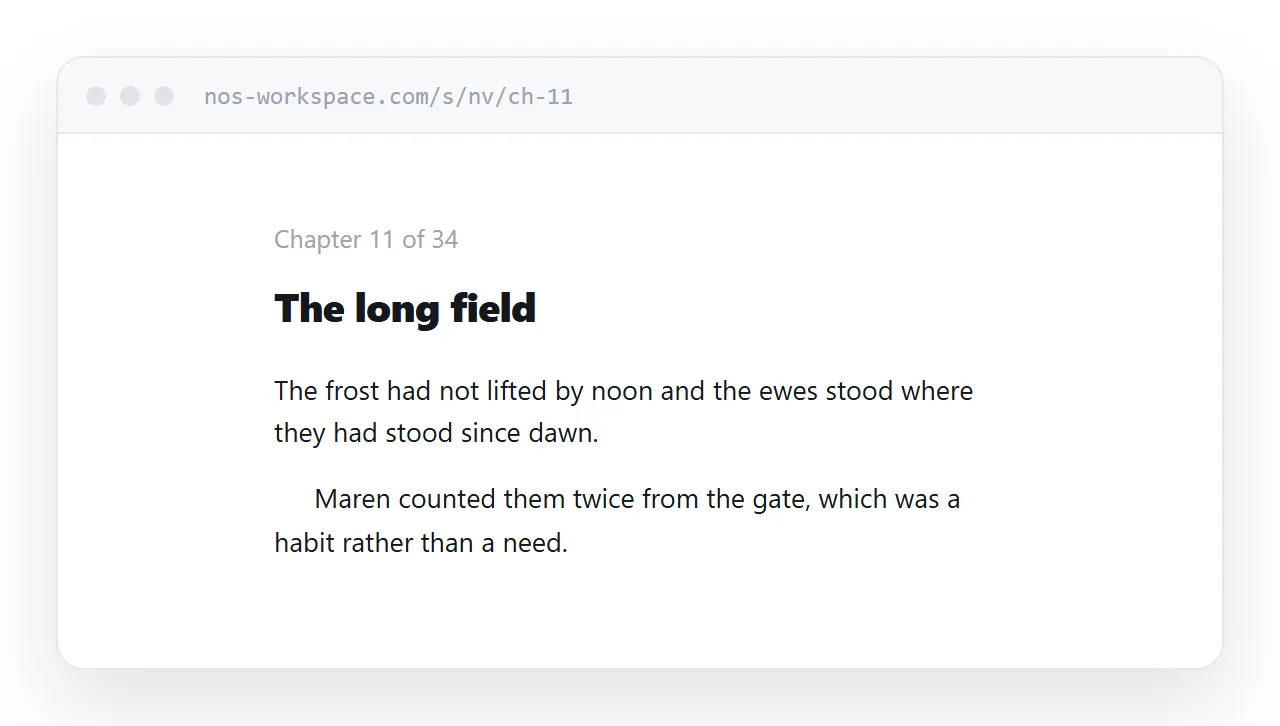
<article id="ch-11">
  <p class="where">Chapter 11 of 34</p>
  <h1>The long field</h1>
  <p>The frost had not lifted by noon and the ewes stood where they had stood since dawn.</p>
</article>
The "chapter 11 of 34" line matters more than it looks. A beta reader needs to know how far through they are, because that shapes how they read structure.
Add a contents page linking every chapter, and previous and next links at the foot of each one.
Keep it out of publication
Agents and publishers want to acquire first publication rights. A manuscript sitting at a findable address complicates that, and a few will simply not consider it.
The distinction that matters is between sharing and publishing. Sending a link to eight beta readers is sharing. Leaving the novel at an address search engines can find is publishing, regardless of whether anyone read it.
So keep the address unguessable and out of search engines while the manuscript is in play. That covers beta reading entirely, which is what this is for.
| Public page | Unguessable address | |
|---|---|---|
| Beta readers | Unnecessary risk | Correct |
| Querying agents | May count against you | Fine |
| Deliberately self-publishing | The point | Pointless |
| Serialising as you write | The point | Defeats it |
Serialising deliberately is a different project with different economics, and there the public page is exactly right. Just make the choice on purpose.
Set it for hours, not minutes
Beta readers are giving you real time. Typography that is merely acceptable becomes tiring across eighty thousand words.
.chapter {
  max-width: 33rem;
  margin: 0 auto;
  padding: 0 1.25rem 4rem;
  font-size: 1.1rem;
  line-height: 1.8;
}
.chapter p { margin: 0; text-indent: 1.4em; }
.chapter p:first-of-type { text-indent: 0; }
.chapter .break { text-align: center; margin: 1.8em 0; text-indent: 0; }
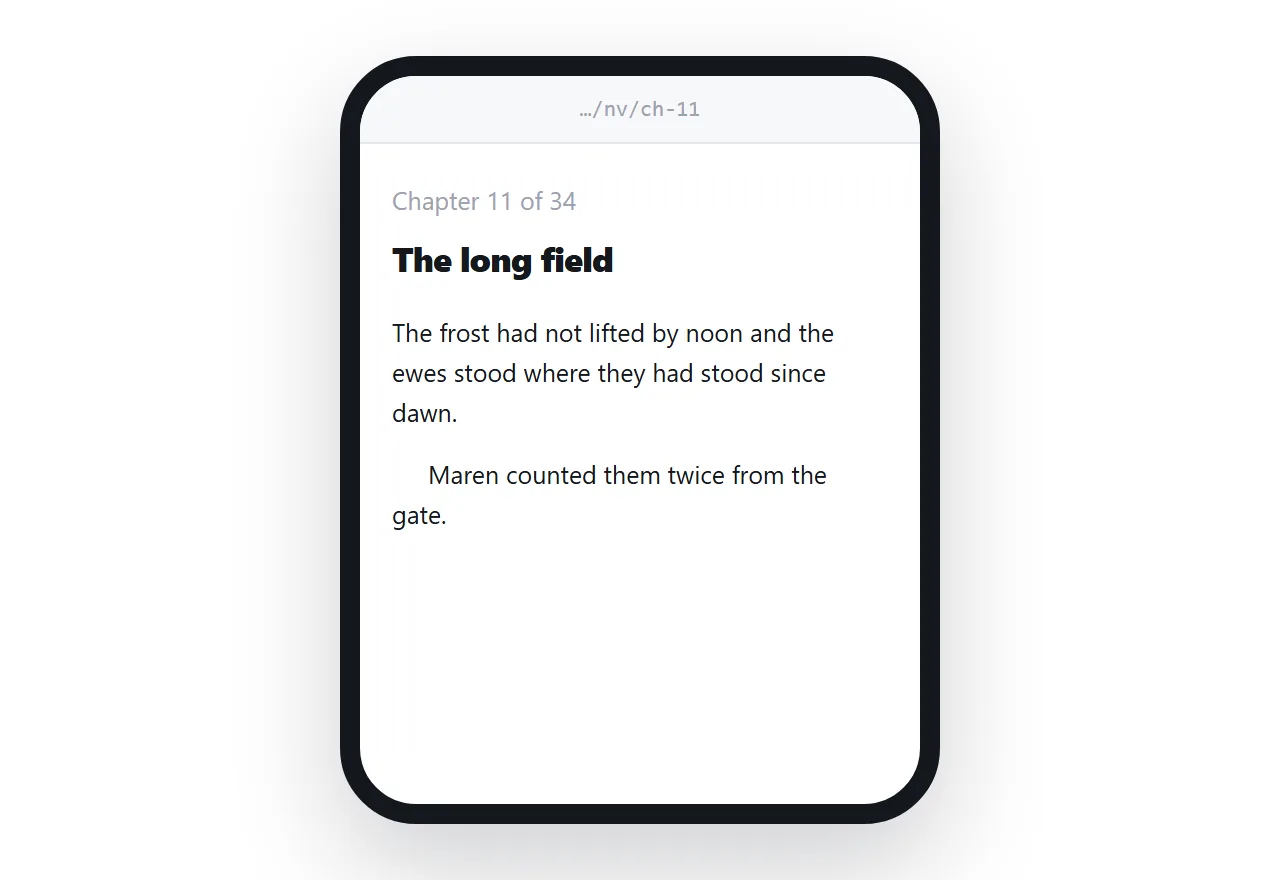
Indented paragraphs with no space between them is the novel convention and it reads well on screen at this line height. The first paragraph after a heading or a scene break is not indented, which is the standard typesetting rule.
The manuscript file still exists
Agent submissions specify format precisely: usually double spaced, a particular font and size, indented paragraphs, a header with your name and the title, and a word count on the title page.
That is a different artefact and you need to keep it. Send exactly what the guidelines ask for, because format compliance is the first filter and failing it means not being read.
Print rules can generate a readable copy for your own use, though for actual submission it is usually easier to keep a manuscript document.
@media print {
  nav, .where { display: none; }
  @page { size: A4; margin: 25mm; }
  .chapter { max-width: none; font-size: 12pt; line-height: 2; }
  h1 { break-before: page; }
}
More in export HTML to PDF.
Ask questions, do not build a comment system
The temptation is to add commenting to the page. It usually backfires.
Inline comments produce line-level notes: a word here, a comma there. What a draft needs is structural feedback, and that comes from asking specific questions and having a conversation.
Send three questions with each batch of chapters. Where did you get bored. Who did you stop believing. What did you think was going to happen. Those answers are worth more than four hundred marginal notes.
Put it at an address
Write each chapter as a page, keep the address private, create a share link, and send readers the contents page.
They read a chapter, stop, and come back to exactly where they were.