A short story link is a story published at an address so readers open it in one tap, with typography you control and no download in the way.
Before anything about layout, there is a question about rights that is easy to answer and expensive to ignore.
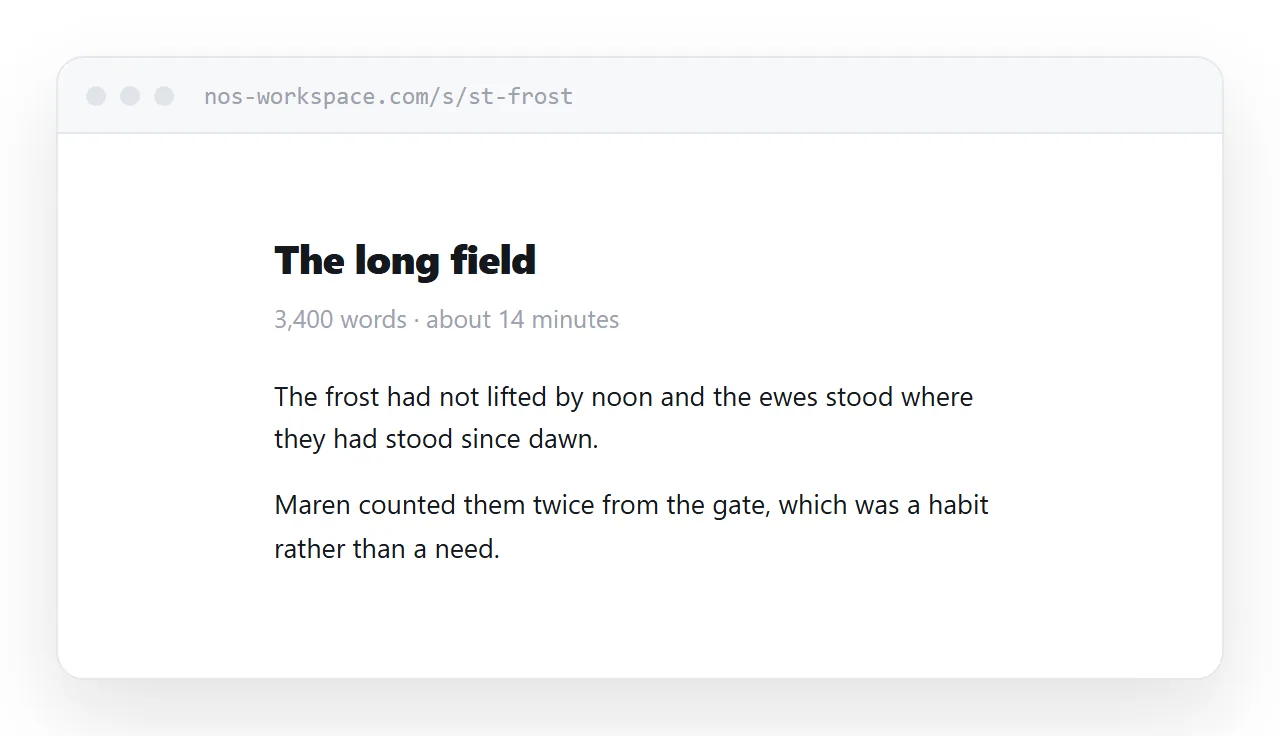
This guide covers what posting does to first publication rights, how to set fiction so it reads well in long stretches, and why telling readers the length helps rather than hurts.
First publication rights come first
Most literary magazines buy first publication rights. That means they want to be the first place the story appears, anywhere, including your own site.
A story sitting at a public address has been published in that sense. It does not matter that the audience was three people. Editors check, and a story that has been posted is usually declined without being read.
| Where you are | Public page | Unguessable address |
|---|---|---|
| Planning to submit to magazines | Spends first rights | Generally fine |
| Sharing with a workshop | Unnecessary risk | Correct |
| Story already published, rights reverted | Fine | Fine |
| Self-publishing deliberately | The point | Pointless |
If you intend to submit, keep the address unguessable and out of search engines, and read the guidelines of the specific magazine. Some are relaxed about work shared privately; few are relaxed about work that was findable.
Set it for long reading
Fiction is read differently from articles. Someone reading a story gives it fifteen uninterrupted minutes, so small discomforts accumulate.
.story {
  max-width: 33rem;
  margin: 0 auto;
  padding: 0 1.25rem;
  font-size: 1.1rem;
  line-height: 1.8;
}
.story p { margin: 0 0 1.15em; }
.story p.break { text-align: center; margin: 2em 0; }
A slightly narrower column and slightly looser leading than you would use for an article. The difference is small on any one line and noticeable over four thousand words.
Scene breaks need marking. A blank line alone disappears at the bottom of a screen, so a centred mark of some kind is worth the small amount of furniture it adds.
Remove everything else
An article page can carry navigation, related links and a footer without harm. A story cannot.
Anything at the edge of the screen is competing with your first paragraph, and your first paragraph is doing the hardest work in the piece. Strip the page to the title, the length, the text, and whatever byline you want.
Put the navigation at the end if you want readers to go somewhere next. By then they have either finished or left.
Tell them how long it is
There is a persistent worry that stating a word count scares readers off. The opposite is closer to true.
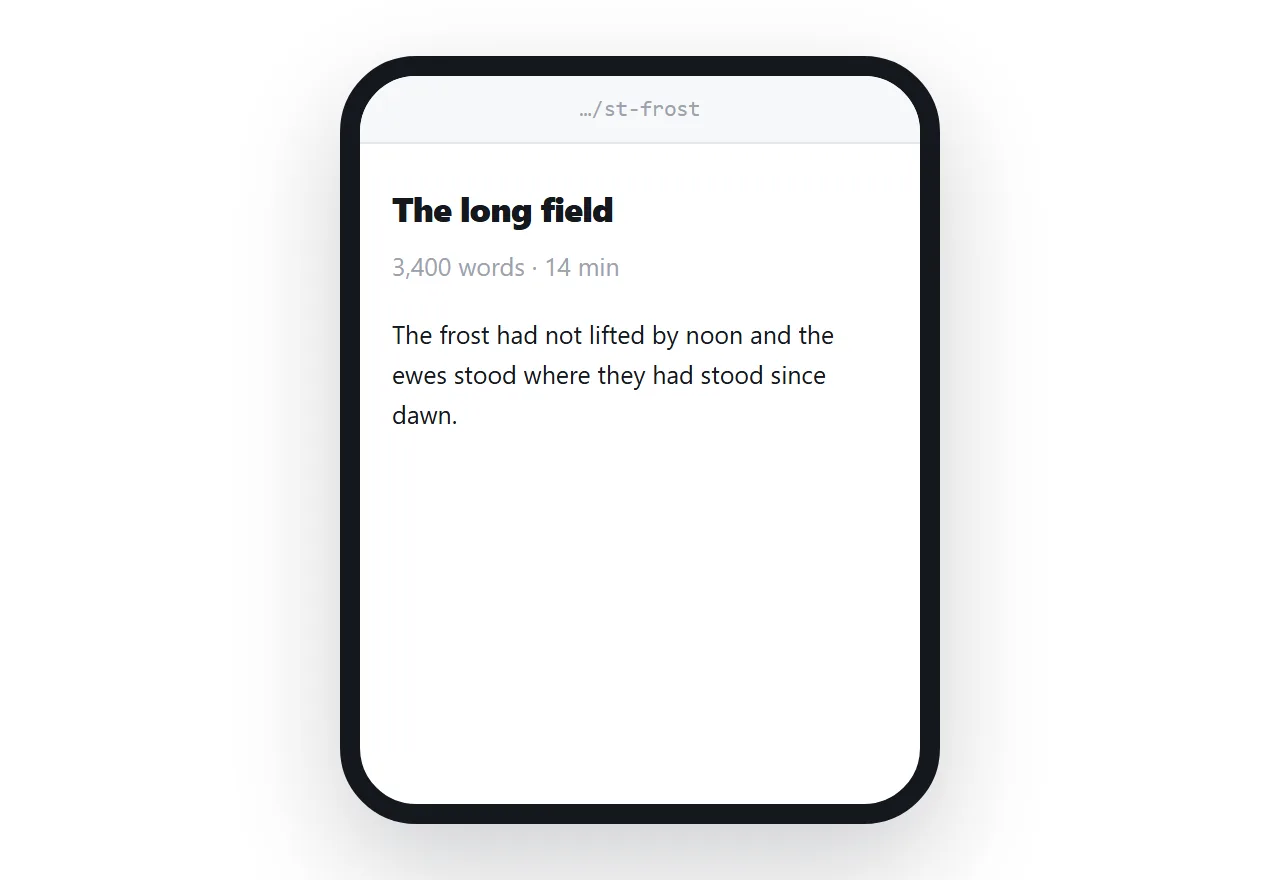
A reader with five minutes will not start something of unknown length, because the risk is being interrupted halfway. Tell them it is 3,400 words, or about fourteen minutes, and they can decide to start now or come back. The ones who come back are readers you would otherwise have lost entirely.
A version for people who print
Some readers, particularly in workshops, print fiction to mark it up. Print rules make that copy usable.
@media print {
  nav, .meta { display: none; }
  @page { size: A4; margin: 25mm; }
  .story { max-width: none; font-size: 12pt; line-height: 2; }
}
Double spacing for a workshop copy leaves room to write between lines. If you are printing to submit somewhere, follow that market's format requirements instead, which usually specify spacing, font and header content precisely.
More on the conversion in export HTML to PDF.
Put it at an address
Check your submission plans, write the story as a page, set the column for long reading, and create a share link.
The reader taps once and is in the first paragraph, which is where you wanted them.