A flipbook takes a document and adds a page-turn animation. The instinct behind it is sound: printed brochures are pleasant, and people want that back.
The costs are specific and they fall on the reader.
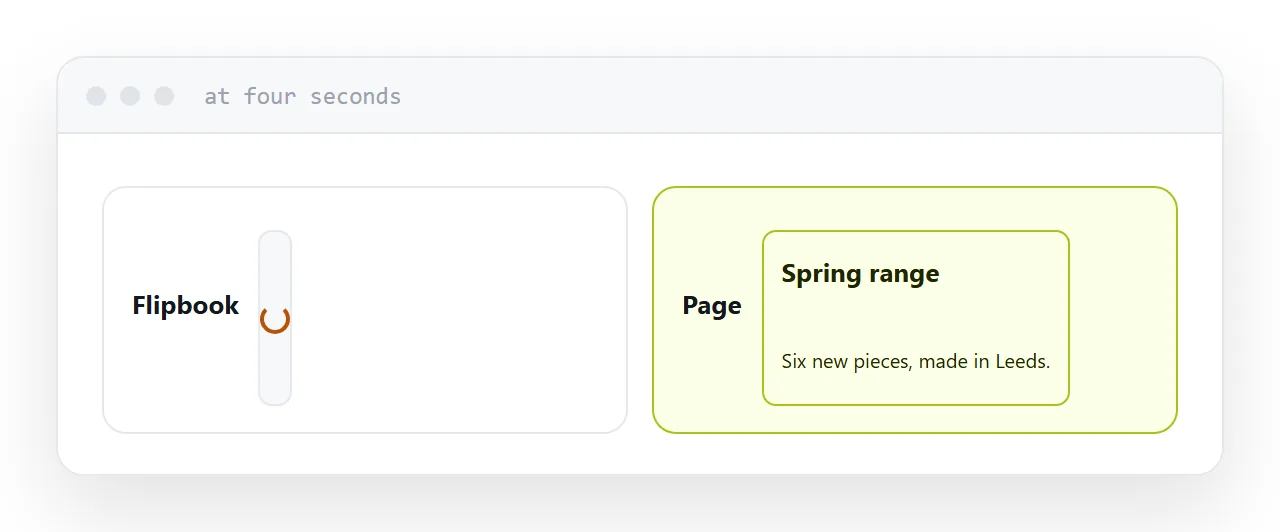
Four costs
Slow. The viewer loads, then page images load, then anything appears. On a mobile connection that is commonly several seconds, and the reader arrived from a link out of mild curiosity.
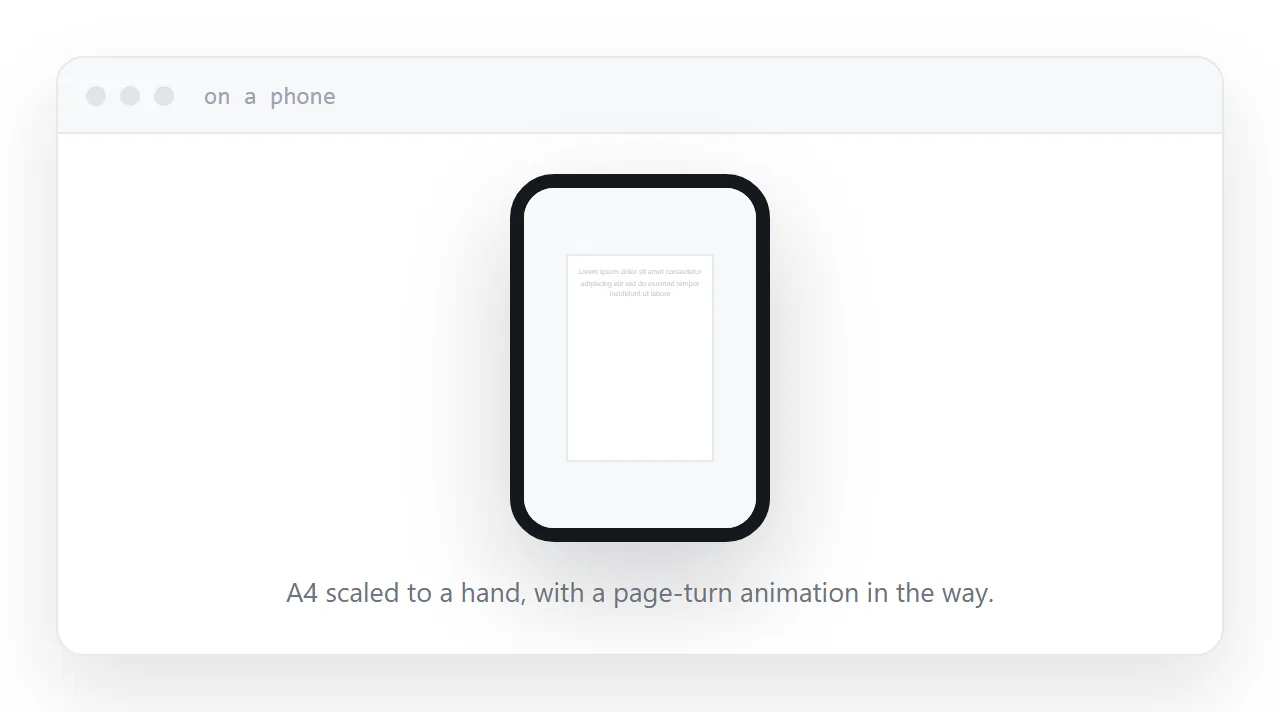
Unreadable on a phone. The page is a fixed A4 layout scaled to a hand. Body text drops below readable size and the reader zooms and pans, with the flip animation in the way.
Invisible to search. The pages are images inside a viewer. Nothing in them is text, so a catalogue published this way cannot be found by anyone searching for what is in it.
No deep links. You cannot send somebody page eleven. You send the flipbook and an instruction.
| Flipbook | Page | |
|---|---|---|
| Time to readable | Several seconds | Under one |
| Readable on a phone | Zoom and pan | Reflows |
| Found in search | No | Yes |
| Link to one item | No | Yes |
| Update a price | Re-upload | Edit |
The argument for one
There is a real case, and it is narrow.
When the layout genuinely is the content, a designed magazine spread, a photography portfolio, an annual report where the typography is doing work, and the audience is on desktops, a flipbook preserves something a reflowed page loses.
That case exists. It is much smaller than the number of flipbooks in use.
The test
Two questions.
Will readers be on phones? If yes, the format is fighting them.
Does the content need to be found? If yes, the text being invisible is disqualifying.
For a trade catalogue, a price list, a brochure or anything commercial, both answers are usually the wrong ones.
What to do instead
Put the content on a page and keep the document available underneath.
The page reflows, loads immediately, is searchable, and individual items can be linked. Readers who want the designed artefact download it; everyone else reads without waiting.
For a catalogue, give each product its own page as well. That is what makes a buyer with a part number able to find it.
If you keep the flipbook
Put a plain text version at an address alongside it, linked clearly.
That recovers the search visibility and serves the phone readers, and the flipbook stays for the people it works for. Doing both costs little and removes the worst of the trade.
Closely related: How to make a digital brochure, and How to make a digital catalog for the adjacent problem.
Put it at an address
Ask whether readers are on phones and whether the content needs to be found. Time it on a mobile connection. Publish the content as a page with the document underneath, and keep the flip only where the layout genuinely is the content.
Then the brochure is read rather than waited for.