Two documents get combined into one and neither works afterwards. Separating them is most of the job.
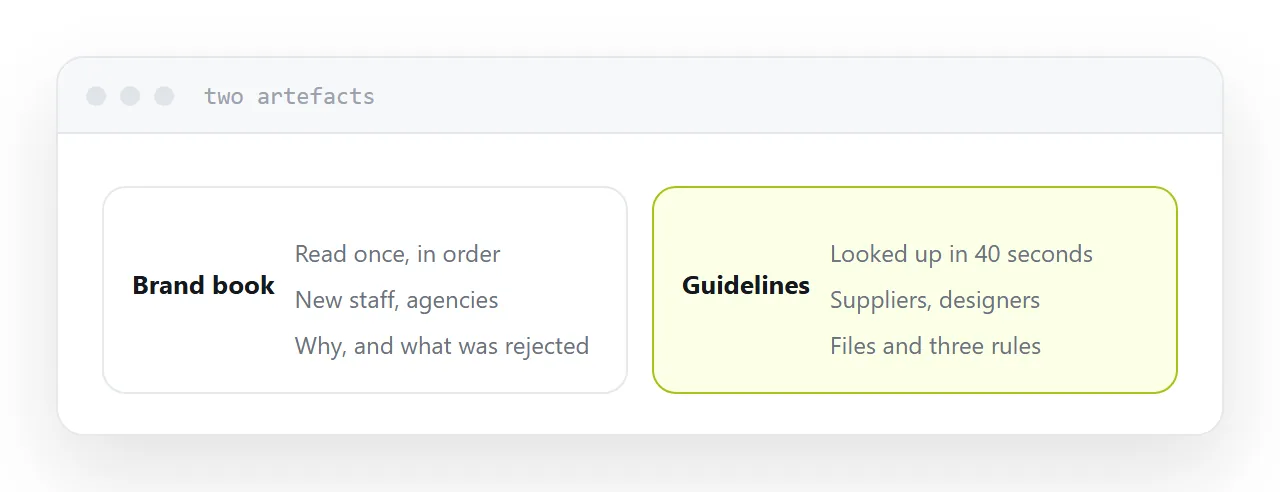
Two readers, two documents
The brand book is read once, in order, by somebody forming an understanding. A new starter in their first week. An agency about to begin. Somebody deciding whether to work with you.
The guidelines are looked up, under time pressure, by somebody who needs a file or a value and will spend about forty seconds finding it.
A single combined document serves the first adequately and the second badly, because a supplier is now scrolling through positioning statements to reach a colour swatch.
| Brand book | Guidelines | |
|---|---|---|
| Read | Once, in order | Looked up |
| Reader | New staff, agencies | Suppliers, designers |
| Contains | Reasoning | Files and rules |
| Best format | Designed document or page | Page |
| Length | Short enough to finish | As short as possible |
What makes a brand book worth reading
Decisions with reasons.
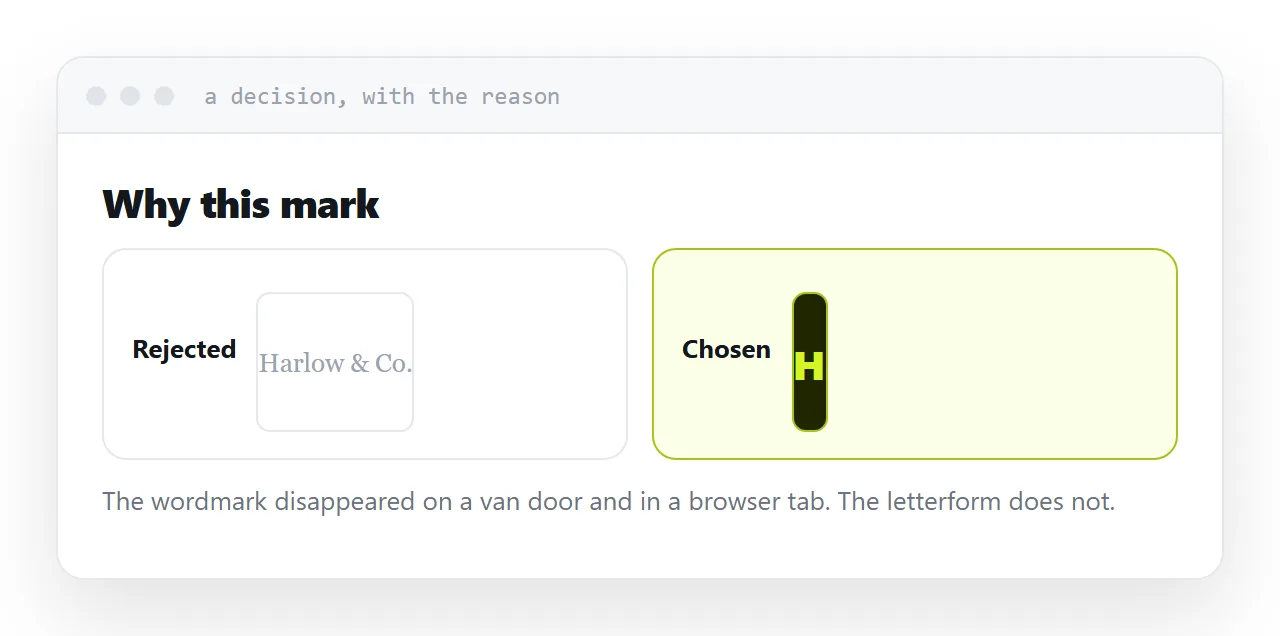
Why this mark rather than the three that were rejected. Why the palette is restrained. What the organisation will not do, and why. What the founders were reacting against.
That is interesting, memorable, and useful to somebody who has to make a judgement call the guidelines do not cover.
What gets skipped is a page of abstract values. Integrity, excellence and innovation appear in every brand book ever produced and guide nobody. If a value would not be contradicted by any competitor, it is not saying anything.
Keep it finishable
A brand book is read in one sitting or not at all.
Twenty pages that somebody finishes beats eighty they abandon on page nine. Cut the history of the sector, the market analysis, and anything that is context rather than decision.
If it is genuinely long, split it and say what each part is for.
The guidelines belong on a page
Looked up under time pressure, on whatever device is to hand.
Individual logo downloads. Colour values as copyable text. The typeface and its fallback. Three rules that are genuinely not allowed.
A document is the wrong format for that, and it is why guidelines documents go unread while people take logos from websites.
Link them
The book ends with a link to the guidelines. The guidelines carry a line saying the reasoning is in the book.
Then a supplier who is curious can read the thinking, and a new starter who needs a file can get one, without either wading through the other.
For the surrounding ground, see What brand identity means in practice and How to share brand guidelines as a link.
Put it at an address
Separate the book from the guidelines, explain decisions rather than values, publish guidelines as a page, link each to the other, and keep the book short enough to finish.
Then the person who needs a colour value gets one, and the person who needs to understand the company can.