Crime fiction serialises better than almost any other form, because the structure it already uses is the structure serialisation needs.
Why the genre suits it
A chapter of crime writing ends with something unresolved: a body nobody has explained, an alibi that does not hold, a person who was not where they said.
That is the same device a serial needs to bring a reader back. You do not have to add anything; you have to stop publishing at the right moment, which the draft probably already does.
Split by existing chapter breaks first and only reconsider where a chapter runs past a single sitting.
What a reading page needs
Very little, and the little matters.
| Element | Setting |
|---|---|
| Column width | 60-75 characters |
| Body size | 18-20px |
| Line spacing | 1.6-1.75 |
| Contrast | Dark grey on off-white |
| Everything else | Absent |
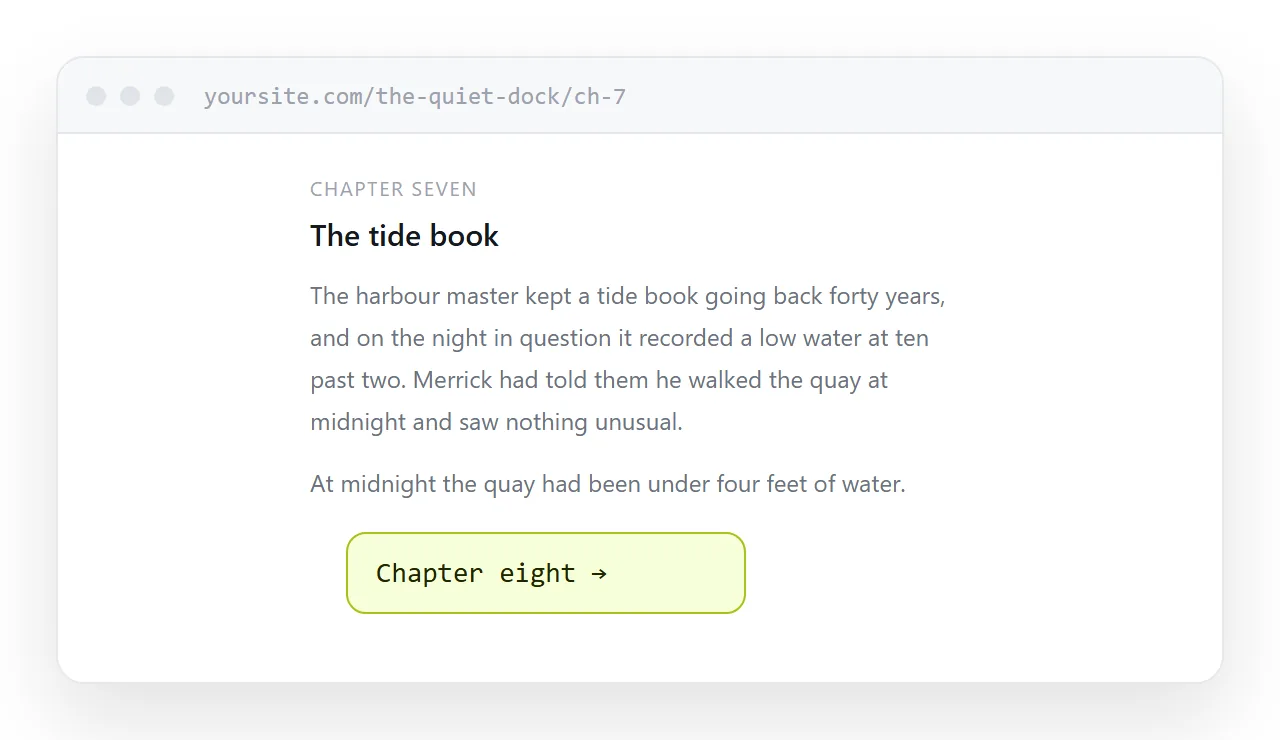
A sidebar, a share bar and a pop-up are three reasons to stop reading. A reading page is a column of text, a chapter number, and a link to the next chapter.
Structure
One page per chapter, each with its own address.
That matters because a reader who wants to send a chapter to somebody sends that chapter, not the whole book with an instruction to scroll.
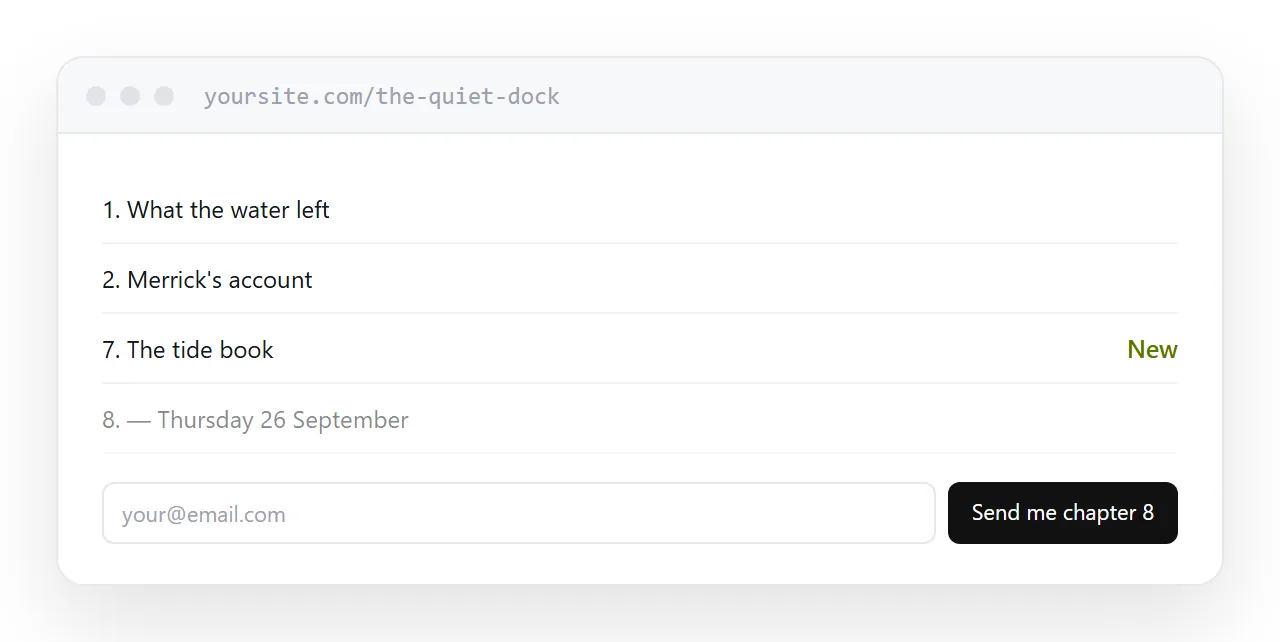
A contents page lists every chapter and is the address you publish everywhere else. It is the front door, and it is where a new reader decides whether to start.
Publishing rhythm
Pick an interval and keep it. Weekly works; fortnightly works. Irregular does not, because a reader cannot form a habit around it.
Say on the contents page when the next chapter appears. A date visible on the page does more for returning readers than any amount of promotion, because it converts a hope into an appointment.
The email list
Readers who finish a chapter will not remember to come back. The ones who leave an address will be told.
Put a single field at the end of each chapter and on the contents page. One line: leave an address and I will send the next chapter. No form, no categories.
That list is the asset. Everything else is traffic.
Two neighbouring cases are worth a look: How to publish a novel online and How to publish a thriller.
Put it at an address
One page per chapter, chapters short enough for one sitting, stop on the open question, a contents page as the front door, and an email field where people finish reading.