Genre fiction has the most predictable readership in publishing. Those readers are loyal, they buy series, and they decide very fast.
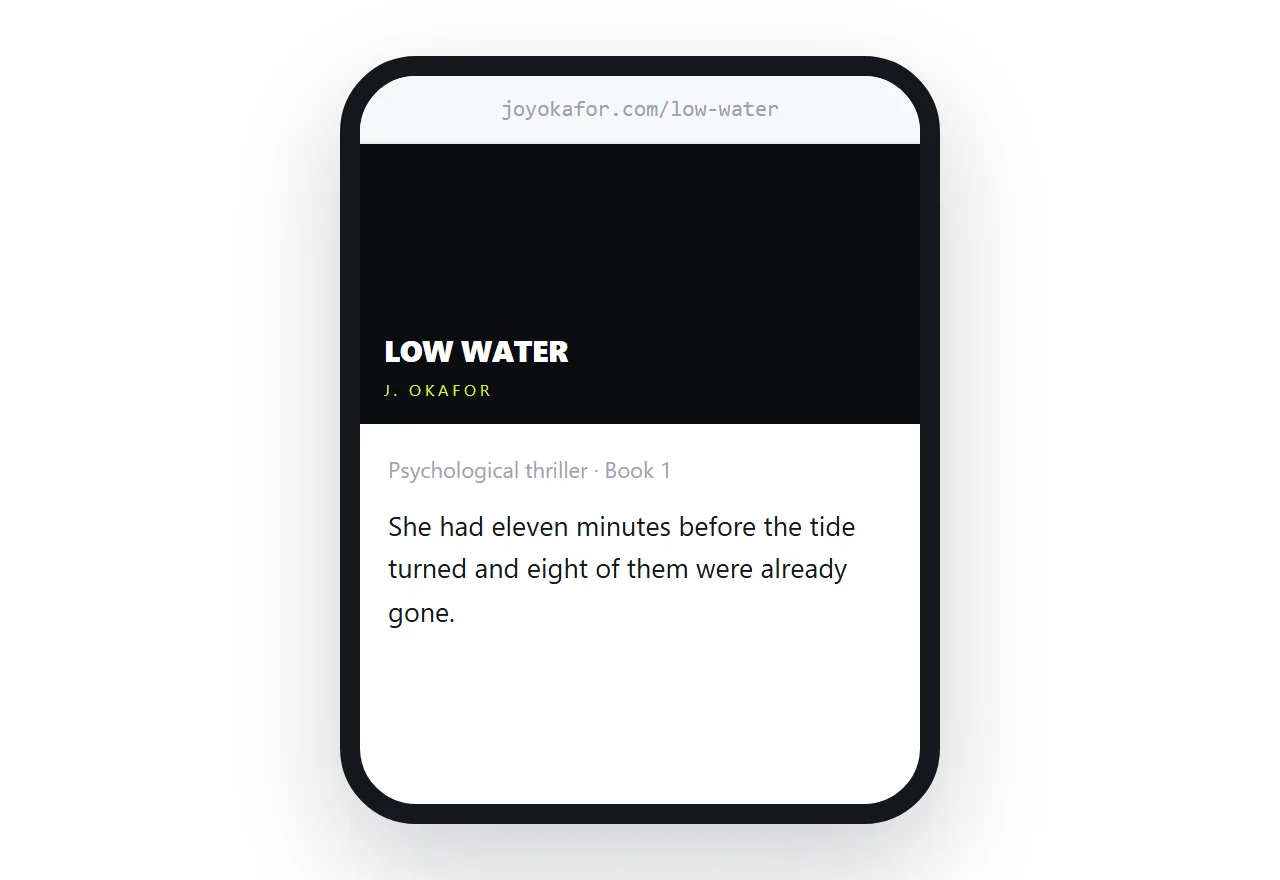
Eight seconds, three signals
The cover. In genre, this is the primary signal and it is doing categorisation work rather than decoration. A reader scanning a list is reading covers to work out which books are the kind of book they want. A cover that does not read as a thriller fails before the title is read.
Pay for it. This is the clearest case in publishing where the money returns.
The category. Psychological, legal, techno, domestic, spy. Readers browse and filter by subcategory, and the wrong one puts your book in front of people who wanted something else and will say so in reviews.
The first page. Pace is judged immediately. A thriller that opens with three paragraphs of weather loses readers who have been trained by a thousand books to expect otherwise.
| Signal | Weight | Where it acts |
|---|---|---|
| Cover | Highest | The browse list |
| Subcategory | High | Which list you appear in |
| First page | High | The sample |
| Description | Moderate | After the cover |
| Reviews | Moderate | Later |
The sample decides it
Put the opening on the page, readable without a download, unedited.
A thriller reader who reads two pages and wants the third has decided. One who has to download a file to find out has not started.
Be generous. The first chapter costs nothing and it is the only argument that works on a reader deciding whether the pace suits them.
The series is the economics
Genre readers who finish a book they liked buy the next one immediately.
That means the mailing list matters more here than in almost any other category. A list of five hundred thriller readers who asked to hear from you produces first-week sales on the next book, and first-week sales are what ranking responds to.
Ask at the end of the book and on the book page. Say plainly what it is for: a message when the next one is out, nothing else.
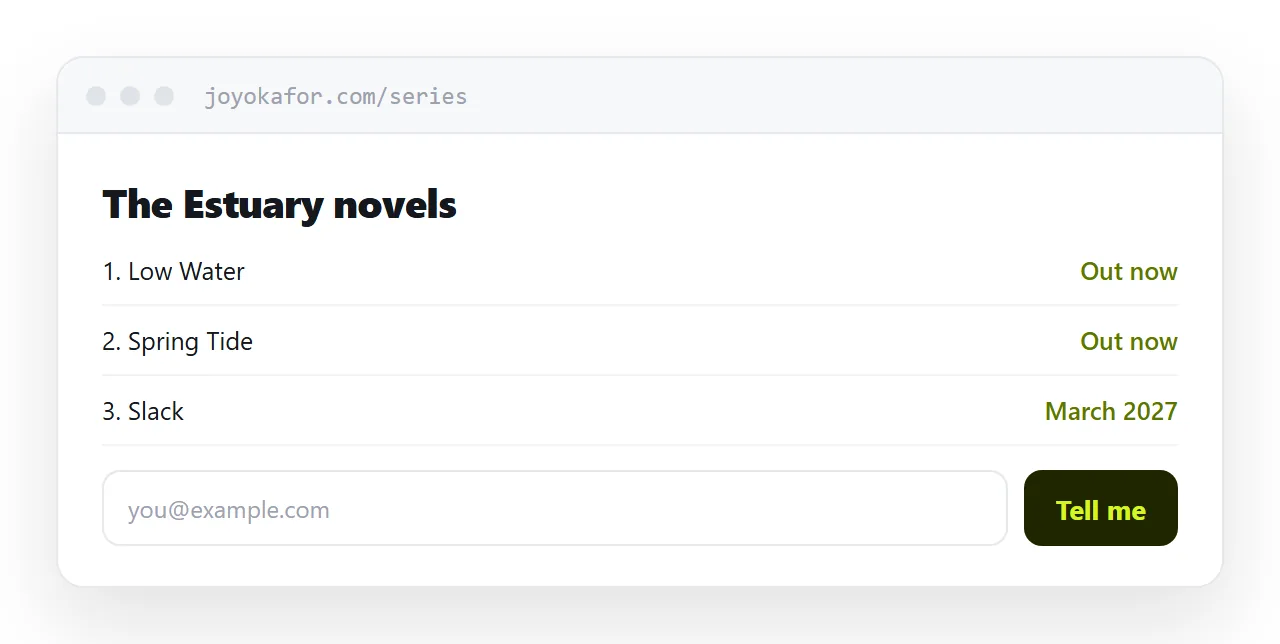
The series page
One address listing the books in reading order, with the next one and its date.
Readers arriving from book three need to know where to start. Readers who finished book one need the link to book two without searching.
That page is the thing you point at from the back of every book, and it keeps working regardless of what any store does.
Where to publish
Stores reach genre readers, which is most of the argument for them. Exclusivity programmes are worth arithmetic rather than principle: if your readers are concentrated on one store, the higher rate and promotional access may be worth more than what you forgo.
Whatever you choose, keep a book page and a series page at your own address. Stores change terms and rankings; those pages do not.
Closely related: How to publish a novel online, and How to share a novel as a link for the adjacent problem.
Put it at an address
Pay for a cover that reads as the subgenre, choose the subcategory deliberately, put the opening on the page, build the list from the first book, and keep a series page at your own address.
Then a reader who liked book one finds book two without help.