A novel published online is read differently from one on paper: in fragments, on a phone, across weeks, interrupted constantly.
The technical decisions that matter are the ones that make resuming easy.
This guide covers structure, typography, and the platform question.
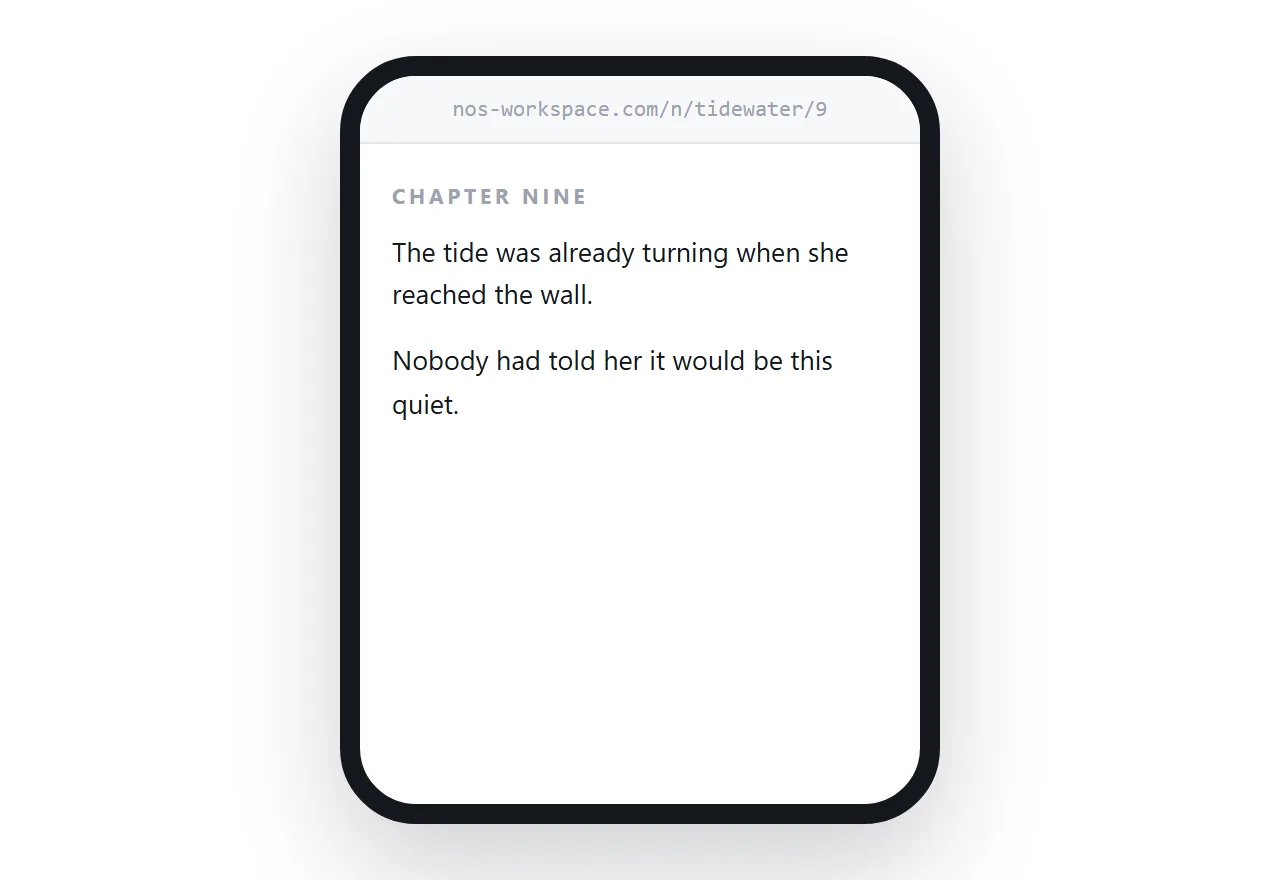
One address per chapter
A chapter at its own address is something a reader can bookmark, return to, and send to someone.
It also means you can publish as you write, which is how serial fiction works, and each new chapter is a thing to announce rather than an edit to a page nobody will revisit.
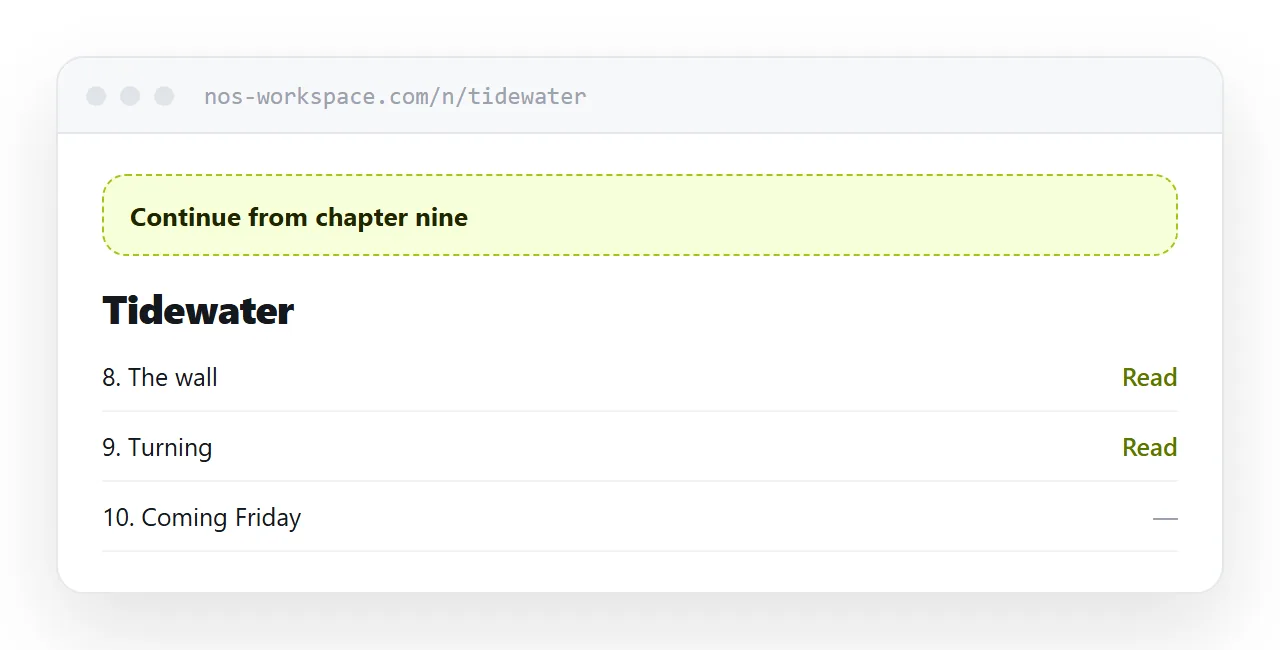
An index above them holds the order and the progress. That index is the book.
A single page containing the whole novel sounds simpler and makes resuming a scrolling exercise, which is enough friction to end a reader's relationship with a book.
Help them resume
The most common reason a reader stops is not the writing. It is that they cannot remember where they were and cannot be bothered to find out.
Browser storage can record the last chapter opened and offer to continue from it. A line at the top of the index saying continue from chapter nine removes the whole problem.
It is per-device and it can be cleared, so keep the chapter list visible as well. It is a convenience, not a sync service, and as a convenience it is worth a great deal.
| Whole novel on one page | Chapter per address | |
|---|---|---|
| Resume where you left off | Scroll and hunt | One tap |
| Share a chapter | Not really | An address |
| Publish as you write | Awkward | Natural |
| Readable on a phone | Yes | Yes |
| Reader finishes | Less often | More often |
Typography for long reading
Prose is read for twenty minutes at a time. Settings that are fine for an article become tiring over a chapter.
Line length around sixty to seventy characters. Generous line spacing. A font size larger than you would use for interface text. Enough contrast without being harsh, and a dark mode that is genuinely dark rather than grey.
Let the reader change the size. Some of your readers need it larger, and a novel they cannot read comfortably is a novel they do not read.
Platforms
Serial fiction platforms bring readers, and finding readers is the hardest part of publishing anything.
What they take is the relationship and the presentation. Your book is inside their product, formatted their way, ranked by their rules, and reachable only while they exist.
The usual sensible arrangement is both: publish on the platform for discovery, keep the canonical version at your own address, and point one at the other. Readers who find you there can follow you somewhere permanent.
Free chapters
Nobody pays for writing they have not read.
The first few chapters free is not a marketing trick; it is the online equivalent of standing in a bookshop reading the opening. Readers decide on the prose, and no description substitutes for it.
Where the paywall goes is a judgement. Too early and nobody is invested; too late and nobody converts. Most serial fiction settles somewhere around the first act.
If this is near what you are doing, How to share a novel as a link and How to share a short story as a link cover the cases on either side.
Put it at an address
One address per chapter under an index, a resume prompt, typography built for long reading, the first chapters free, and the canonical version at your own address.
Then a reader who stopped three weeks ago can pick it up in one tap.