Publishing an ebook has two halves. The stores sell it, and a page at your own address is where readers meet it.
Most authors do the first and skip the second, which is why their second book starts from nothing.
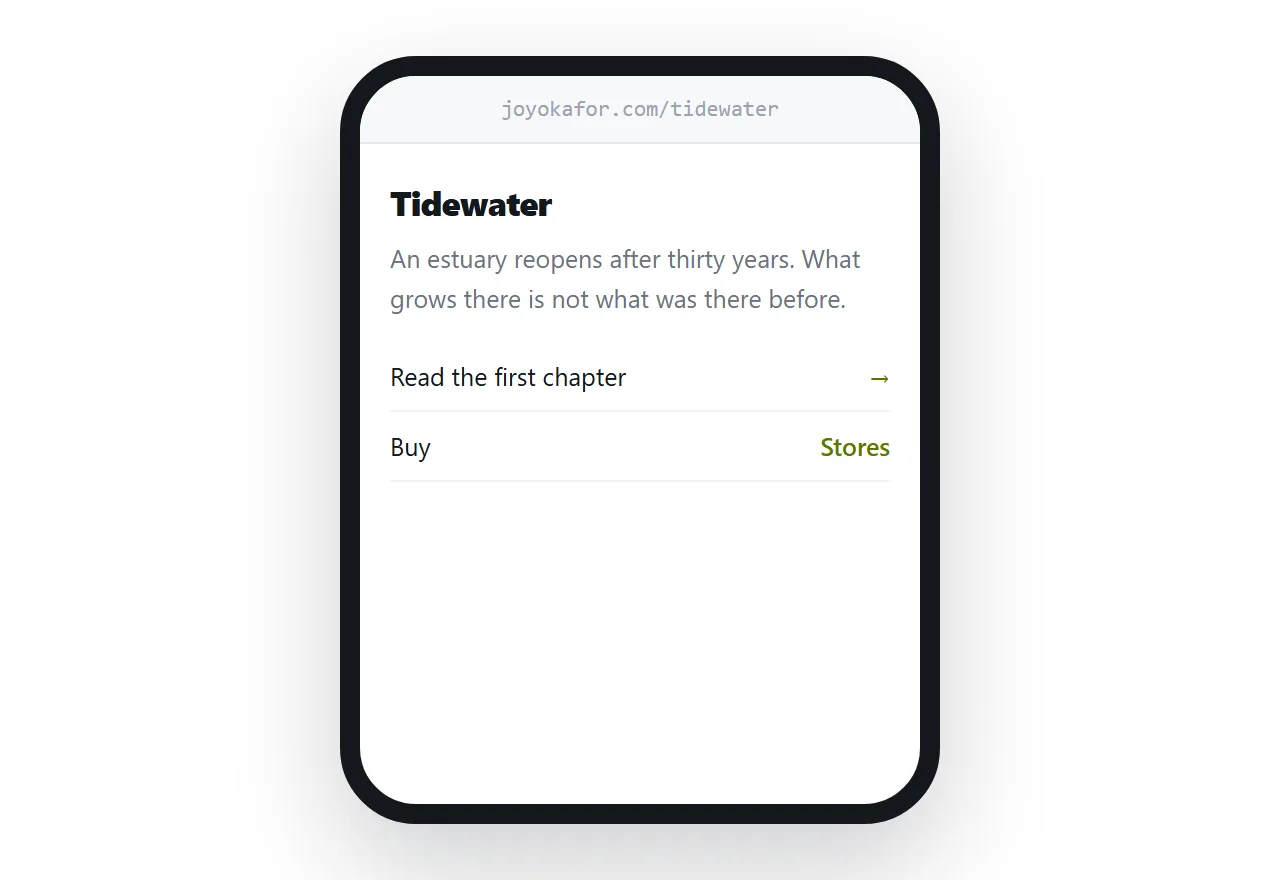
This guide covers the split, the sample, and the list.
What stores do well
Payment. Tax, currency, refunds, fraud. All handled.
Discovery. Readers search there. Being in the catalogue is being findable by people who were already looking.
Delivery. The file reaches the right device in the right format with no support burden on you.
That is a genuine service and worth what it costs.
What stores keep
The customer.
You see a sales figure. You do not get an address, a name, or any way to tell that reader your next book exists. The store has a relationship with your reader and you have a royalty statement.
For one book that is fine. Across a career it is the whole difference between an audience and a series of launches from zero.
| Store | Your own page | |
|---|---|---|
| Handles payment | Yes | Not by default |
| Brings readers | Yes | Not by itself |
| You learn who bought it | No | Via the list |
| Survives the store changing | No | Yes |
| Presentation is yours | No | Yes |
The book page
One address per book, carrying four things.
What it is. A paragraph a stranger can read, not a blurb that assumes they already care.
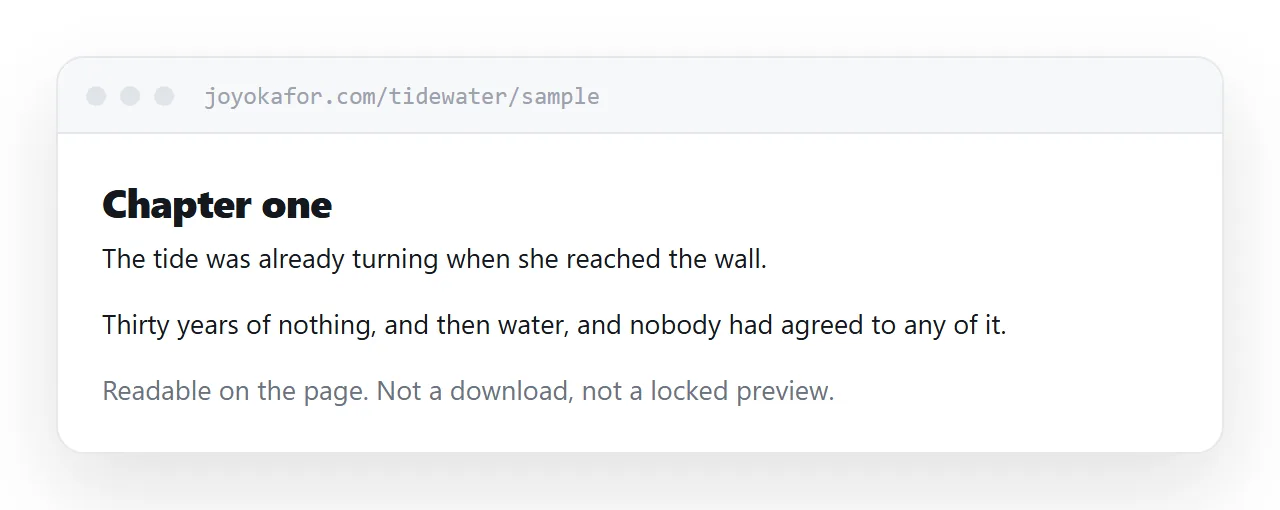
A sample. Readable on the page, not a download.
Buying links. Every store, plainly listed, so the reader buys wherever they already have an account.
A way to hear about the next one. One field.
That page is the thing you point at from everywhere: your profile, interviews, the back of the book, other people's pages. It survives every change a store makes.
Be generous with the sample
Readers decide on the prose. No description, cover or endorsement substitutes for reading a page of it.
A first chapter readable on the page, without a download, converts far better than a locked sample or a description. The reader is either gripped or not, and the ones who are not were never going to buy.
Put it on the page rather than offering a file. A download is a decision; a page is already open.
Formats
EPUB for anything mostly text. Readers change font size, and a fixed layout cannot accommodate that.
PDF as well when the layout is the content: a cookbook, a workbook, anything with a designed grid.
A web version of the sample, and sometimes of the whole book. It reaches everyone with no software, and it is where search finds you.
The list
Collect it from the first day, and say plainly what it is for: a message when the next book is out, and nothing else.
That promise is easy to keep and it is why people sign up. A list of two hundred readers who asked to hear from you is worth more at launch than any store placement, because they buy in the first week, which is what ranking responds to.
Two neighbouring cases are worth a look: How to share an ebook as a link and What is EPUB.
Put it at an address
Sell through the stores, keep a book page at your own address, be generous with the sample, offer EPUB and a web version, and build the list from day one.
Then the second book launches to readers rather than to a category.