A short story is a complete thing read in one sitting. Publishing one well is mostly about the moment it gets shared and the moment it gets finished.
This guide covers the submission question, the share, and the ending.
Check submissions first
This is the decision that cannot be undone.
Most journals and anthologies count a publicly readable page as previously published, which makes the story ineligible. Some accept work from a personal site; many do not.
If you intend to submit, either hold the story back or keep it at an unlisted address not linked from anywhere. Read the guidelines rather than assuming, because a story cannot be unpublished.
If you are not submitting, publish it properly and make it easy to pass around.
The share is the distribution
Short fiction spreads by one reader sending it to another. That is the whole mechanism.
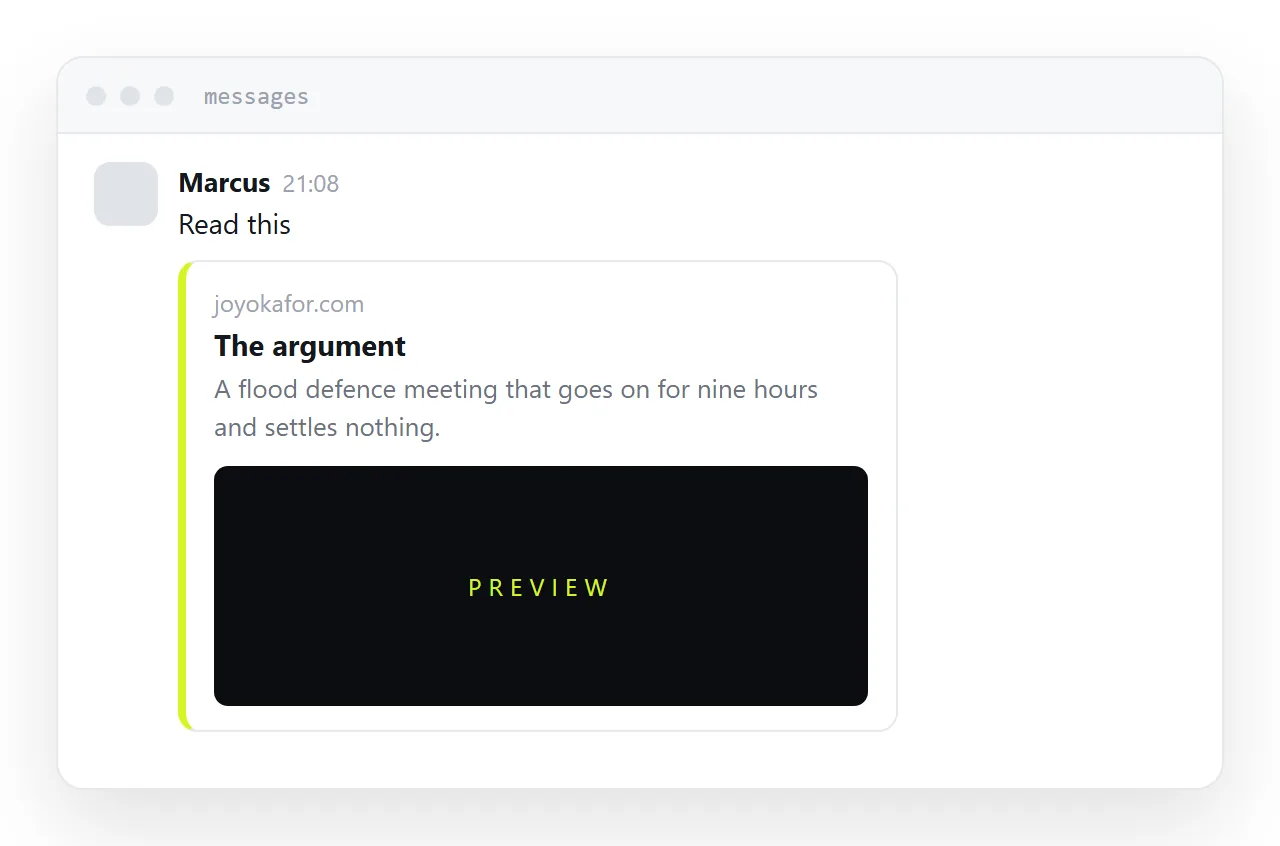
What gets sent is a link, and what determines whether it gets opened is the preview card: a title, a line of description, an image.
Without metadata in the page, a shared story is a naked address in a message thread, and naked addresses are scrolled past even when the sender said something enthusiastic about them.
Write the description as a hook rather than a summary. One sentence that makes someone want the next one.
| Bare address | Preview card | |
|---|---|---|
| Shows the title | No | Yes |
| Shows a hook | No | Yes |
| Has an image | No | Yes |
| Gets opened | Sometimes | Much more often |
Say how long it is
A reading time at the top, before the story begins.
The reader is deciding whether they have room for this right now. Twelve minutes is a decision they can make; an unknown length is a decision they postpone, and postponed means never.
Being honest about a long piece loses fewer readers than leaving them to discover it at the halfway point.
Typography for one sitting
A story is read continuously, which is a different demand from an article that gets skimmed.
Comfortable measure, around sixty to seventy characters. Generous line spacing. A size larger than interface text. Enough contrast without harshness.
Anything mildly uncomfortable becomes genuinely uncomfortable by the end, and the reader attributes the tiredness to the story.
The ending is the willing moment
Someone has just finished something they enjoyed. That is the most receptive they will be to anything you ask.
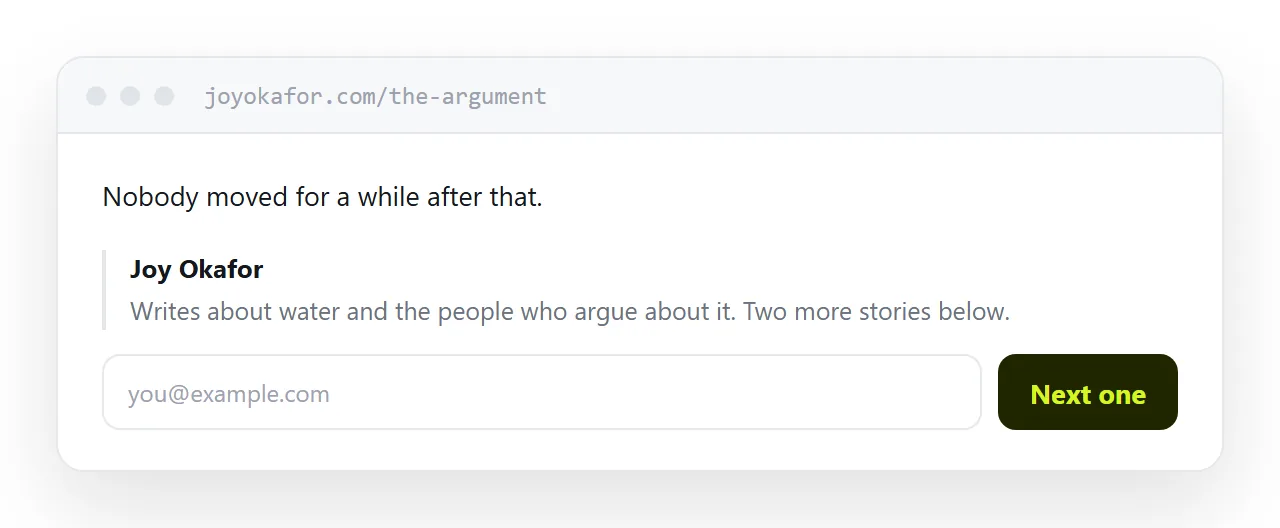
A short line about you, a link to two other stories, and one field to hear about the next. Not a wall, not a plea. Three things.
Most published stories end and then nothing happens, which wastes the only moment in the whole encounter where the reader was actively looking for more.
For the surrounding ground, see How to share a short story as a link and How to publish a novel online.
Put it at an address
Check submission rules before publishing, add metadata so the share looks like something, state the reading time, set typography for continuous reading, and put a short line and a signup after the ending.
Then a story that one person liked reaches the next one.